
The Power of Trust: Six Ways to Build Stronger Relationships with Learners

Your relationship with a learner matters whether you teach in person, online or in a blended format, individually or in groups.
Learners want a safe environment and support. Trust helps them feel comfortable enough to participate and try things they cannot yet do confidently.
There is no trick that earns trust instantly, and no quick method that makes learners like you within minutes. Building a relationship takes time. But there are everyday choices that help.
English teachers Elizaveta and Elena shared their approaches after eight and 14 years of teaching respectively. Their examples show how small classroom choices affect a relationship over time. They shared six principles they use to build trusting relationships with learners.
1. Show from the first lesson that honest conversation is welcome
Introduce yourself, your experience and how you teach. Avoid letting technical instructions take over the first lesson. A short tutorial or video sent beforehand can cover those.
Your main task is to show interest in the learner as a person. Ask questions, listen and follow up. A game such as “Two truths and a lie” can help you get to know each other. Use the language you are teaching where the learner’s level allows, so the activity also becomes language practice.
Save these: 50 questions to help learners start talking
It matters less that you demonstrate every teaching technique you use than that you show you can listen and understand. Ask what the learner likes or dislikes about learning languages. Find out where things have gone wrong before. I often hear, “I’m no good at languages, but I need English for work.” That can be the echo of an unsuccessful experience. It is worth noticing those barriers early and working with them gently.
Sometimes a learner expects a miracle. You need to say openly that learning does not work that way. Both learning and trust involve two people.
Elena
2. Invite learners to share stories

Conversation is part of how we connect with other people. Use lesson topics to ask for the learner’s opinions, examples from their life or something that happened recently. If the topic is pets, for example, they might show a photograph or introduce their pet on camera.
If a learner does not welcome personal questions, do not push. They may not be in the mood, or the subject may be uncomfortable. Family, for example, can be sensitive. Respect that boundary.
I have a regular learner who is 13. When something has happened, she sometimes asks whether I can listen. It usually comes up while we are discussing the lesson topic. Once, we were talking about travel and I realised she could not continue what she was saying. Something was worrying her, so I let her know I was willing to listen.
It gives her English practice and a chance to express how she feels. Of course, this is not appropriate with everyone, and a teacher should not take the role of a psychologist. But being willing to listen can affect the trust between teacher and learner.
Elizaveta
3. Share something of yourself too
You can start with your interests and, where appropriate, talk about parts of your own life. Listening remains important, but sharing relevant experiences lets learners see the person behind the teacher.
Almost all my learners follow me on Instagram. They usually find the account themselves. I do not object because it lets them see that I am a real person, not only their teacher.
Elizaveta
4. Make progress visible and praise something specific
A learner needs to trust your professional judgement as well as feel comfortable with you. Show them the progress they are making, including small steps towards their goal.
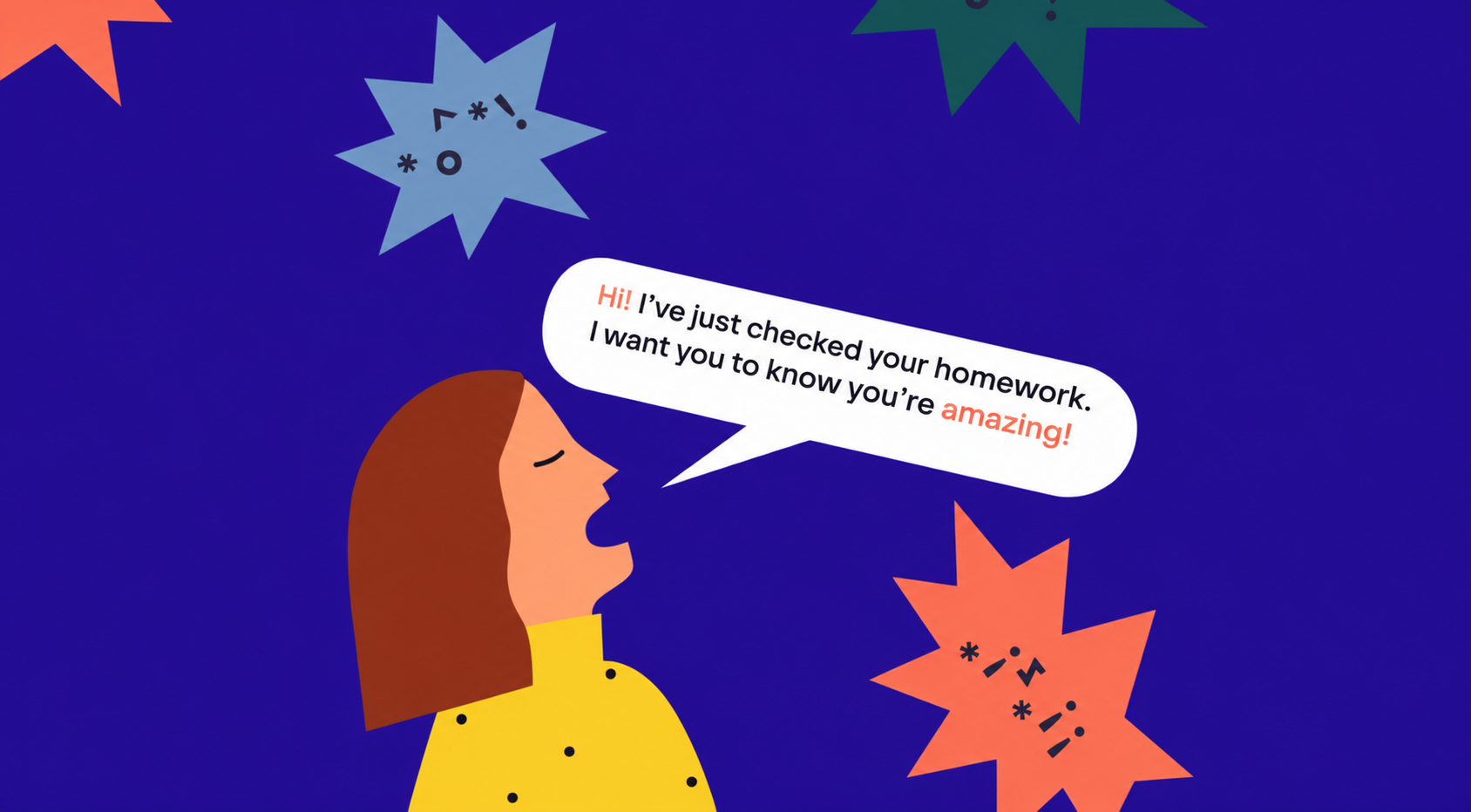
Praise can help build trust, especially early on, but give it for something real. A small achievement counts: perhaps the learner has remembered three more words than the task required.
I make a plan for each learner, with a starting point and a goal. We use a tracker to mark what we have covered. I also explain how the material relates to their needs, so they know we are not doing exercises without a purpose. I want them to leave feeling that they have achieved something. The teacher becomes a guide who understands the goal and helps them move towards it.
Elena
You can read more about tracking a learner’s progress here.
5. Be patient and avoid personal judgement
People already encounter criticism from family, friends, partners and colleagues. A lesson should not become another place where they feel judged as a person.
Showing contempt or frustration can push a learner away from both the teacher and the subject. If someone chooses to tell you a personal story, listen without offering a hurtful verdict. Do not scold them or press on a sensitive issue.
Patience definitely came with experience for me. At the beginning of my teaching career, I could be quite reactive. It annoyed me when a learner arrived without homework. I might show my frustration or roll my eyes. Eventually, I realised that it did not work. A teacher who intimidates or ridicules a learner damages the learning process. The person simply loses motivation.
Elizaveta
6. Occasionally surprise them
Even when lessons follow a familiar pattern, there is room for an occasional personal touch: a role-play, a quest or a creative homework task. For a food topic, you could make a restaurant menu together with unusual dishes. Or try a karaoke activity, listening to songs and then exploring the language. A thoughtful change can give learners something to remember.
Sometimes I make a personalised visual game. I do it only a couple of times a year because it takes a lot of preparation. I might create a quest with plenty of visual elements. The learner arrives expecting an ordinary lesson and finds a surprise. It makes an impression that stays with them.
Elizaveta
Keep this in mind
No teacher is the right fit for everyone. You may not connect with a learner even if you have approached everything carefully. Talk openly with the learner, or with their parents when appropriate, about difficulties and sticking points. Trust is mutual, so building it does not depend on you alone.


