
Christmas and New Year English Lesson Ideas for Tutors
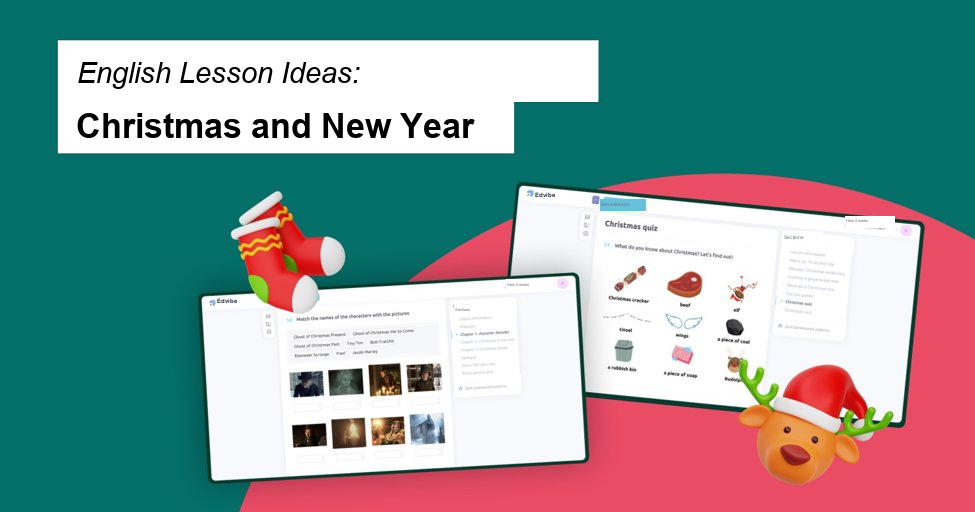

Here are five Christmas and New Year lesson ideas, with examples of the activities in each one. Choose an idea by level and the skills you want learners to practise, then prepare the material for your class.
How professional Santas are trained (B2)
Aim: vocabulary, speaking and writing practice built around the question: “What skills does a good Santa need?”
Lesson structure
Lead-in
Learners meet the new vocabulary and discuss how easy, or difficult, being Santa might be.
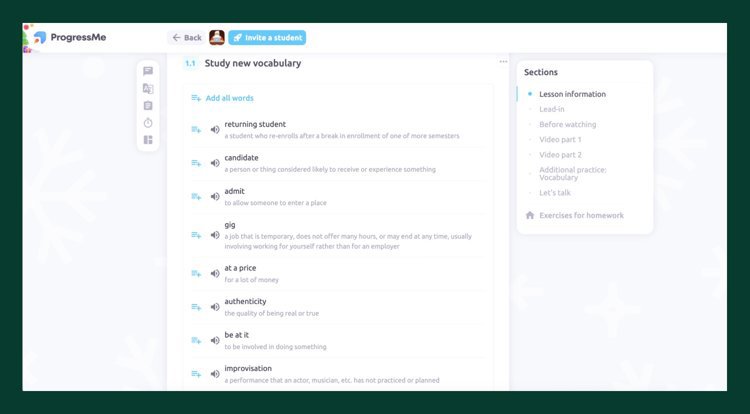
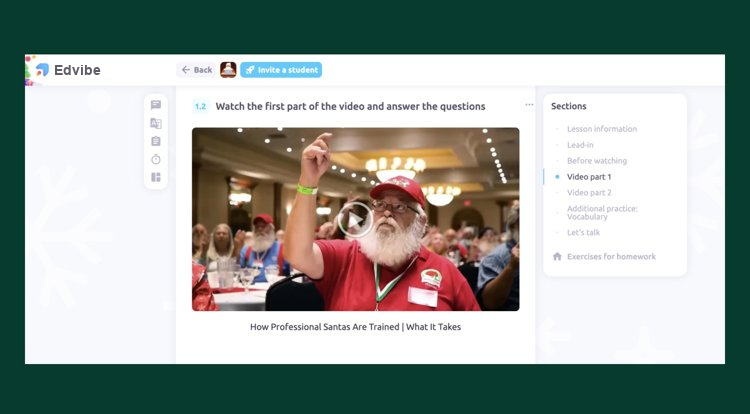
Learners watch two videos about schools that train professional Santas. They study new words and practise them in the accompanying exercises.
Learners review the vocabulary from the lesson and choose a school where they could learn a new skill in the coming year.
Homework
For homework, prepare three exercises that bring back the vocabulary and give learners a short writing task.
Christmas Ads: How Brands Sell Holiday Magic (B2/B2+)
Aim: listening and speaking practice. Learners describe feelings and identify techniques advertisers use to attract attention and influence an audience.
Lesson structure
Lead-in
Using the pictures, learners discuss the emotions advertisements evoke and why brands spend so much on Christmas campaigns.
Podcast and vocabulary
The podcast introduces sales and persuasion techniques used in advertising. Learners practise listening, then work with new words and phrases connected to the topic.
Speaking
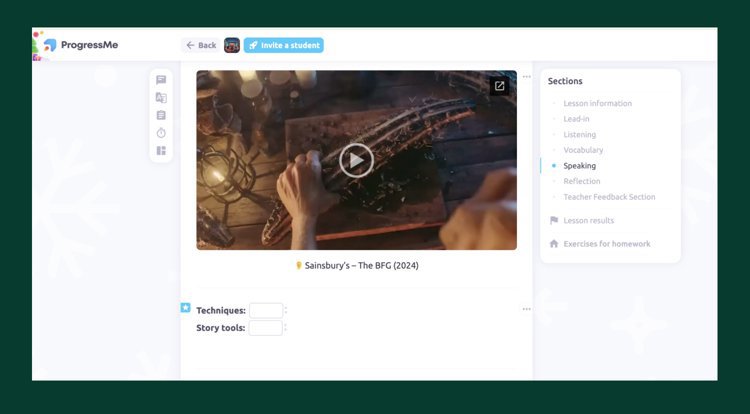
You can use this part in an individual lesson or adapt it for a group. Learners watch an advertisement and identify its persuasive and storytelling techniques.
Reflection
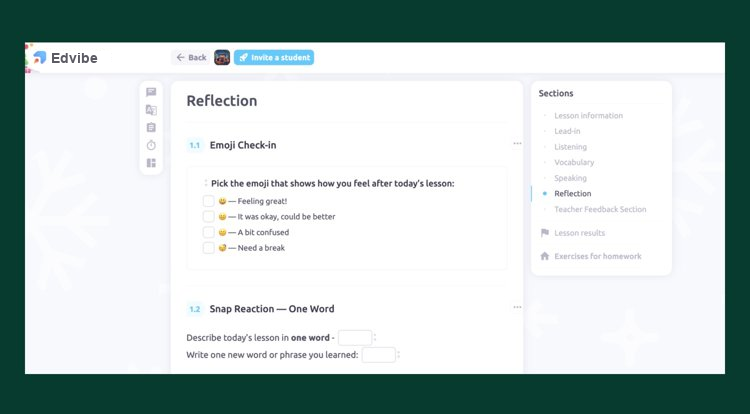
Learners reflect on the lesson and how they feel. Use this moment to recognise what they have done.
Christmas and all that jazz (A2)
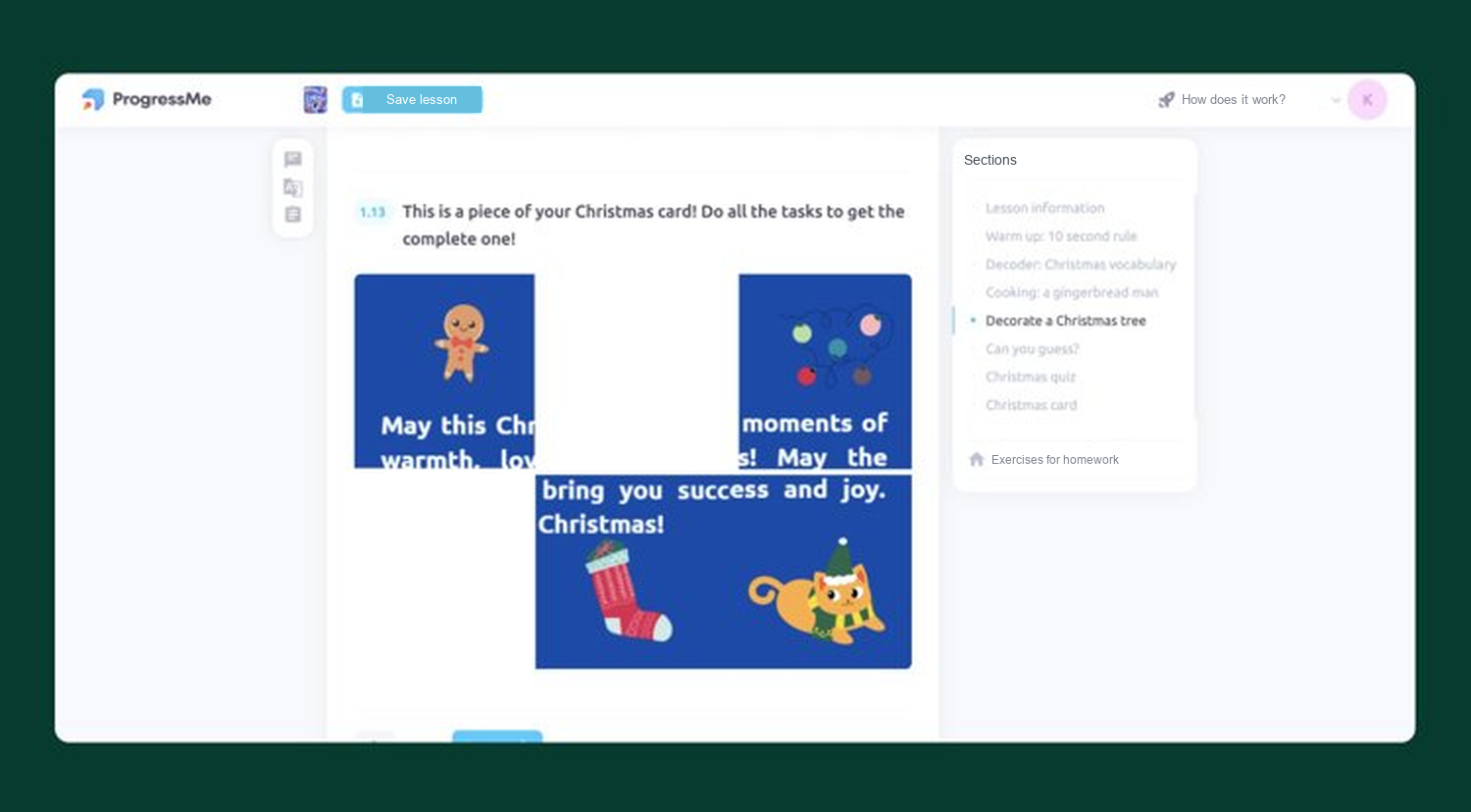
This lesson is a quest for teenage learners. Correct answers in each part earn them a piece of a Christmas card from Santa. By the end of the lesson, the pieces form a complete picture.
Aim: practise talking about Christmas through vocabulary, grammar (Present Perfect), reading and speaking activities.
Lesson structure
Warm-up
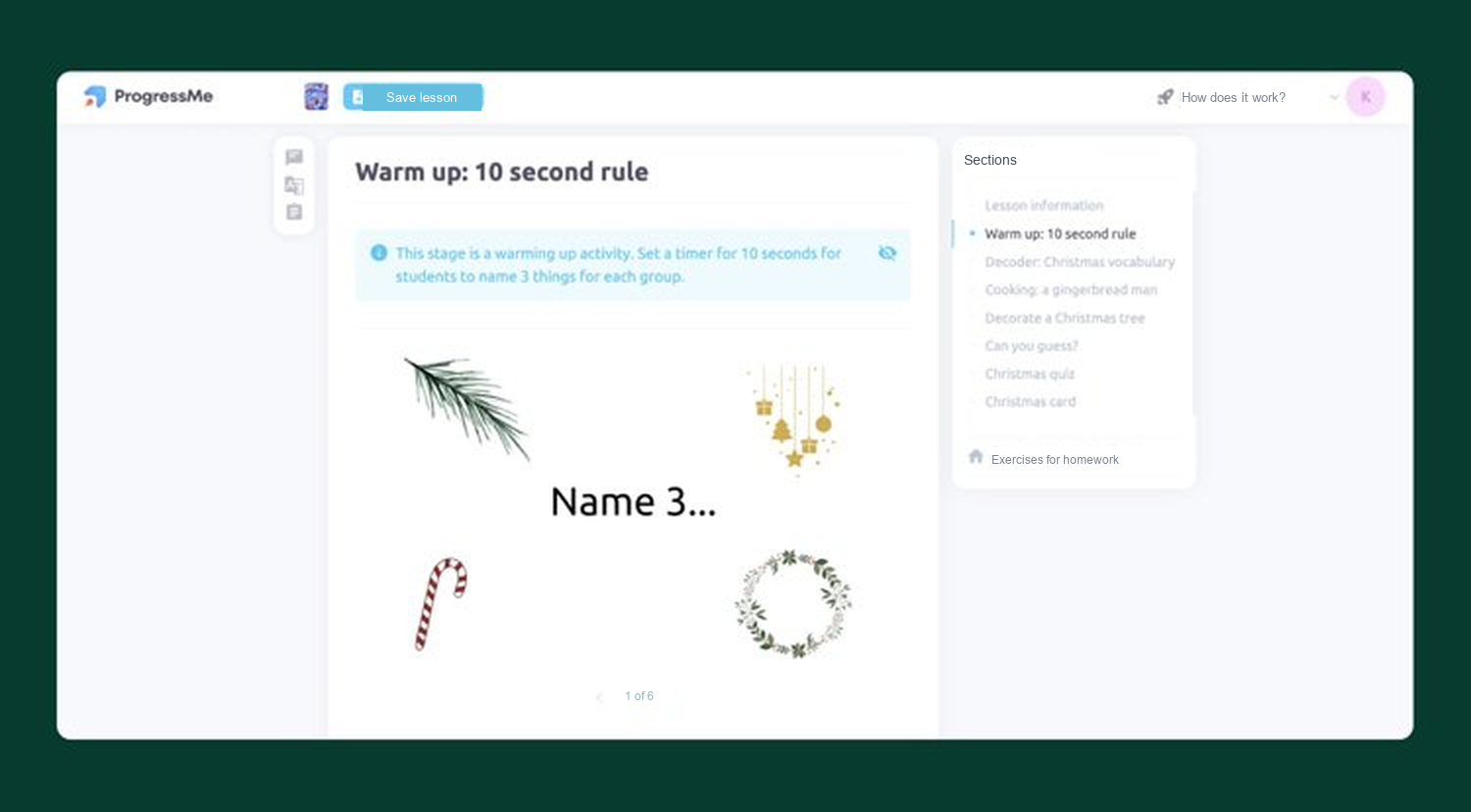
Use pictures of Christmas objects to bring out what learners already know.
Christmas vocabulary
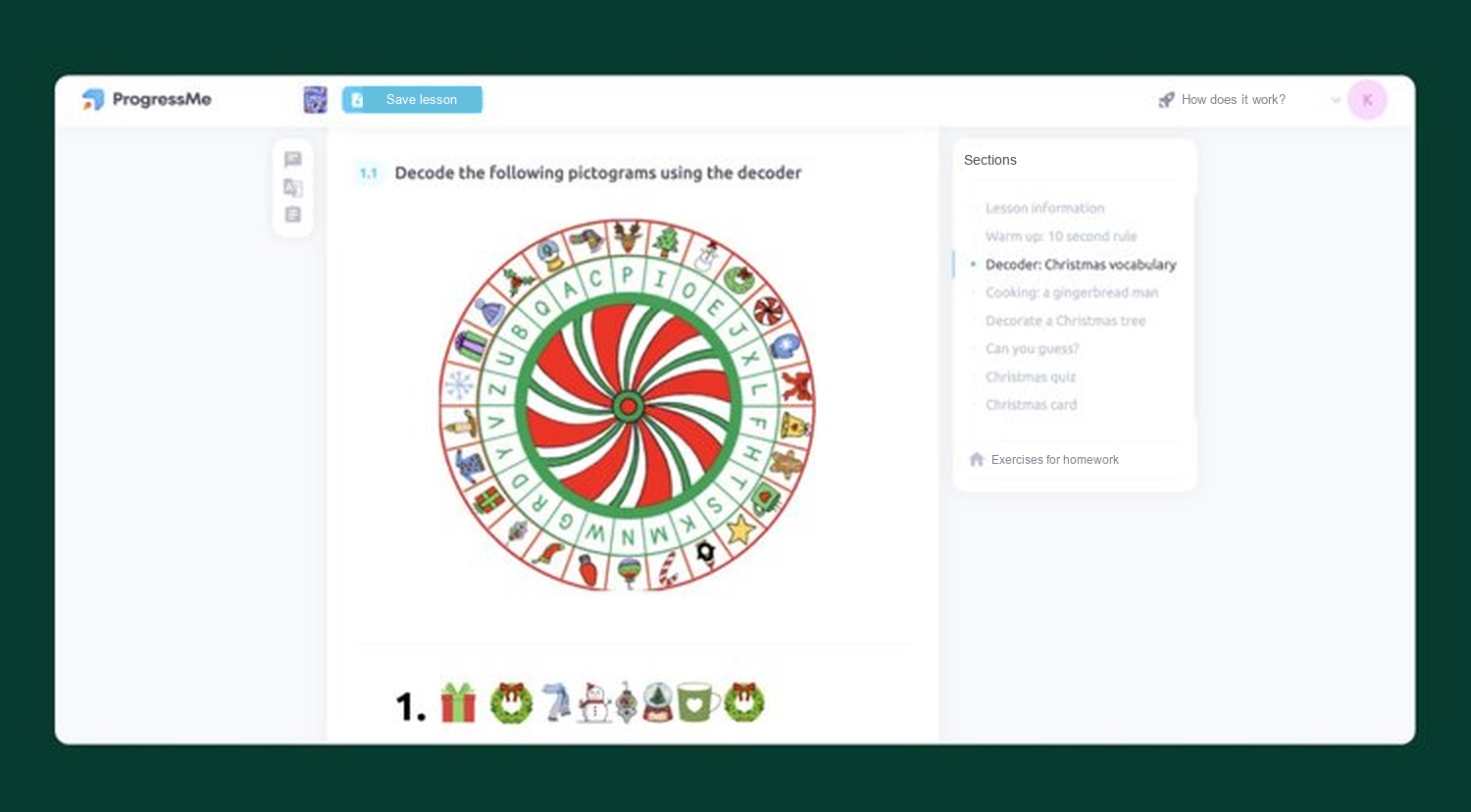
Ask learners to decode a festive pictogram, match words with pictures, and build a sentence from the supplied parts.
Cooking: a gingerbread man
Introduce the vocabulary through interactive activities. Then watch a video containing the new words and practise them in a gap-fill exercise.
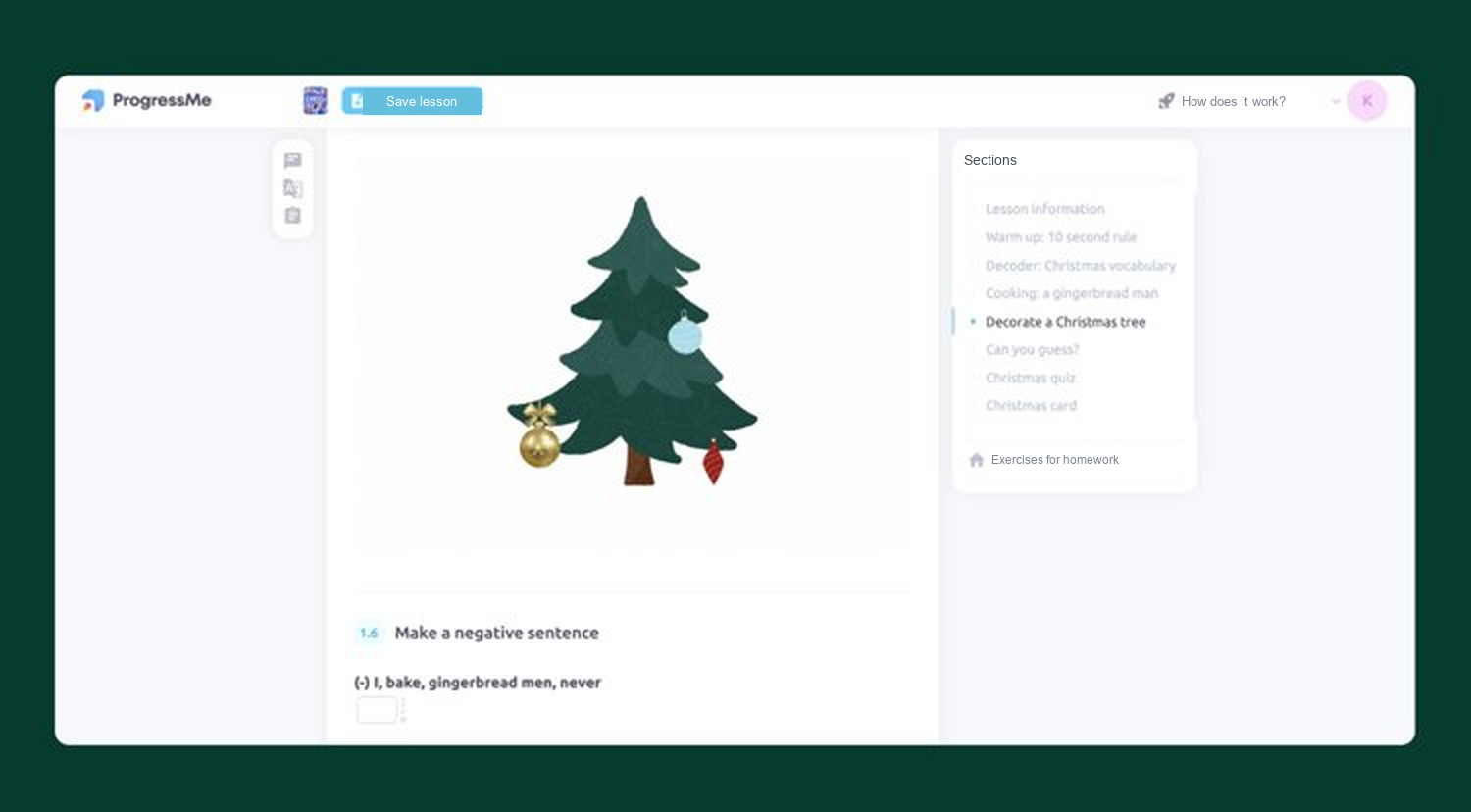
Decorate a Christmas tree
Use slides with an interactive tree to practise the vocabulary. Learners describe what is on the tree or ask questions. If they have not studied Present Perfect, use Past Simple sentences instead.
Can you guess?
Before listening, learners see a book with ink spilled across part of a page. Ask them to predict how the story ends, using the pictures as clues.
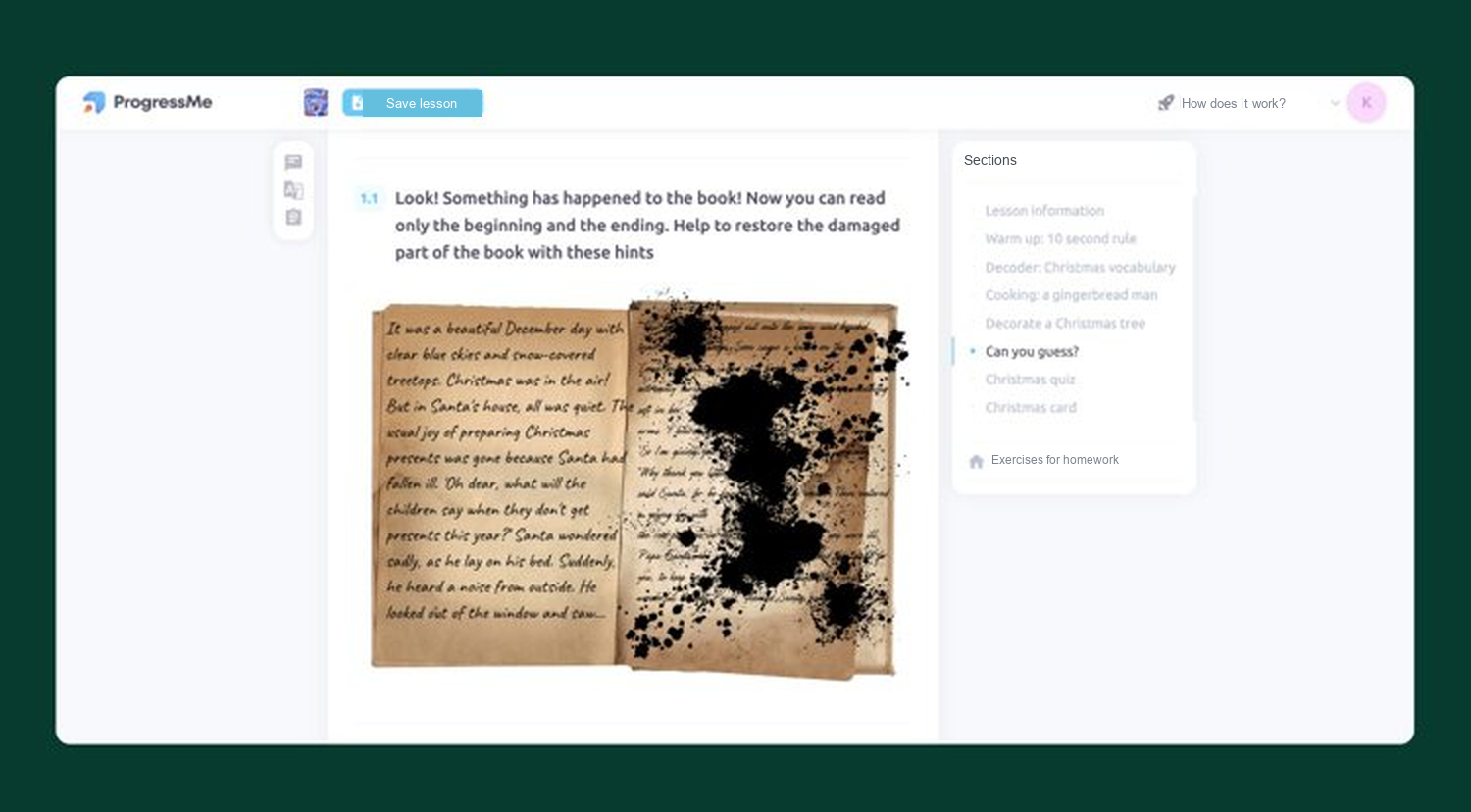
After the discussion, play the recording and complete the accompanying exercises.
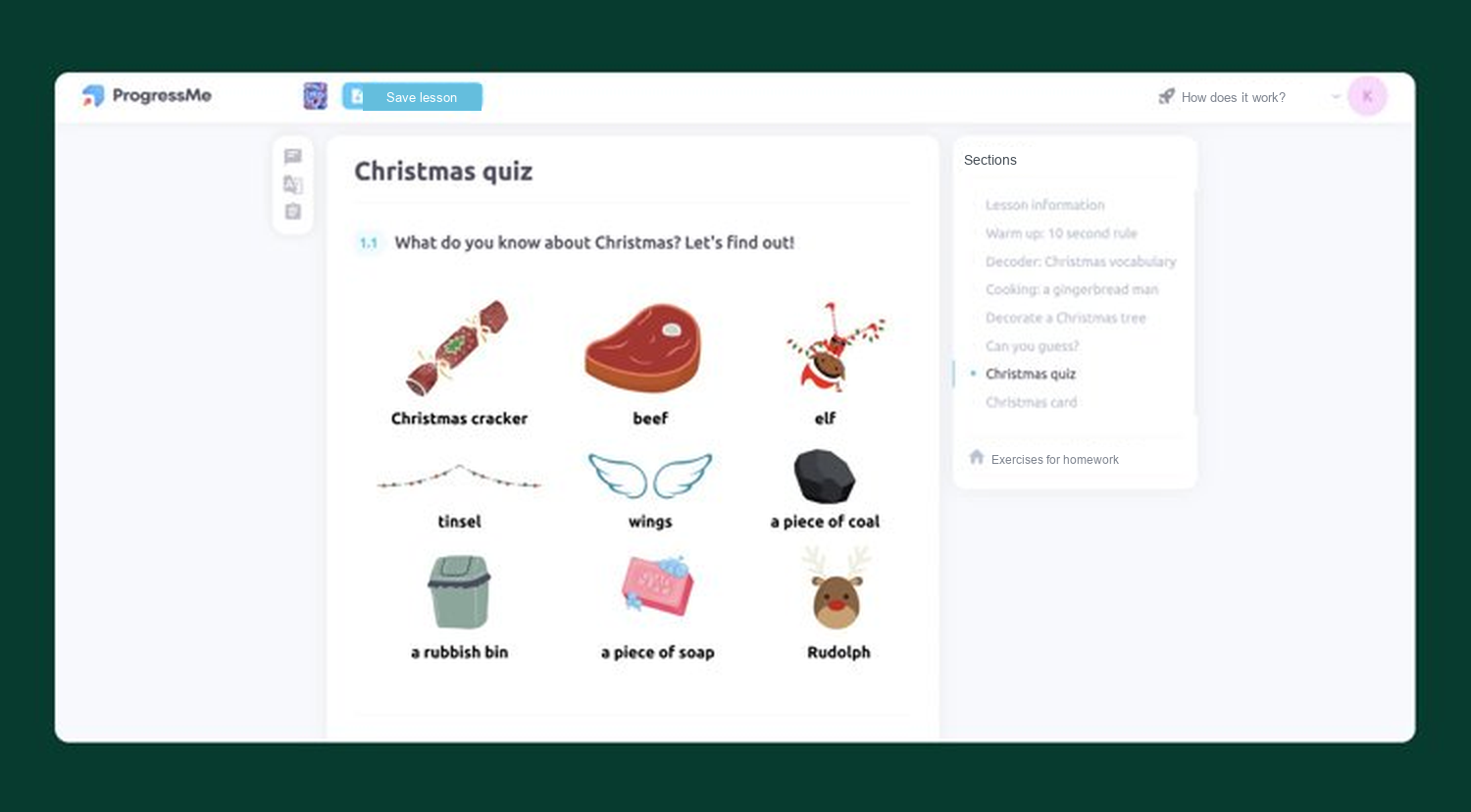
Christmas quiz
Review the vocabulary in an interactive quiz.
Christmas card
Learners see the complete card they have assembled through the preceding activities. Acknowledge the work they have done.
Why do we celebrate New Year (B1)
The lesson explores the origins of New Year celebrations and introduces vocabulary for talking about festive preparations and customs.
Lesson structure
Warm-up
Start by discussing other people’s comments about what New Year means to them.
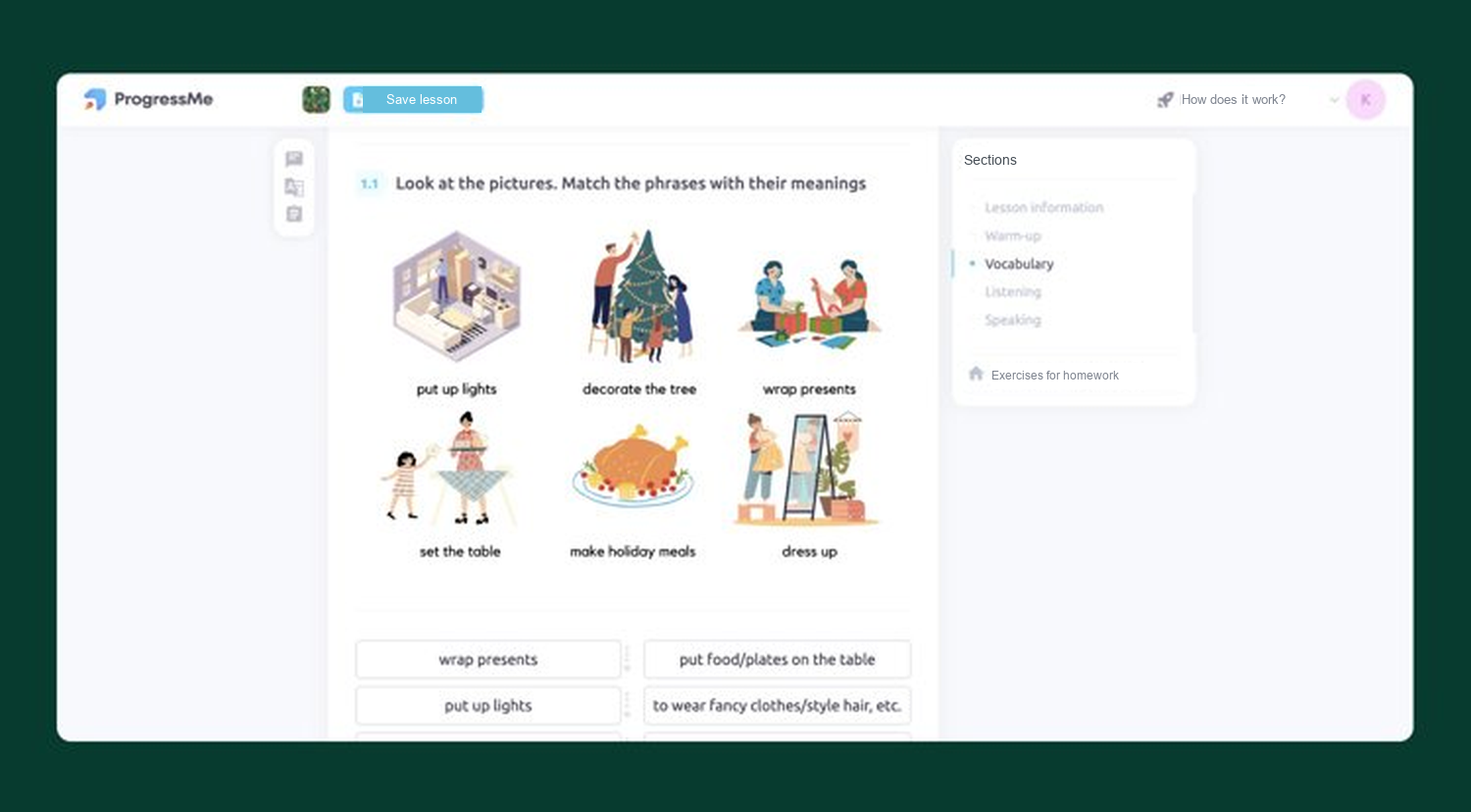
Vocabulary
Introduce the New Year vocabulary and practise it with matching and gap-fill exercises.
Listening
Prepare learners for the video with true-or-false questions and a look at the vocabulary it uses. Watch the video about the origins of the celebration and complete a gap-fill activity. Discuss it using the supplied questions.
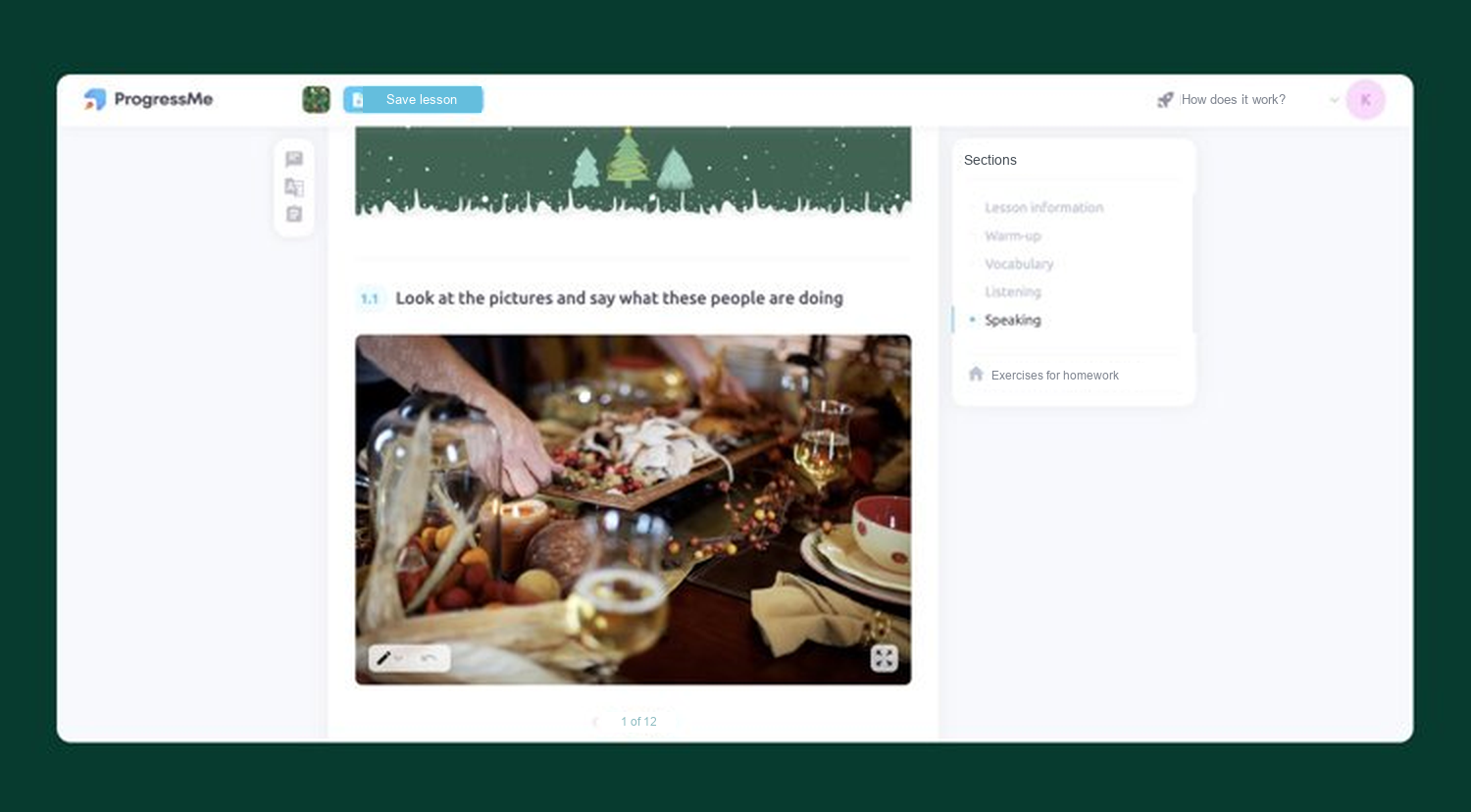
Speaking
Use the new vocabulary in conversation. Ask learners to describe pictures of New Year preparations, then put them in pairs or groups with question cards about how they celebrate.
Did Charles Dickens reinvent Christmas? (B1)
Explore the world of Charles Dickens’s A Christmas Carol. You can run the lesson as a quest with adults or teenagers.
Lesson structure
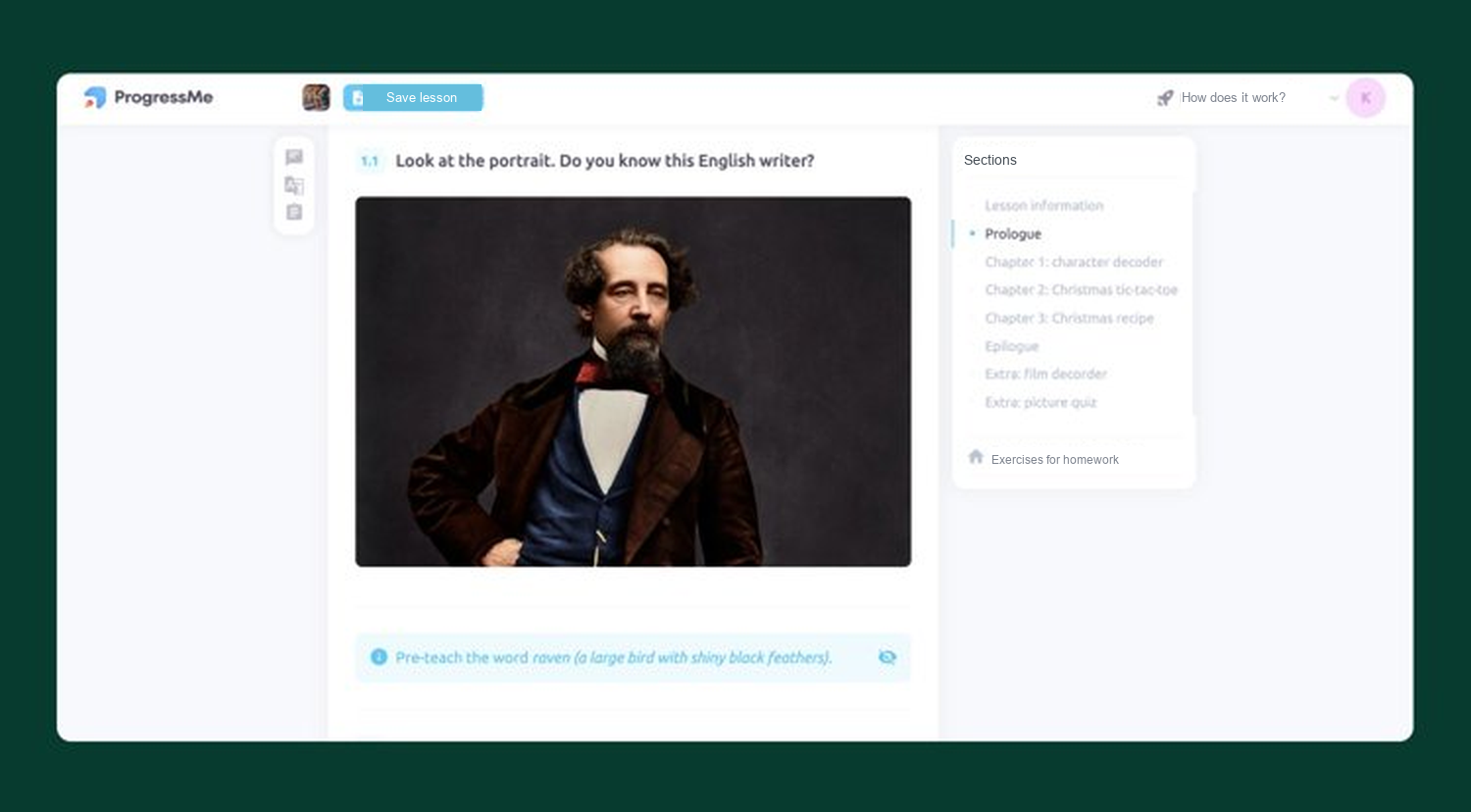
Prologue
Start with a quiz about Dickens’s life and work.
Chapter 1: character decoder
Learners meet the characters through a series of activities: decoding a pictogram, matching pictures with names, and describing the characters from their pictures.
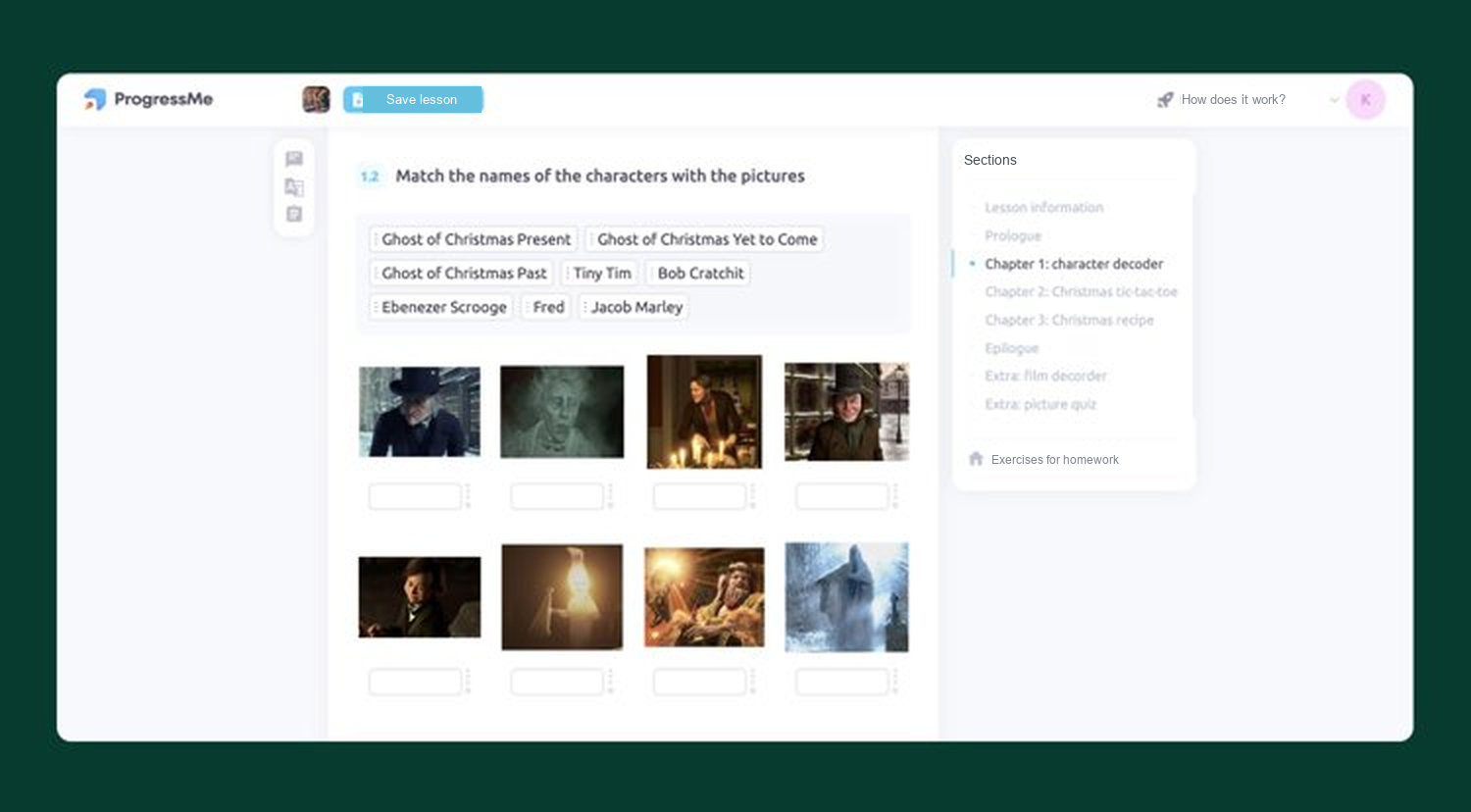
At the end of this part, show learners the first section of the story.
Chapter 2: Christmas tic-tac-toe
Introduce Christmas vocabulary through a game of tic-tac-toe. If learners need more support, do the vocabulary exercises first. Then reveal the second part of the story.
Chapter 3: Christmas recipe
Learners find out how to make Christmas pudding. Before watching Jamie Oliver’s video, introduce the necessary vocabulary through the interactive exercises.
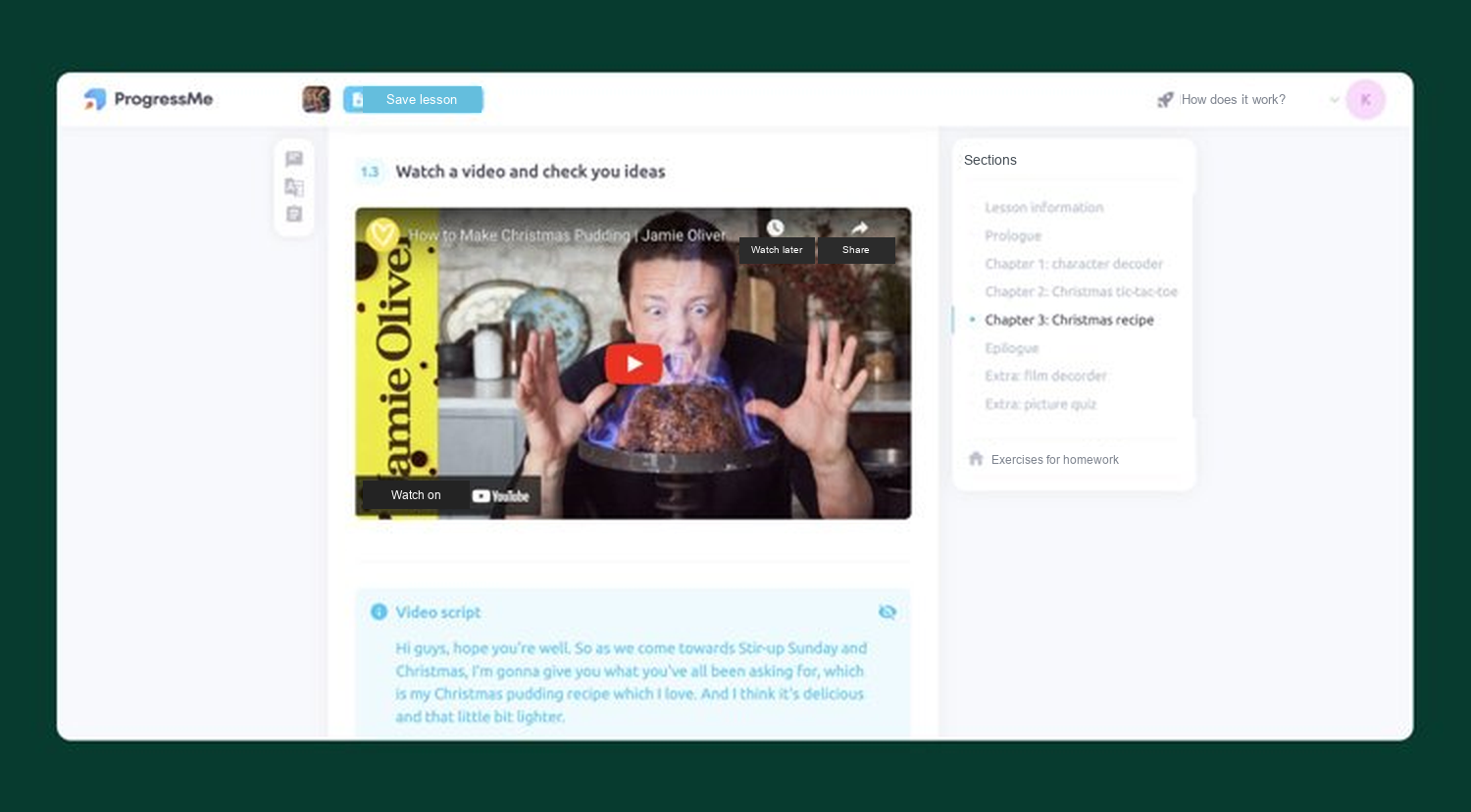
After watching, ask learners to reconstruct the recipe and complete the vocabulary exercise. Finish this section by discussing their favourite festive dishes.
Epilogue
Learners see all three parts of the Christmas story and put them in the correct order.
If there is time, use the additional guessing activities about popular Christmas films and pictures.
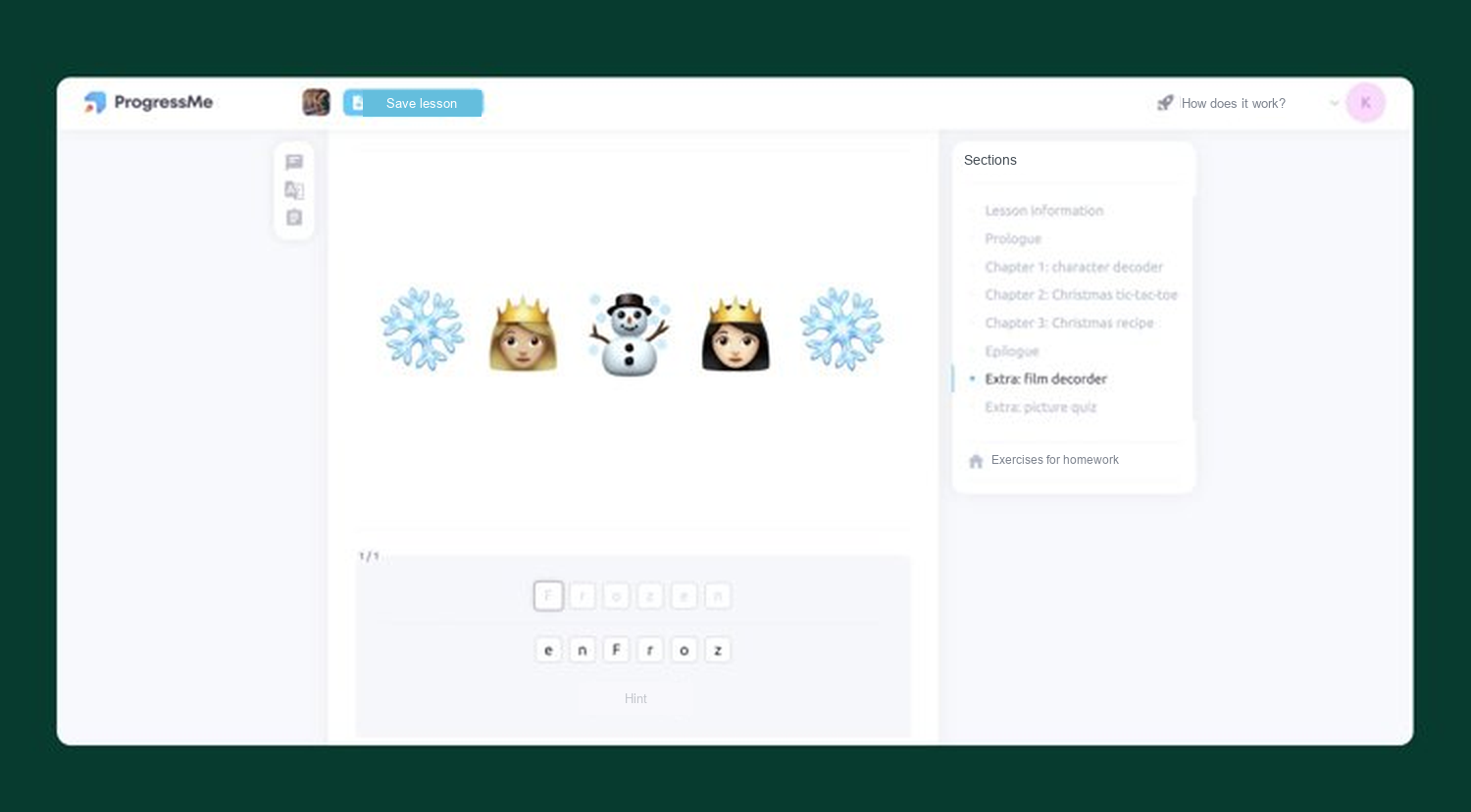
Use Edvibe’s lesson builder to organise the activities, add the media you have chosen and set follow-up tasks for homework.


