
5 Creative Warm-Up Activities for English Lessons


A warm-up helps students switch their attention to the lesson. Here are five activities to try when you want something more surprising than the usual opening questions.
Why use a warm-up?
Before a run, you warm up your muscles. Before a lesson, a short activity gives students time to put other things aside and start thinking in English.
Begin with something that makes the student curious. Familiar options include:
- A discussion
- A short video
- Pictures connected with the topic
- A quotation, idiom or proverb
Sometimes you want a different opening, especially before speaking or writing tasks that call for imagination. A short brainstorming activity gives students permission to experiment, look for unusual answers and have some fun before the main work begins.
The activities below can fit into a five-to-ten-minute opening. Adjust the prompts and support to your student's level.
1. A story behind a picture
Suppose the lesson is about art. Show the Mona Lisa and ask the student to imagine the story behind the painting. Give them a few questions in the language they are learning:
- Who was Mona Lisa?
- Why do you think da Vinci chose to paint her?
- How many hours or days might she have spent posing?
Let the student invent a story. You can then compare it with the painting's history, if you have checked those details in advance, and move into the lesson.
Any picture can work. Choose one with details that give the learner something to wonder about.
2. Role-play
Give the student a real or imaginary character: an actor, entrepreneur, film character or someone they invent. Add a short description or a situation so they have a reason to speak.
For example: you run a social media company and can buy another platform. Which one would you choose? What would you change? How would you make it better?
The role lets the student explore a situation they would not normally encounter. If the celebrity is unfamiliar, choose someone else or invent a character together.

3. Very bad ideas
Give the student a problem and ask them to solve it as badly as possible. For a lesson about health and exercise, you could ask: “How could we get people to exercise more?”
Allow a few minutes for deliberately terrible suggestions. One example is a tax for anyone who takes fewer than 10,000 steps a day. Ask why each idea would be so bad, and welcome the unexpected answers.
4. A new use for an ordinary object
Choose an object: a pencil, a sheet of paper, a cupboard, a straw or a guitar. It can connect with the lesson topic, but it does not have to.
Ask the student to sketch three to nine unusual uses for it. Give them a few minutes to think, then invite them to explain their inventions. How could a guitar become a piece of exercise equipment? What would have to change?
5. Draw a phrase
Use a shared drawing tool you have checked beforehand, or simply ask the student to prepare paper and a pen.
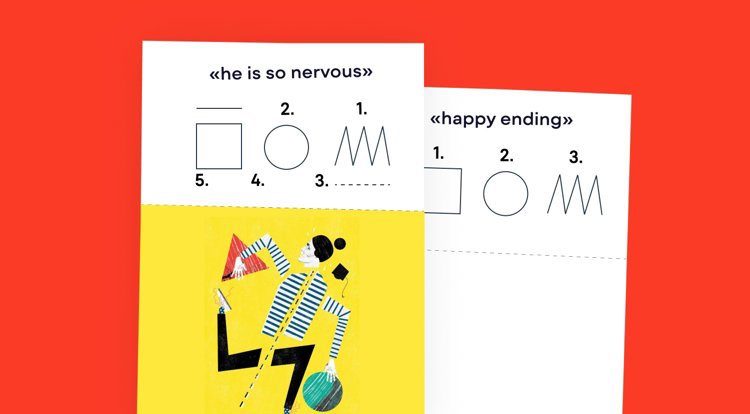
Offer a small set of shapes: a circle, a zigzag, a straight line and a square. The exact shapes matter less than keeping the choice manageable.
Give the student three English phrases, such as “He is so nervous”, “A happy ending” and “The art of noise”. Ask them to draw each phrase using at least two shapes, then explain how their picture represents it.
Making the warm-up work
1. Join in. An example of your own can help a hesitant student get started.
2. Respond to the student's ideas. During brainstorming, give them room to develop a suggestion without treating every answer as right or wrong.
3. Keep an eye on the time. You do not need a hundred ideas. Explore one interesting answer, then use it to lead into the main lesson.
Prepare the prompt, picture or drawing space before class so you can start without searching for files. Explore Edvibe if you are choosing a place to organise your online teaching materials.


