
How to Create an Online Course People Finish


A learner buys a course, completes the opening tasks and then falls behind. Course creator Alina shares five ways to prepare for that point, from a practical introductory module to support when enthusiasm fades.
Tip 1. Start with an introductory lesson
My favourite advice for anyone creating a course is to include an introductory lesson, or Module 0. Alongside the programme, format and practical details, add a lesson on organising your learning. Personally, I find getting ready to study one of the most inspiring parts of the process. Here is what I suggest:
- Give learners a course map showing every module and its timing.
- Ask them to put important dates in their calendars, including when modules open.
- Ask them to print the workbook or set aside a notebook.
- Provide a preparation checklist:
- Advice on planning their time. Respect the fact that learners have lives outside your course.
- Details of the folders they will need on their computers and any software they can download in advance.
- A practical suggestion for staying motivated.
- A reflection task: “Where I am before starting this course.” It establishes a starting point in a more personal way.
Tip 2. Leave room for creativity
Think about what successful learning will look like before the course begins. It is not always a matter of grades and homework. People need creative freedom and different ways to show what they have learned.
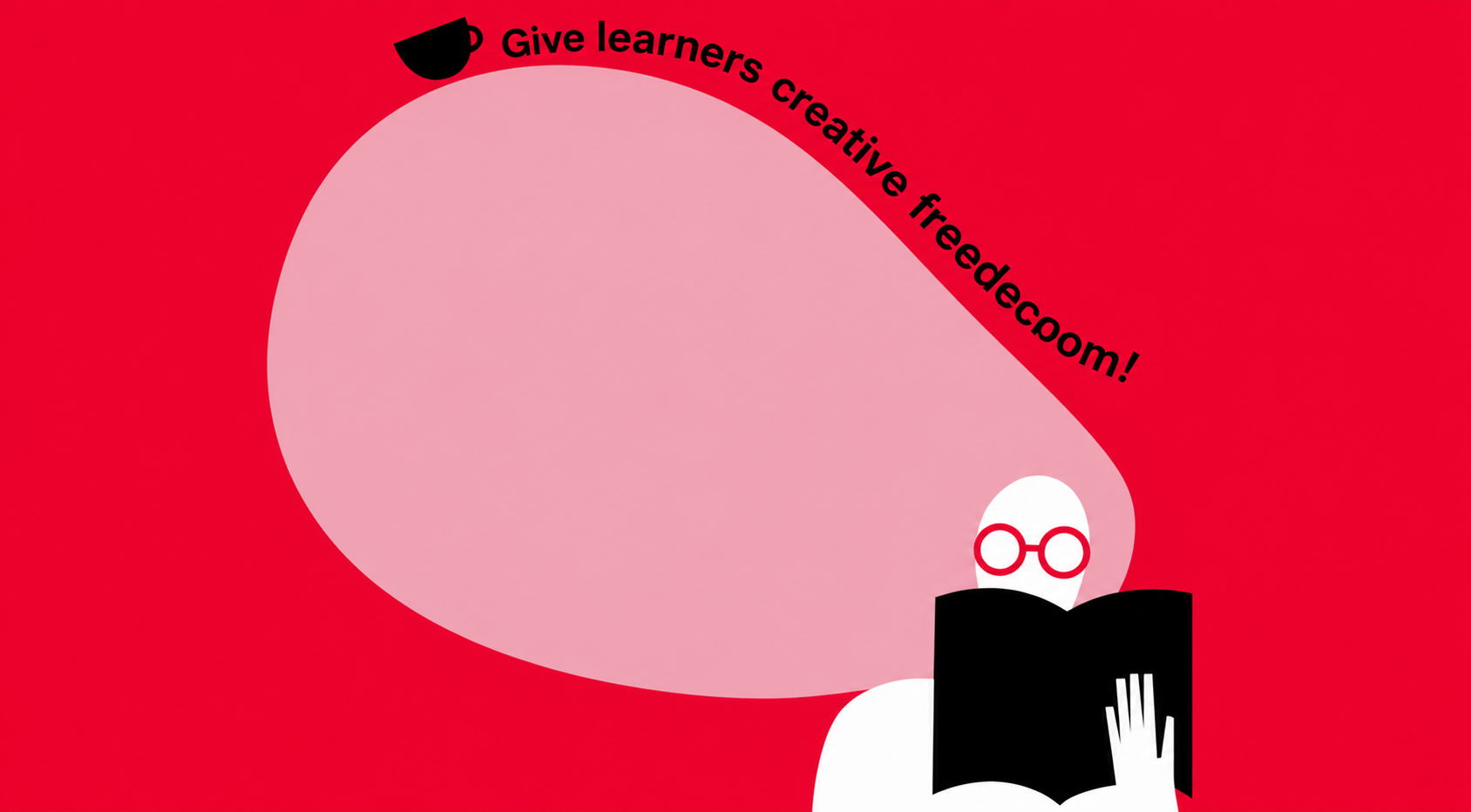
Learners can demonstrate their understanding in different ways. Not everyone wants to do conventional homework, and that is fine. Offer another way to respond. For example, at the end of a module they could reflect on what they understood, what they enjoyed and what did not work for them. Some technical subjects allow less freedom, but there is usually still some room for choice.
Tip 3. Understand the learner’s motivation
- Their immediate reason for taking the course.
- Any additional reasons.
- Their longer-term motivation.
You can simply ask each learner about these. A questionnaire is one way to do it.
Tip 4. Follow the learner’s journey through the course
A funnel within a course works on the same principle as a sales funnel, but serves a different purpose. A sequence of emails can guide learners from buying the course to completing it.
I would identify roughly five stages between purchasing the course and receiving a certificate. Map two paths alongside each other: the learner’s emotional experience and the practical steps they take.
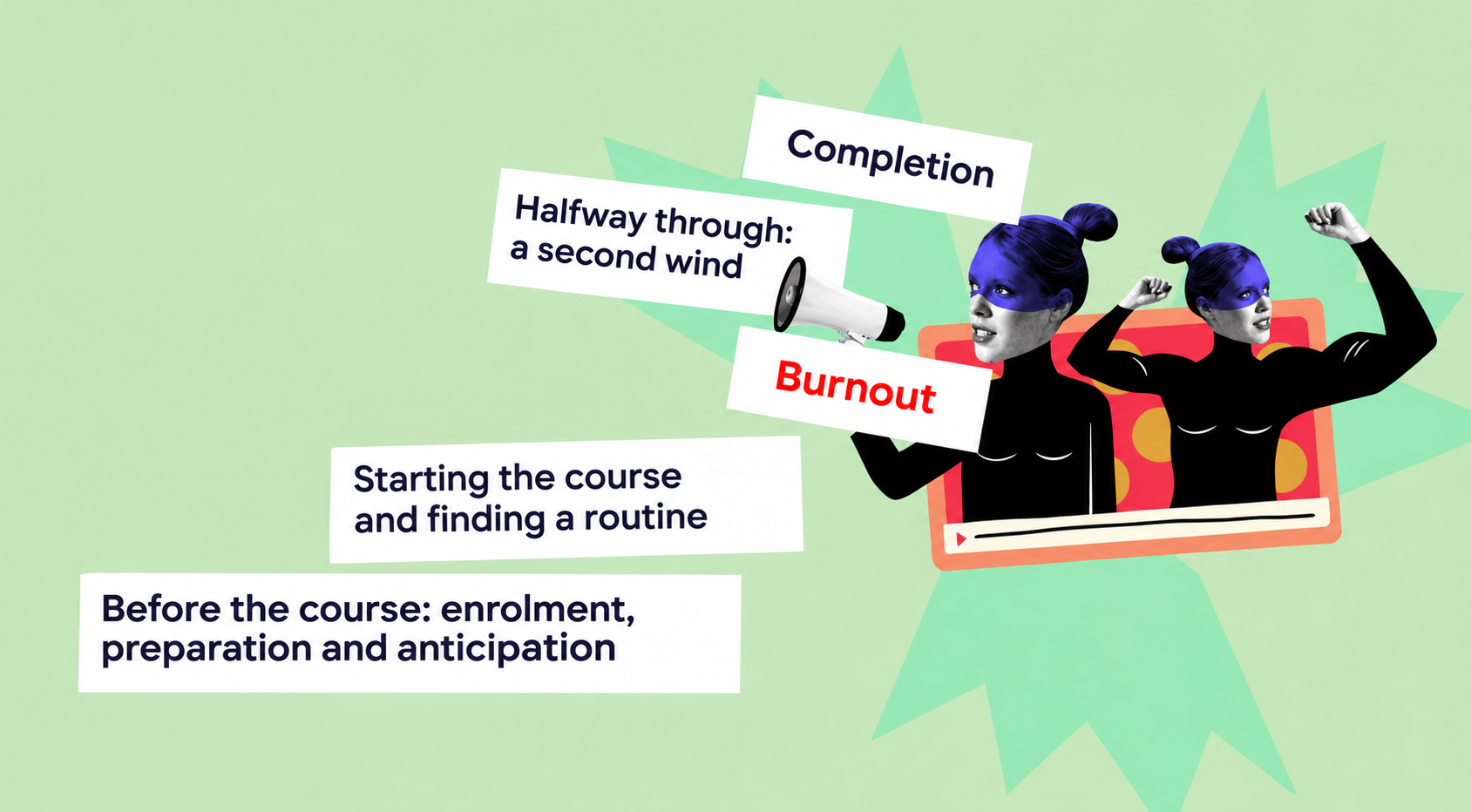
Stage 1. Before the course: purchasing it, preparing and waiting for it to begin.
Stage 2. Starting the course and getting used to how it works.
Stage 3. Burnout.
Stage 4. Reaching the halfway point and finding a second wind.
Stage 5. Finishing. Explain how learners can continue without your support. Review what they have done, ask for feedback on the programme and collect their results. Do not forget people who have fallen behind. Give them a couple of weeks to catch up and some light support, such as a final webinar.
Tip 5. Plan for the point when enthusiasm fades
In my experience, this often happens around the middle of a course. You can anticipate it and add something that helps learners re-engage. Gamification can work here: an activity that supports learning without simply repeating the course material. An extra webinar, a guest psychologist or a session reviewing progress can help change the mood. Another option is a learner-led day, when students take the role of the experts.
Why completion is not always a measure of success
Completion rates are a sensitive subject for course creators because they are often treated as proof that a course works. I do not think that is always a fair measure. Much depends on the audience, the activities and the way the course is delivered. Sometimes a high completion rate simply shows how often learners were pushed to keep going.
As a learner, I have taken many different courses. Some of the best involved very little monitoring. Adult learners make their own decisions about what to study and how. You can raise completion rates through pressure: award homework points that increase the chance of winning a gift, or lock the next module until the previous one is finished. But be prepared for disagreements with learners over those rules.
Ask yourself why you need everyone to reach the end. If you see it as confirmation of your expertise, the connection is not that simple. Someone might return to your course six months later. You can use less forceful ways to encourage participation, including gamification. Instead of “Write a review or we will close your access,” try “Write a reflection after this module.” People often prefer describing their own experience to listing the strengths and weaknesses of your product.
Sometimes the course simply is not right for someone: the topic, format or timing may not suit them, or their circumstances may change. They may leave or request a refund. Keep collecting feedback. Analysis, spreadsheets and statistics are part of running a course too. We discussed why in the first article: how to create a successful online learning product from scratch.


