
How to Plan an English Lesson Around a Clear Learning Goal

If your lessons lack structure, start by deciding what the student should be able to do at the end. Then choose the language and activities that will help them get there. This guide walks through a lesson plan with examples.
How to set a lesson goal
“Cover going to” names a grammar point. “Talk about plans” describes something the learner can do. For that conversation, you might need I'm going to, the Present Continuous and vocabulary connected with the student's plans.
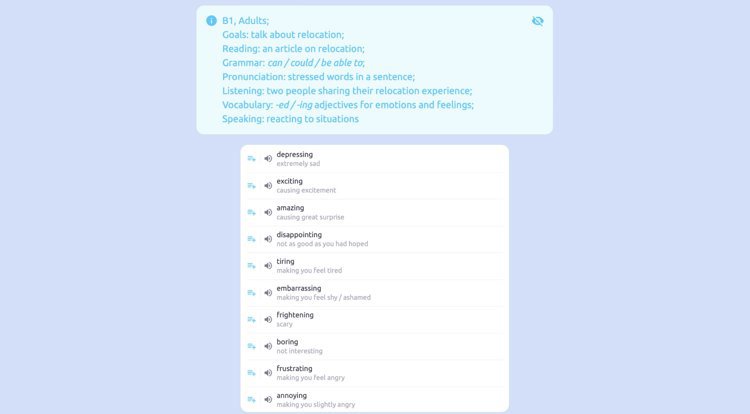
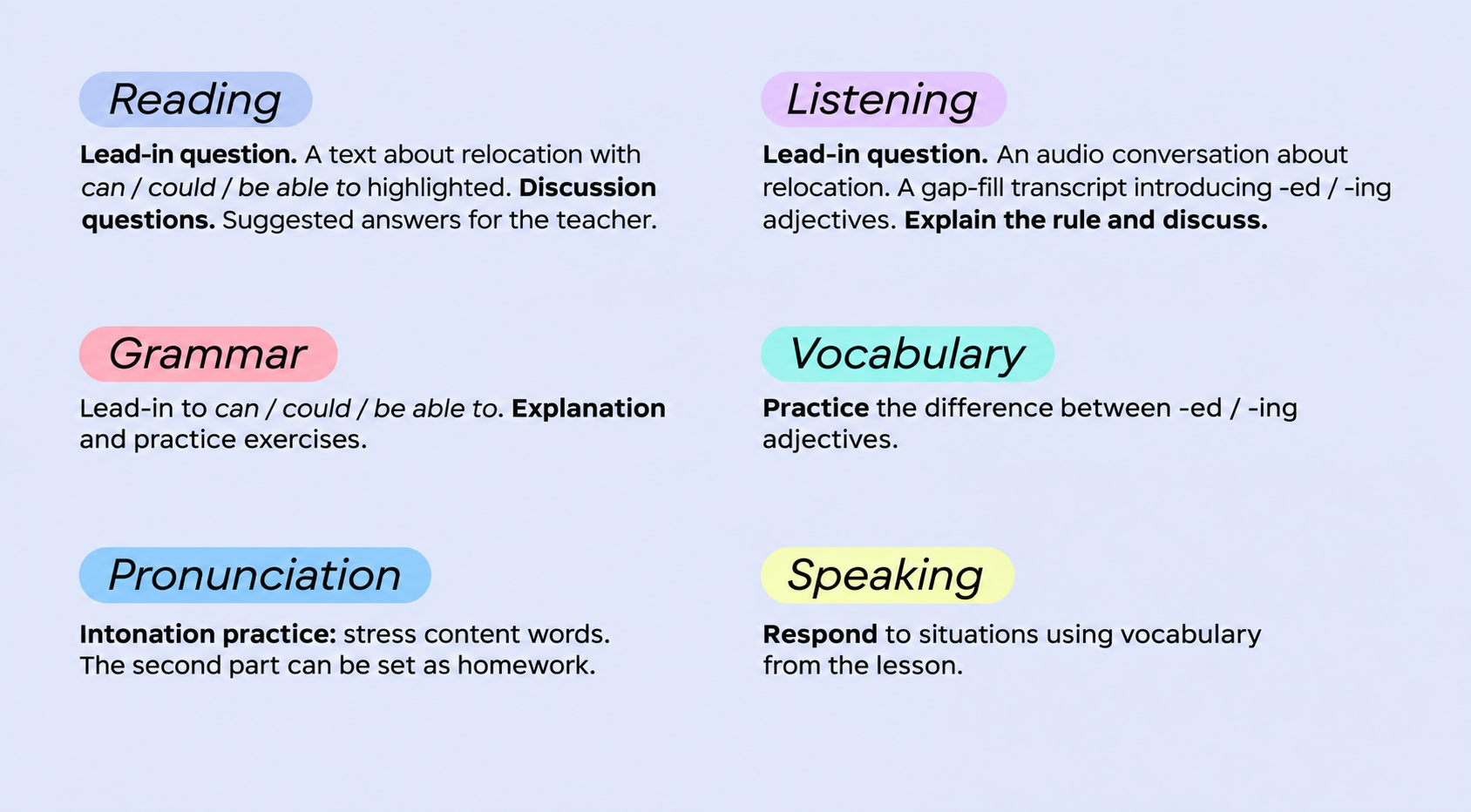
Choose the materials after the goal. The Relocation lesson idea helps B1 students talk about moving abroad. Its materials include can, could, be able to and the difference between -ed and -ing adjectives.
Here is the target vocabulary alongside the lesson overview:
A language lesson often has four parts:
- Greeting and quick revision: 2–3 minutes
- Warm-up or lead-in: 5–7 minutes
- Main activities: 30–40 minutes
- Wrap-up or cool-down: 3–4 minutes
These are starting allowances, not a fixed timetable. Adjust them to your lesson length and leave time for instructions and transitions.
Greeting
Greet the student, ask how they are and give them a chance to share news. Bring back something from the previous lesson with a question, a game or a picture description.
Warm-up
A short opening activity helps students turn their attention to the lesson. A lead-in connects with the topic; a warm-up can stand apart from it.
For a lesson about future plans, use travel, work or study as a starting point. Ask about an upcoming trip, or show three to five destinations and ask where the student would like to go. Follow the student's interests rather than forcing a conversation they have little to say about.
A talkative student may only need an interesting question. A student who struggles to begin may need ideas, useful words or sentence starters.
Move into the main lesson by explaining what students will do: “Today we'll talk about travel plans and practise explaining what we've already arranged.”
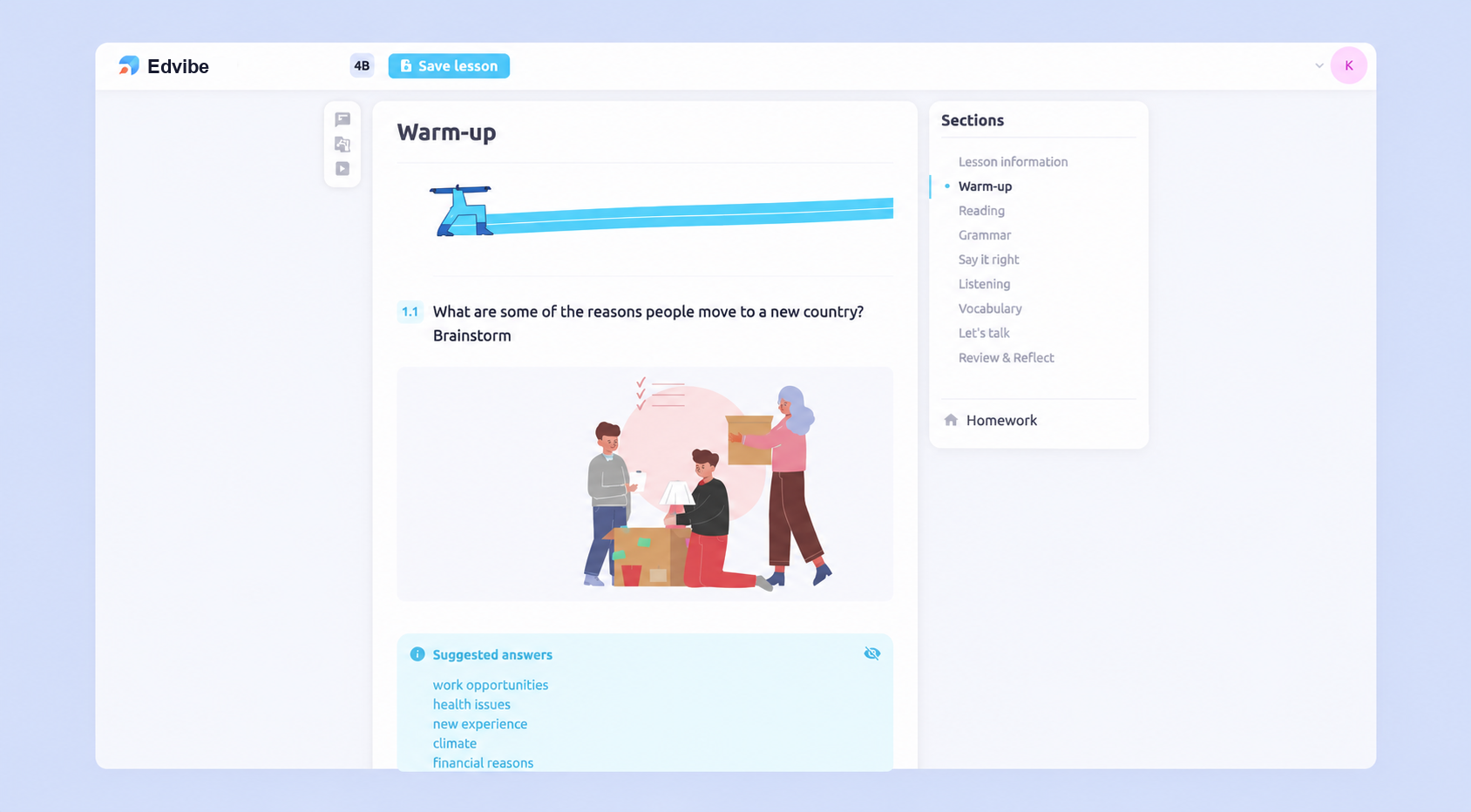
Here is the opening activity from the Relocation example.
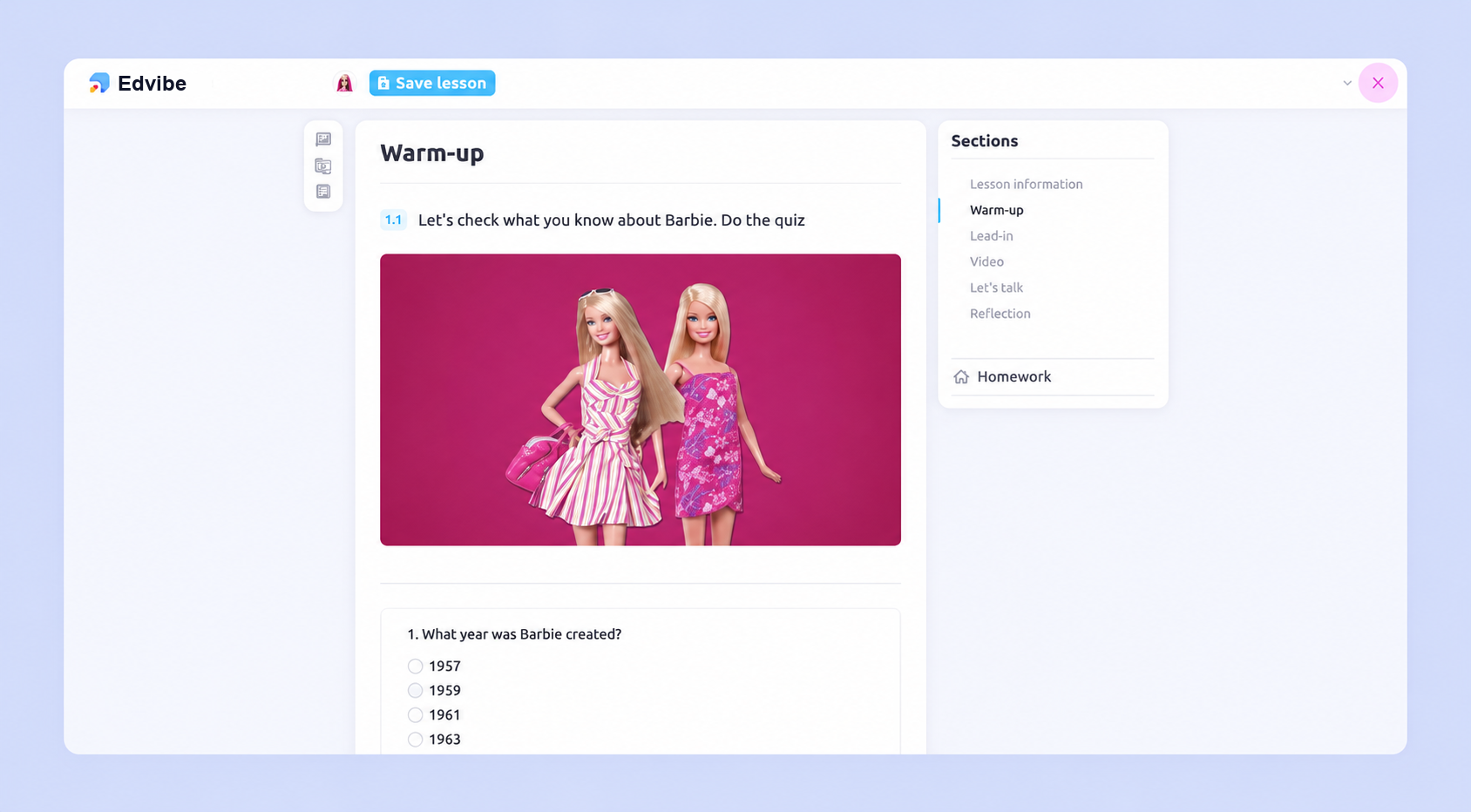
You can vary the format. The Barbie lesson example begins with a quiz, while the Christmas activity uses pictures to prompt vocabulary.
The main part of the lesson
Introduce the new language, then use content and tasks to help students understand and practise it. Choose the difficulty and amount of material by their level, goals and response during the lesson.
Grammar can grow out of the topic. After a travel lead-in, give students a short exchange about two people's plans. Look at examples of going to and the Present Continuous, discuss their meaning, then practise using them.
Move from tasks with more support to tasks with more choice: select a form, create it, use it with a prompt, then use it in a conversation about a picture or a real plan.
Principles for planning the main activities
- Keep a clear thread. If the lesson begins with travel, an unexplained jump to fitness gadgets can make the sequence hard to follow.
- Leave room for students to speak. A lesson filled with reading and written exercises may leave no time for the conversation you planned.
- Connect exercises with questions. After one or two tasks, ask a question that calls for the same language in the student's own answer.
- Vary activities when it helps. A change of format can be useful, especially with children, but every new task still needs a purpose.
- Put tasks in a logical order. Bring back vocabulary before a recording that uses it. Check meaning before asking students to use a new expression independently.
Prepare an extension for quick finishers: another question, role or decision within the same situation. Also decide what you could shorten or move to homework if something takes longer than expected.
Methods such as Test–Teach–Test and Presentation–Practice–Production can help you choose a sequence. One planning outline is:
- Instruct and model
- Guided practice
- Independent practice
- Assessment
The illustration below shows how reading, listening, grammar, vocabulary, pronunciation and speaking can support a single lesson topic.
Wrap-up
Give the student time to look back at what they have done. Offer specific feedback, ask what they remember and discuss where they could use the language.
A few questions may be enough. A short quiz or game can also work if it shows you what the learner can do.
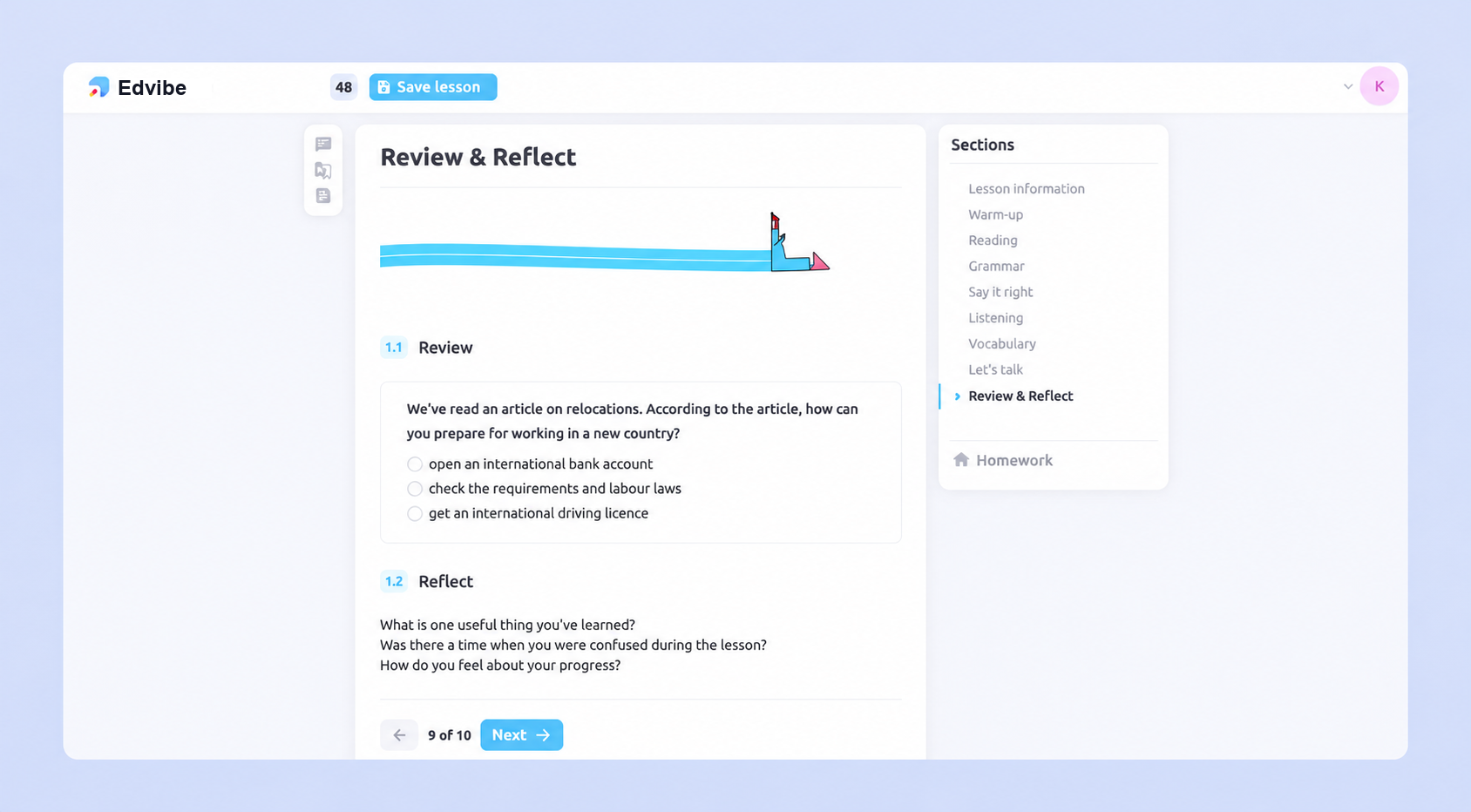
This is a chance to check the opening goal and hear the student's feedback. In the Relocation example, students review the content and reflect on what helped or remained difficult.
Keep the plan usable during class
Whether you use a ready-made lesson or build your own, check the sequence before teaching. Can the student find the text, recording and tasks? Which activity is essential to the goal? Which could wait?
For a lesson of your own, Edvibe’s builder lets you organise texts, recordings and interactive exercises in one place. Use the examples above as planning models and choose material you have permission to use.
If you are choosing a place for your materials, explore Edvibe. During the lesson, use the plan as a guide: notice when the student needs a different pace or more support, and adjust the sequence accordingly.


