
The PPP Teaching Method: Presentation, Practice and Production

PPP is a familiar way to structure a language lesson: introduce the language, practise it with support, then give learners a chance to use it for themselves. We look at the sequence, its strengths and its limitations.
The letters stand for Presentation, Practice and Production. You may recognise the first two stages from school: a teacher explains something, then students complete exercises. In a language lesson, the third stage matters just as much. Students need a reason to use the language without being told every word to say.
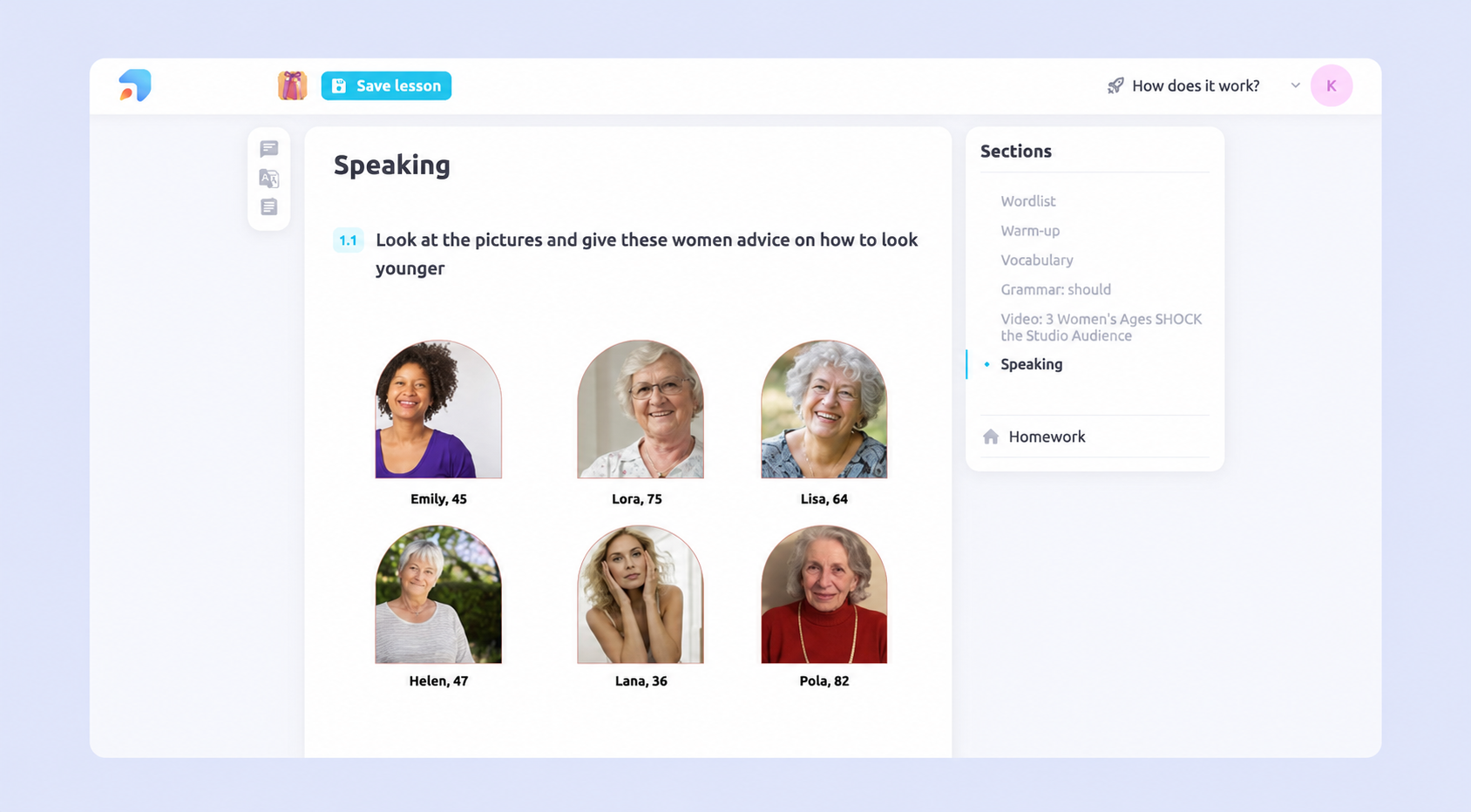
PPP can help when learners need a clear model and an explanation before practising. The screenshots below illustrate its stages through an A2 lesson called Guess My Age as a worked example. Use the sequence to plan your own explanation, practice and advice-giving task.
1. Presentation
Introduce the language through a picture, video, short text, presentation or situation. Explain its meaning and form, and model how it sounds.
Keep the surrounding language familiar. For example, an unfamiliar phrase such as got away in a sentence about a song can distract students from a lesson on which, that and who. They may spend their effort interpreting the example instead of noticing the structure.
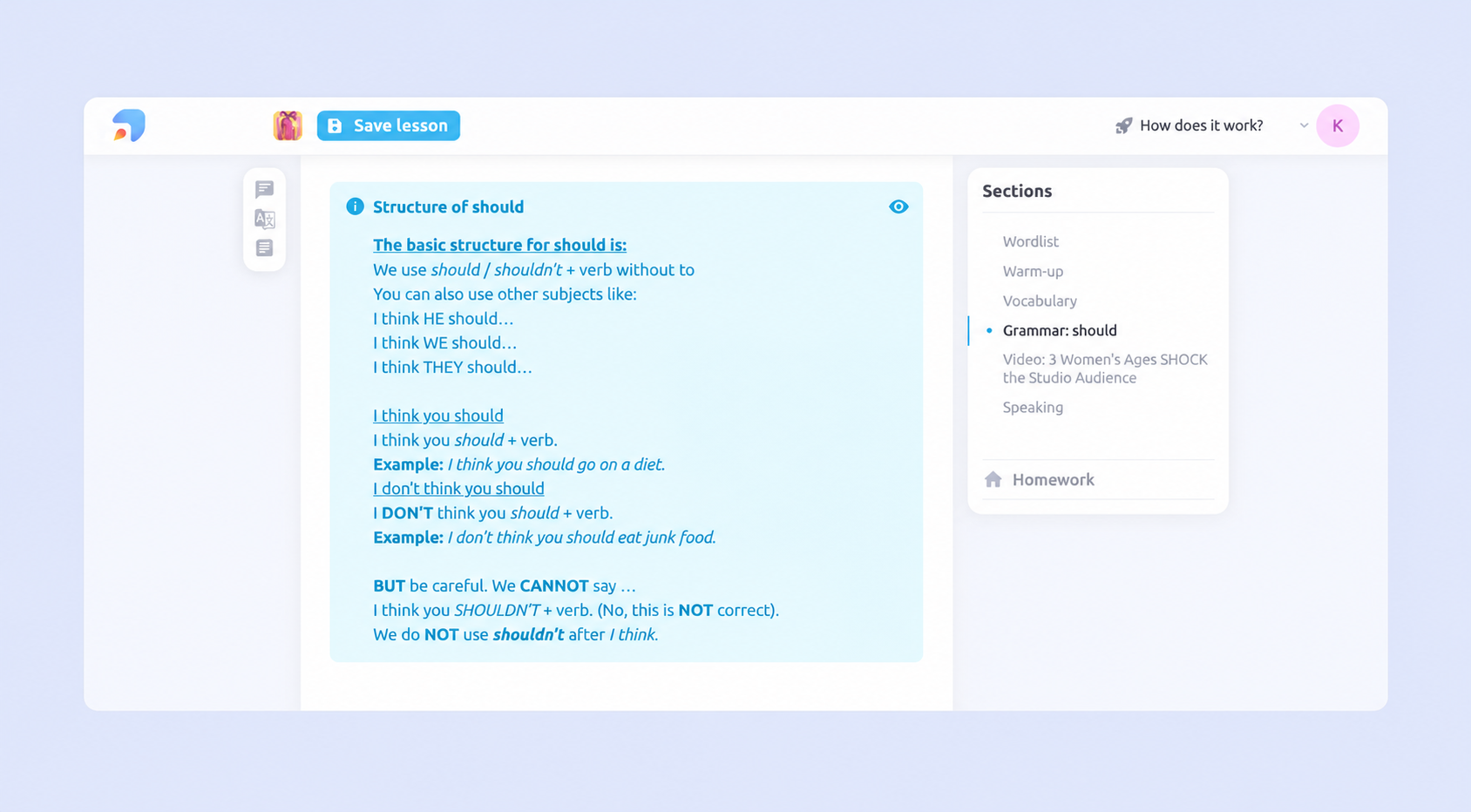
In the example lesson, the teacher introduces should, explains how it works and gives model sentences.
2. Practice
Students now work with the language through controlled exercises. Options include:
- Filling gaps
- Matching words with meanings
- Putting words in the correct order
- Building sentences from prompts
- Correcting mistakes
The aim is to check that students understand the form or meaning and can reproduce it accurately. For example, they need to notice I'm interested in something, rather than I'm interested at something.
Choose the amount of practice by what the learner does. If they work accurately and confidently, two or three different task types may be enough. If mistakes continue, identify the difficulty, explain it again where necessary and offer another attempt.
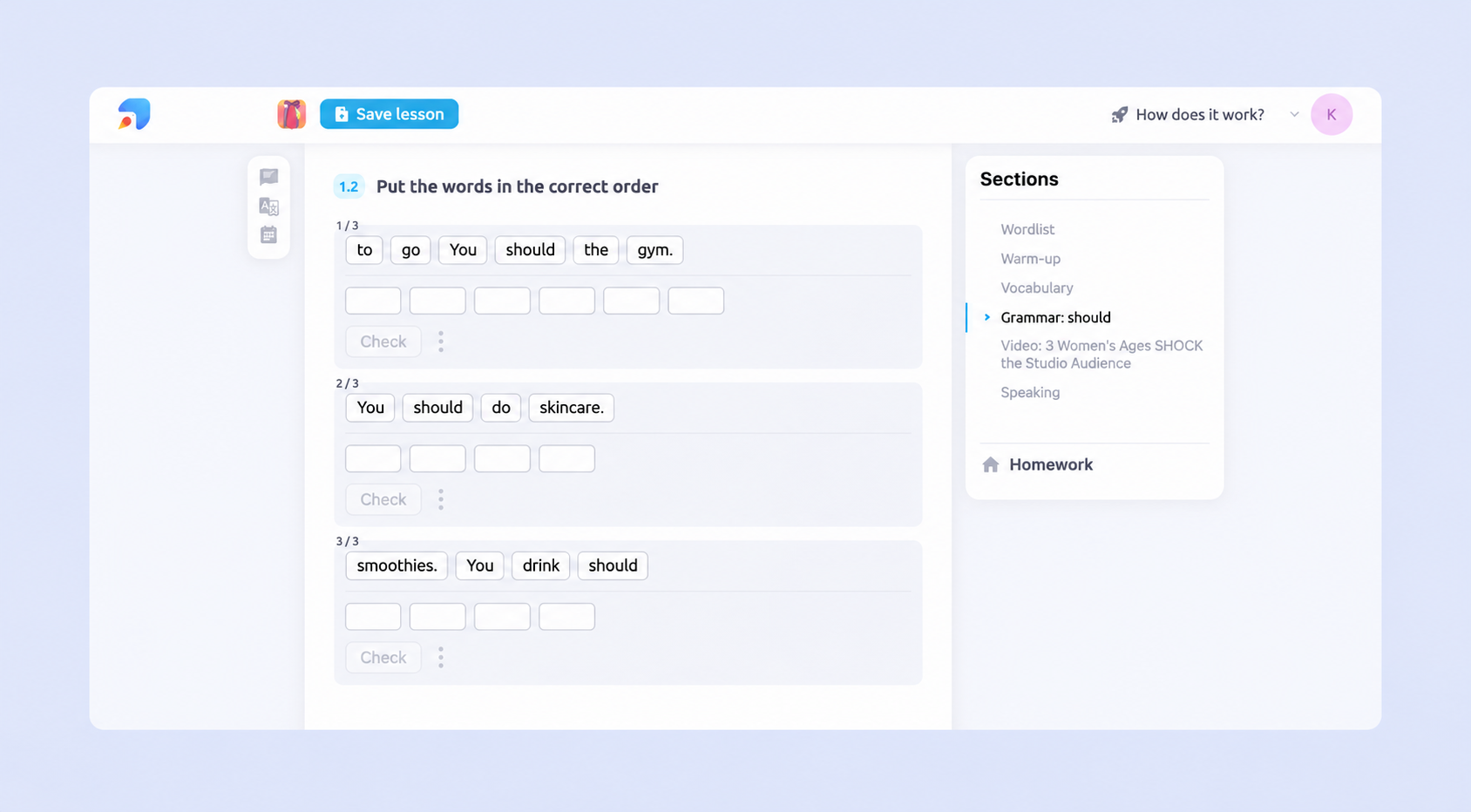
In Guess My Age, a word-order exercise follows the explanation.
Students then watch a video in which women give each other advice about looking younger, using should. A follow-up task asks learners to complete expressions from the video.
3. Production
In the final stage, students use the language in a task where they make choices about what to say. A gap-fill provides most of the message; a discussion or role-play asks learners to create one.
This step can be difficult even when the preceding exercises went well. Leave useful words, pictures, sentence starters or situations visible if the student needs support. Beginners may need help turning an idea into a sentence.
One example task asks students to give advice with should. A useful support is: To feel better, you should…
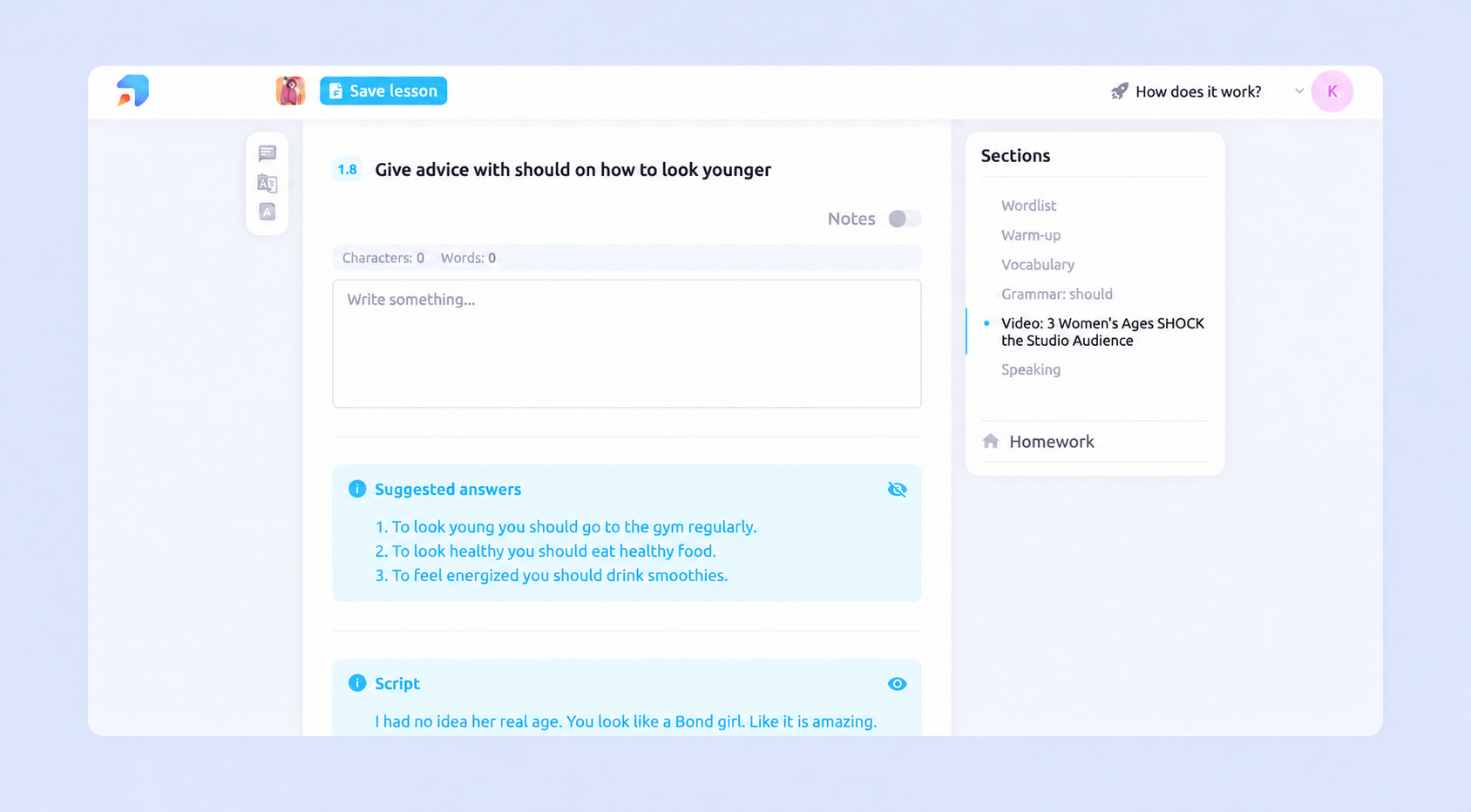
The next task asks learners to give advice to the women in the pictures, using should and vocabulary from the lesson. The portraits give the student someone to address rather than another isolated sentence to complete.
What to watch when using PPP
The explanation needs to leave room for practice and production. A rough starting balance is 1:2:3, but adjust it to the learner and the task rather than treating it as a fixed rule.
Check how your materials are organised. A unit that starts with a task may need a different teaching sequence. That opening alone does not establish that the whole unit follows Task-Based Learning. Look at the purpose of the activities before adapting them.
Limitations of PPP
- The teacher can end up doing most of the talking, leaving too little time for students to speak.
- Controlled exercises emphasise accuracy. Success in them does not automatically transfer to fluent conversation.
- Presentation can expand to fill the lesson if every question leads to another explanation.
Use the production task to see what students can do independently. If they avoid the target language, consider whether the situation calls for it and whether they need more support.
You can prepare explanations, exercises and discussion prompts together before teaching. Explore Edvibe if you are choosing an online teaching setup.


