
Teaching Beginners in English: Maria Vasilyeva’s Approach

Teachers sometimes use Russian with beginners because they worry that students will not understand an explanation in English. Other teachers believe English can be introduced from the first lessons, with appropriate support. One of them is Maria Vasilyeva, an English teacher and teacher trainer with Moscow Pedagogical State University and CELTA qualifications, and author of the Methodology and Rock ’n’ Roll Telegram channel. Here, she explains how she helps beginners become comfortable using English.
Why use English with beginners? With A2 students, we act as a language model and create an English-speaking environment. Does that also help before A2?
Why should beginners not have that environment too? The idea that you first learn all the vocabulary and grammar and only then begin speaking does not work in practice. You can start speaking in the first lesson. Students may be nervous, but they can introduce themselves and say where they are from in two sentences, then produce four sentences in the next lesson and six later. The amount builds gradually. It is like driving: studying the theory is not the same as getting behind the wheel.
Teachers set the direction. If we never introduce English ourselves, why would a beginner suddenly start using it independently?
Beginners also have fewer opportunities to find conversation partners. Apps can provide grammar, reading and listening practice, but speaking at a low level is harder to arrange. That makes lesson time valuable for speaking practice.
What about a student who simply cannot understand you? They might feel the teacher is emphasising how little they know.
In the first lesson, I alternate Russian and English. I do not ban Russian at any level. The communicative approach does not require a blanket ban: the first language should be used where it helps. I begin by teaching classroom phrases such as “Sorry, I don't understand”, “Can you repeat that?”, “What does this word mean?” and “How do you say it in English?”. I ask students to write them down, keep them visible and use them during lessons. They will still switch to Russian, but become more familiar with the phrases over time. Consistency and patience matter.
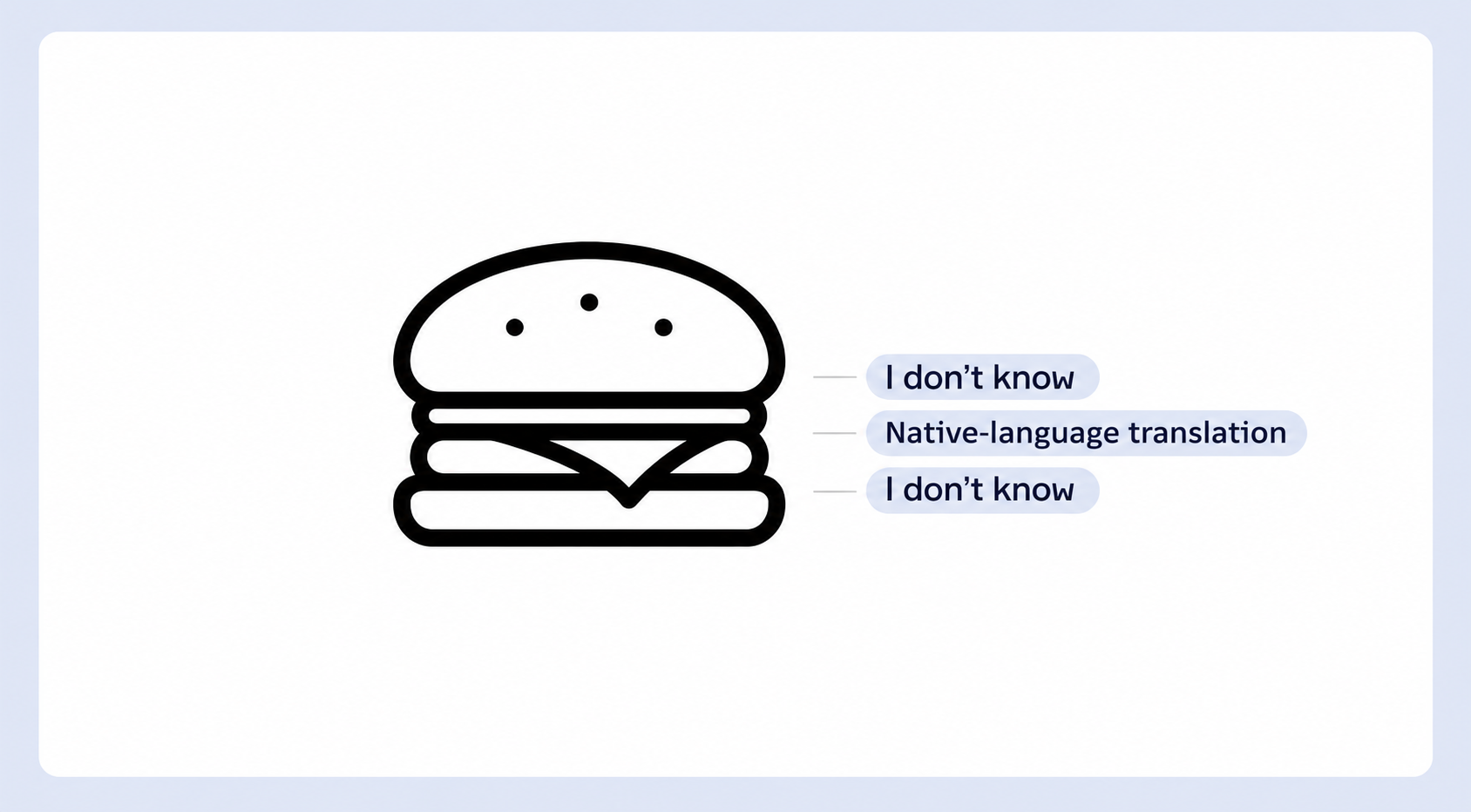
Some students need much longer. I taught a child in her third year of primary school who had come to dislike English after a difficult experience with the subject. I used a sandwich technique: English, the Russian equivalent, then English again. For example, “Let's check the homework”, the same instruction in Russian, then “Let's check the homework”. Repeating familiar instructions gradually made the Russian explanation unnecessary. With that student, we moved fully into English after about six months. It is not always possible in the second lesson, and some students need more time.
Does the technique work with adults as well as children?
Yes. Children can sometimes find it easier because they have fewer discouraging experiences behind them. Adults may initially say, “Me, speaking English straight away? I can't.” I teach a friend's 50-year-old mother, who was reluctant at first. I reassured her: “Trust me and try. If it does not work, we can use Russian.” That took some pressure off.
What else matters when teaching beginners in English?
Keep instructions short and precise, with gestures where useful. “Picture, text, match” may be enough to set up a matching task. A well-chosen coursebook also provides a useful structure. I use Roadmap, which has worked well with many of my students. You can read about it and other options here.
What mistakes do teachers make with beginners?
The first is using language that is too difficult, then switching immediately to Russian when students do not understand. Consider other ways to explain: examples, a familiar synonym or opposite, or a gesture. If those do not help, use Russian. Both teacher and student can become dependent on the quickest explanation, but equally there is no point making the task so frustrating that the student loses interest.
Another problem is overcorrection. Teachers can become very focused on accuracy, especially the third-person -s in the present simple. Students may continue to omit familiar forms even after they have studied them. Constantly drawing attention to every slip can damage motivation. With beginners, prioritise language you have taught and the aims of the task rather than correcting everything you hear.
Too much homework or material that is too difficult is another mistake. My Spanish tutor once gave me grammar-reference exercises when I was at A2. I could not understand them because I did not know the vocabulary. She said the meaning did not matter because we were practising a grammar form. It did not work for me, and I stopped taking lessons.
I see similar problems in children's materials. A grammar activity based on Tangled may include words such as “cauldron”, “magic wand” and “toad” that children do not know at that level. Or a teacher may assign a ready-made Wordwall game using vocabulary the student has never studied. Material needs to be understandable, especially when students have a small vocabulary. If grammar is the focus, use familiar words. A good coursebook, teacher's book and supporting resources provide a helpful starting point.
English coursebooks for teaching children
Finally, listen to the person in front of you. They may have started and stopped learning more than once. Ask what they tried and why it did not work, then take that into account. One student was surprised by the amount of homework I set because her previous teacher had assigned enormous texts she could not manage. That had ended their work together.
Where can teachers develop these skills?
I would suggest CELTA or a comparable programme, which covers this kind of classroom work. Individual teacher trainers can also help. For example, I offer consultations on methodology, beginner teaching and creating song-based lessons.
Maria’s examples show how familiar phrases, manageable tasks and patience can help beginners participate. To put a sequence of your own together, use Edvibe’s lesson tools for interactive activities and homework.


