
How to Create an IELTS Preparation Course: Experts Answer Teachers’ Questions

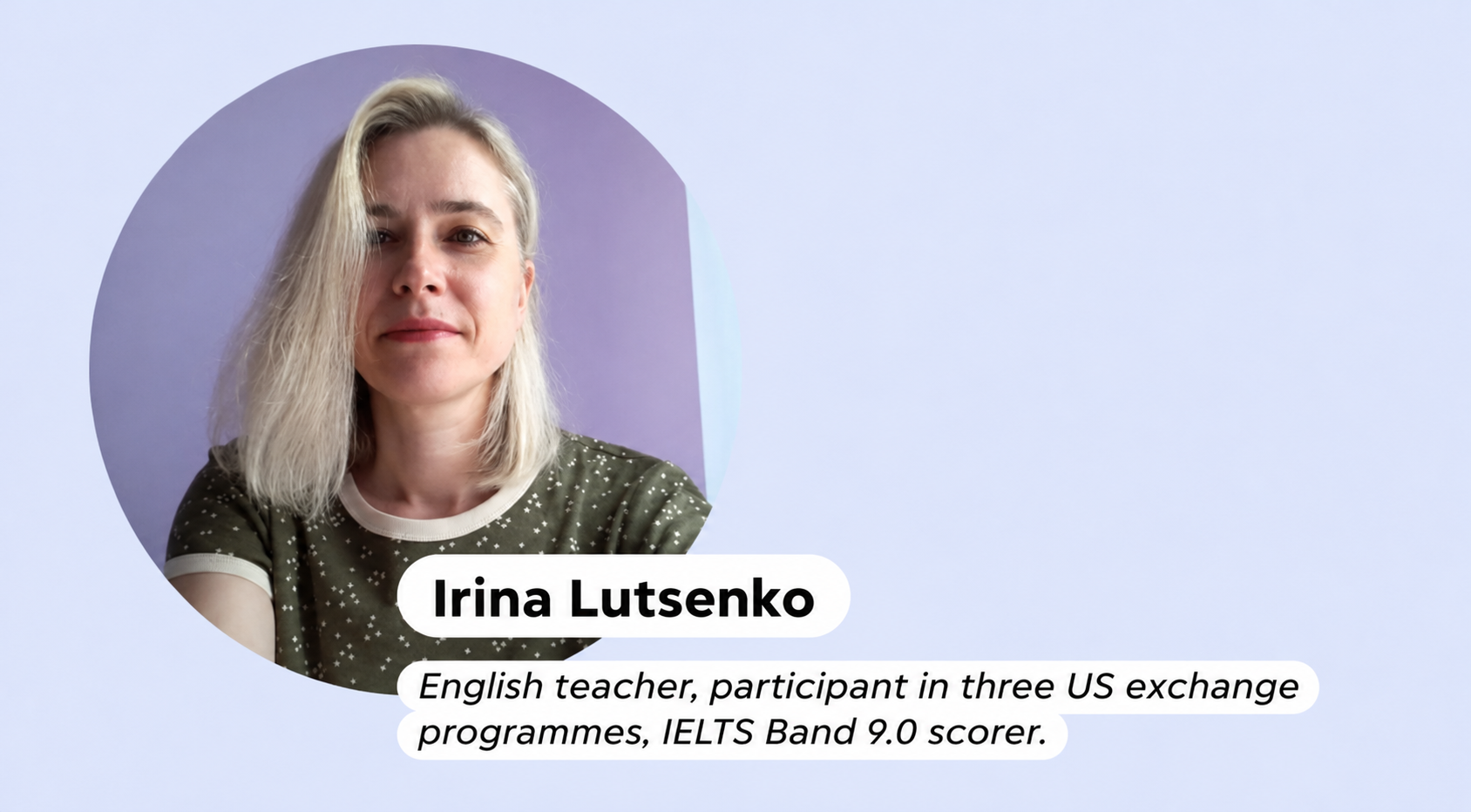
Irina Lutsenko and Irina Ermolenko help prepare both candidates and teachers for IELTS. Irina Lutsenko, author of Irina Lutsenko: IELTS, Writing, Cohesion, had 20 years of teaching experience at the time of the interview, had taken part in three US exchange programmes and had achieved IELTS Band 9.0 twice.
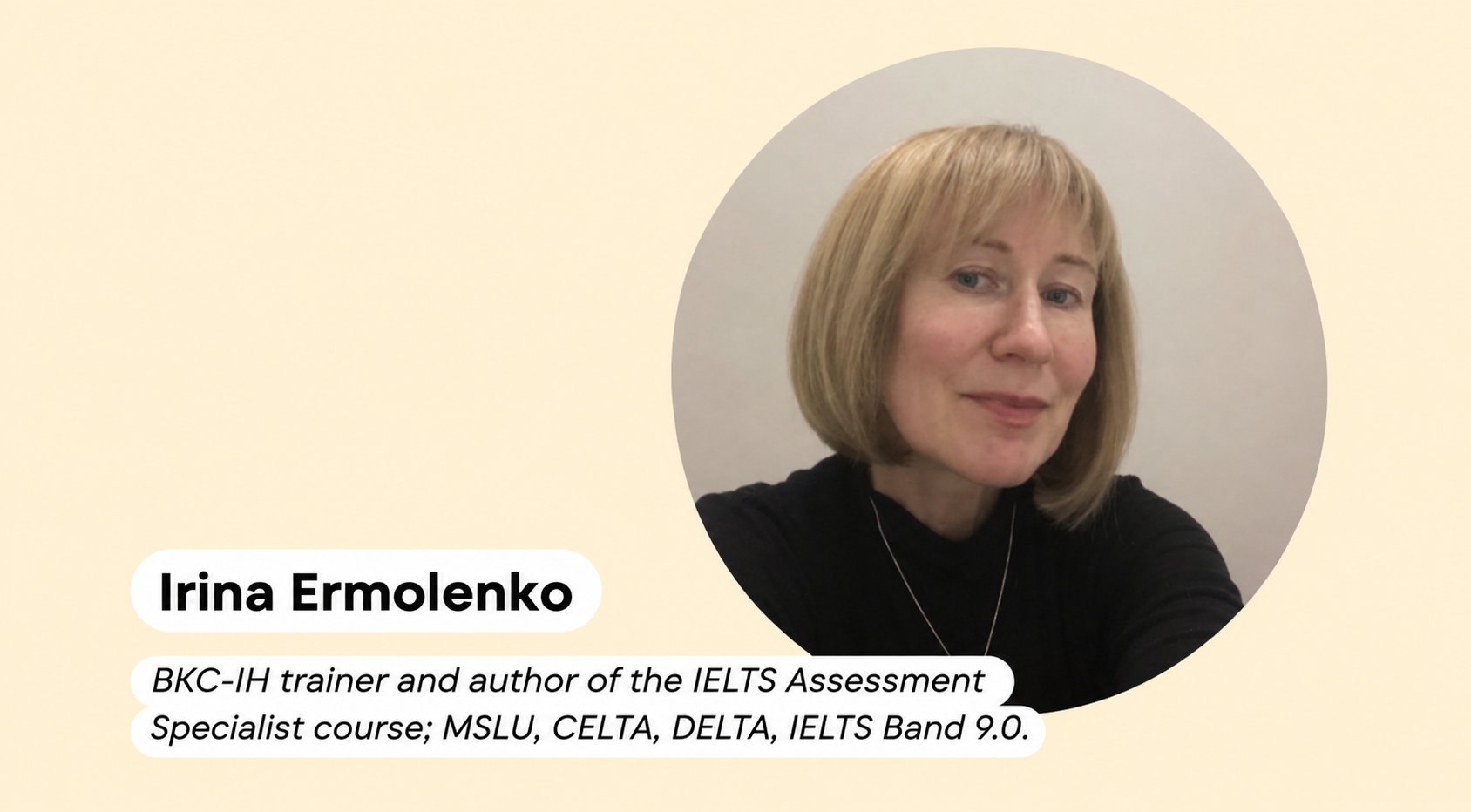
Joining her is Irina Ermolenko, BKC-IH trainer and author of the IELTS Assessment Specialist course, whose qualifications include MSLU, CELTA, DELTA and IELTS Band 9.0. They answered questions about creating a preparation course, from where to begin to the mistakes to avoid.
When does it make sense to create an IELTS course?
The experts suggest considering a course when you have several years’ experience preparing candidates and a consistent flow of learners. Irina Lutsenko adds that grouping works more easily when their starting levels, deadlines and target scores are similar.
Look at demand and what other providers already offer. “In my case, I noticed that Writing was the hardest section for many candidates, including teachers. There was a clear need to develop that skill. Most schools and teachers offered preparation for the whole exam. When I introduced a Writing course, people wanted it,” she explains.
How to start preparing learners for IELTS
What are the advantages of a course?
Group or recorded components may let a teacher reuse preparation and organise their workload. A fixed course can also make scheduling and income easier to plan, although payment and completion arrangements depend on the offer rather than being guaranteed.
Irina Ermolenko highlights three further benefits: organising material from different sources, giving the teacher a structure and showing learners a route through the work.
“You may reach a point where no single book fully meets your needs, especially for Writing. Your own course can also be designed so that it is easier to adapt to a particular group’s goals and level,” she says.
A course gives me discipline too. There are objectives, ways of reaching them and appropriate materials. It gives me a structure to add to or simplify for a group or individual. It is also a plan I can show learners, so they understand where we are going.
What knowledge and skills does a teacher need?
Irina Lutsenko identifies three areas.
1. Knowledge of IELTS
Understand the structure, format and task types. For example, Academic Writing Task 1 is not limited to graphs: it can involve other visual information, including maps and processes. General Training Task 1 instead asks for a letter. See the official Writing resources.
“I believe teachers should be able to do what they teach. Taking IELTS yourself helps you understand both the content and the experience, including practical questions about the test procedure,” Irina says. Check current rules and delivery formats with the official provider rather than relying on an older candidate experience.
Many teachers are unsure of their own writing and sometimes find exam-format writing difficult. But they need to be able to do it, even if only to write a paragraph confidently during a lesson. That is one reason I help teachers develop their writing.
International English exams for teachers
2. Knowledge of preparation materials
Know how to assess both official and unofficial materials. Be able to spot errors and recognise whether a task reflects IELTS requirements.
3. The ability to organise materials
“Creating a course means analysing what you have, arranging it and leaving out what is not relevant. A course has limits; you cannot include everything,” Irina Lutsenko says.
How long does creating a course take?
That depends on the teacher’s experience and existing material. If you have already taught candidates for years, much of the work may be selecting and organising what you use.
“By the time I created my course, I had worked with individuals for many years and had a large collection of material to put into order,” says Irina Lutsenko.
Creating the course is not the end. Each new group needs changes and adjustments. But that is easier than starting again every time.
Should a course cover the whole exam or one section?
I would lean towards a particular area, but many learners need all sections. There probably is not one answer. Irina Ermolenko
“Look at who comes to you,” says Irina Lutsenko. “Do they want the whole exam or particular sections? My own view is that there is a lot of Reading and Listening material for independent preparation, while Speaking and Writing can be harder to develop alone. That is why I prefer a more focused course.”
Reading and Listening courses are possible too. What matters is understanding your learners’ difficulty and how you can help. For my learners, that difficulty is writing, so that is the skill my courses develop.
Where should you begin?
“Begin with objectives based on the learners’ needs, the course length, the number and duration of lessons, the purpose of each lesson, appropriate materials, teaching methods and assessment,” says Irina Ermolenko.
Irina Lutsenko adds: “Find out whether the learner needs Academic or General Training, when they will take it and which scores they need.”
University application deadlines can shape an Academic candidate’s timetable. The interview mentions April and December as examples from Irina’s experience, but application dates vary by institution and programme. Work backwards from the actual deadline, including time to receive results and any possible retake.
Think about when to launch and whether the learners’ starting levels make the target realistic. Then map out the lessons. For example, you might have three months and 12 lessons with a B2 learner aiming for 6.5. That is a planning scenario to assess, not a guaranteed score. Someone starting at B1 may need substantially more time. Start from the individual situation.
How should the material be sequenced?
“Ideally, each lesson or section should connect with the previous one, with challenge increasing gradually. A course often combines several sources, so that is not easy. But otherwise you risk ending up with disconnected material,” says Irina Ermolenko.
Irina Lutsenko plans the amount of work around the time available: “For my Writing courses, I specify how many tasks of each type learners will complete. That might include four graphs, four processes, four maps and four essays of a particular type. The amount depends on the course duration.”
Which platforms and tools can support the course?
“For my Writing teaching, Google Docs is enough,” says Irina Lutsenko. “For Speaking or Reading, I might need something else, such as recorded voice messages or a way to display a long Reading PDF at a comfortable size.”
For online teaching, match the tool to the activity. In Edvibe, a virtual whiteboard supports explanation, a personal dictionary stores vocabulary, and interactive exercises retain answer histories. A teacher can review mistakes and leave text or voice comments. These tools support the practice you design; they do not assess IELTS writing against the official criteria for you.
How to track a learner’s progress
What mistakes should teachers avoid?
Probably the biggest mistake is creating a course that seems interesting to you but is not something learners need. Even an excellent course costs you time and energy if there is no demand. Research the market or analyse the requests you receive from current and prospective learners. Find out what they struggle with and how you can help. Irina Lutsenko
“The second is miscalculating the lessons,” she adds. “You might plan 16 sessions but forget the December and January holidays. Or you might leave out a task type, and the learner meets it unprepared in the exam.”
A third is failing to consider the starting level. Familiarity with the exam format and development of general language proficiency are different goals. A few months may help with format, while a substantial language improvement can take much longer. Explain that difference so the course does not create unrealistic expectations.
Points to keep in mind
- A course is easier to design when you know the exam, have experience preparing candidates and understand the learners who come to you.
- Focus on their needs and the demand you can actually identify. We discuss that side of course planning in this article.
- Plan around real application and test deadlines, holidays, starting levels and target scores.
Materials writer Anastasia Lagutkina prepared an IELTS course-planning checklist. For organising the work across lessons, see this course-organisation guide.


