
30+ New Year Games and Activities for English Lessons

A virtual tree can hide vocabulary questions; a letter to Santa can become writing practice. The ideas below give children, teenagers and adults different reasons to use English during the holidays.
You can build these activities with Edvibe’s exercise templates, whiteboard and AI tools. Choose a game around the language your learners need, then prepare the prompts before class.
Games and activities for children
A virtual Christmas tree with hidden tasks
Prepare a decorated tree on a virtual board. Children choose an ornament and complete the task behind it: name an object, make a sentence, read a word or act out an animal.
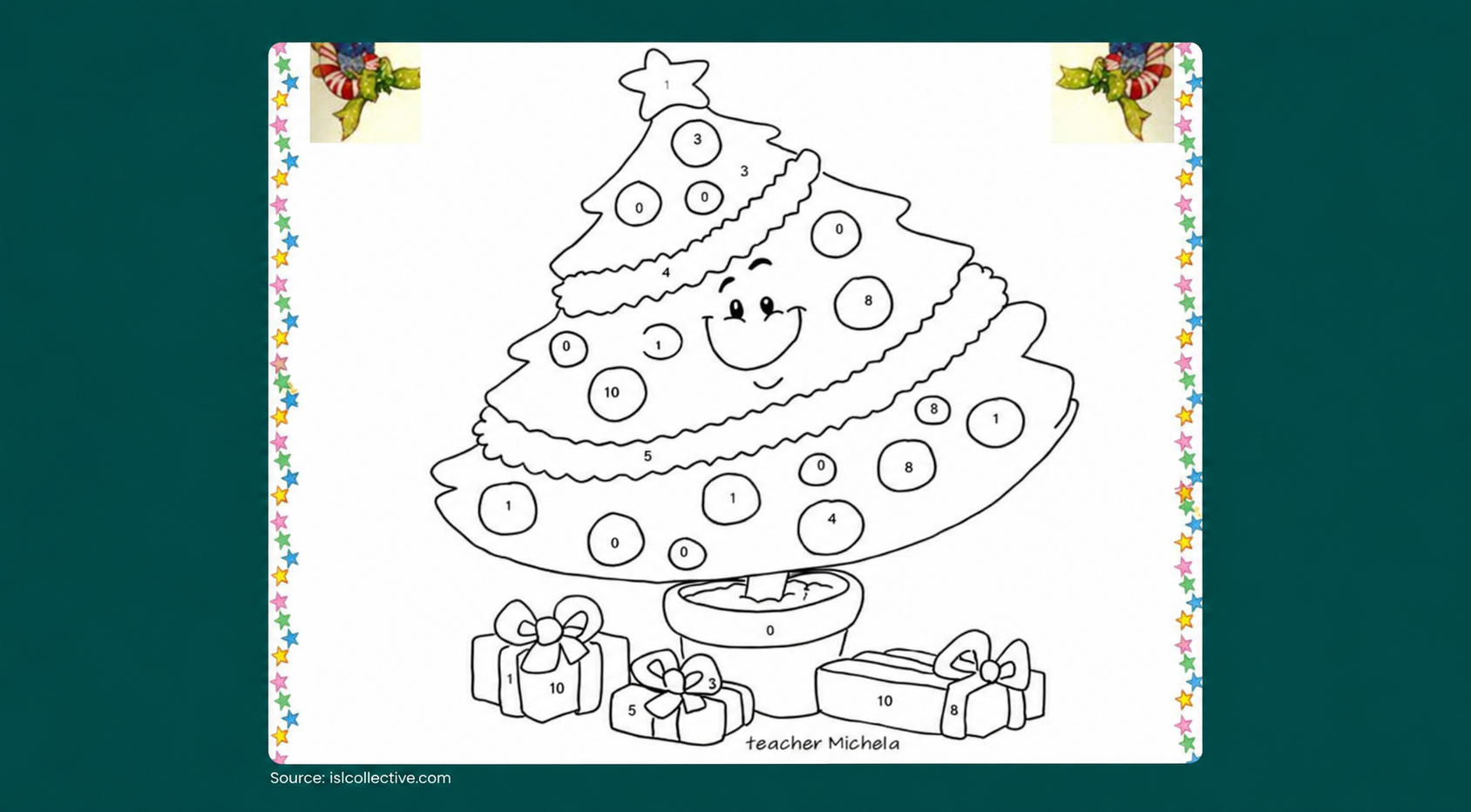
Christmas colouring
Children colour a festive picture, then tell the teacher or class what is in it. Give colour instructions in writing or audio, or let children choose and explain their choices.
A Christmas crossword
Create a crossword with holiday words such as snowman and Christmas, using pictures as clues.
Crafts
Revisit language from a Christmas or New Year lesson through paper, modelling clay or other craft materials. Children can make a festive character, tree, decoration, gift or house.
Afterwards, ask them to describe what they made so the vocabulary gets used in speech. Find Christmas craft ideas here.
A letter to Santa
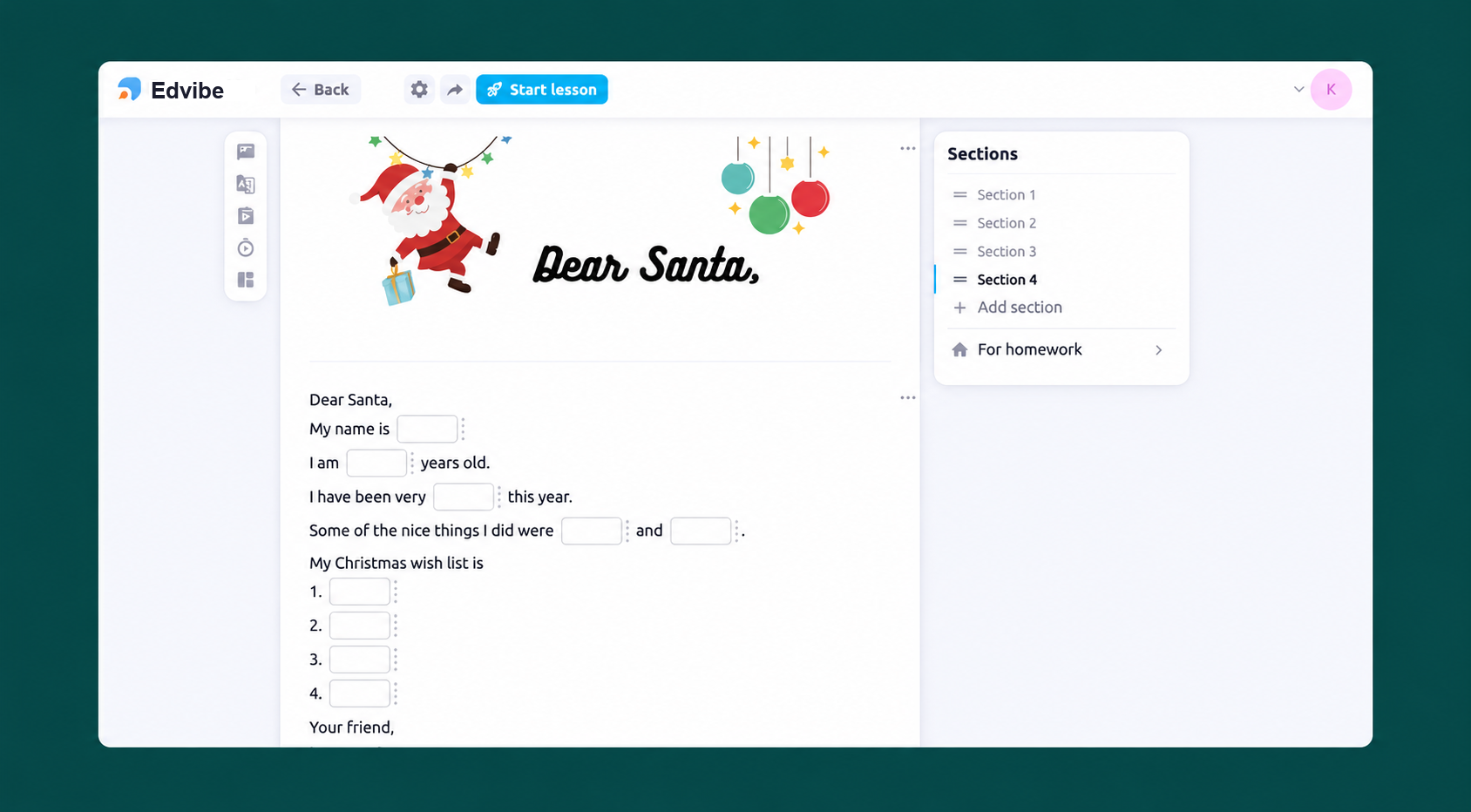
Read a fictional character's letter together, then provide a template for students' own letters. They can introduce themselves, say what kind things they have done and explain which gifts they would like. Use a fictional address rather than asking children to share their home details in class.
Use paper templates offline or a digital template online. In Edvibe, create a gap-fill task in your lesson materials and preview it before assigning it.
A memory game
Put children into pairs or teams. Show holiday pictures, such as candles, ornaments, crackers and a Christmas tree, and ask them to name the objects. Award a sticker point for a quick, correct answer.
A Christmas word search
Give students a grid of letters containing holiday words. In teams, see who can find the most.
Find printable word searches
A Christmas board game
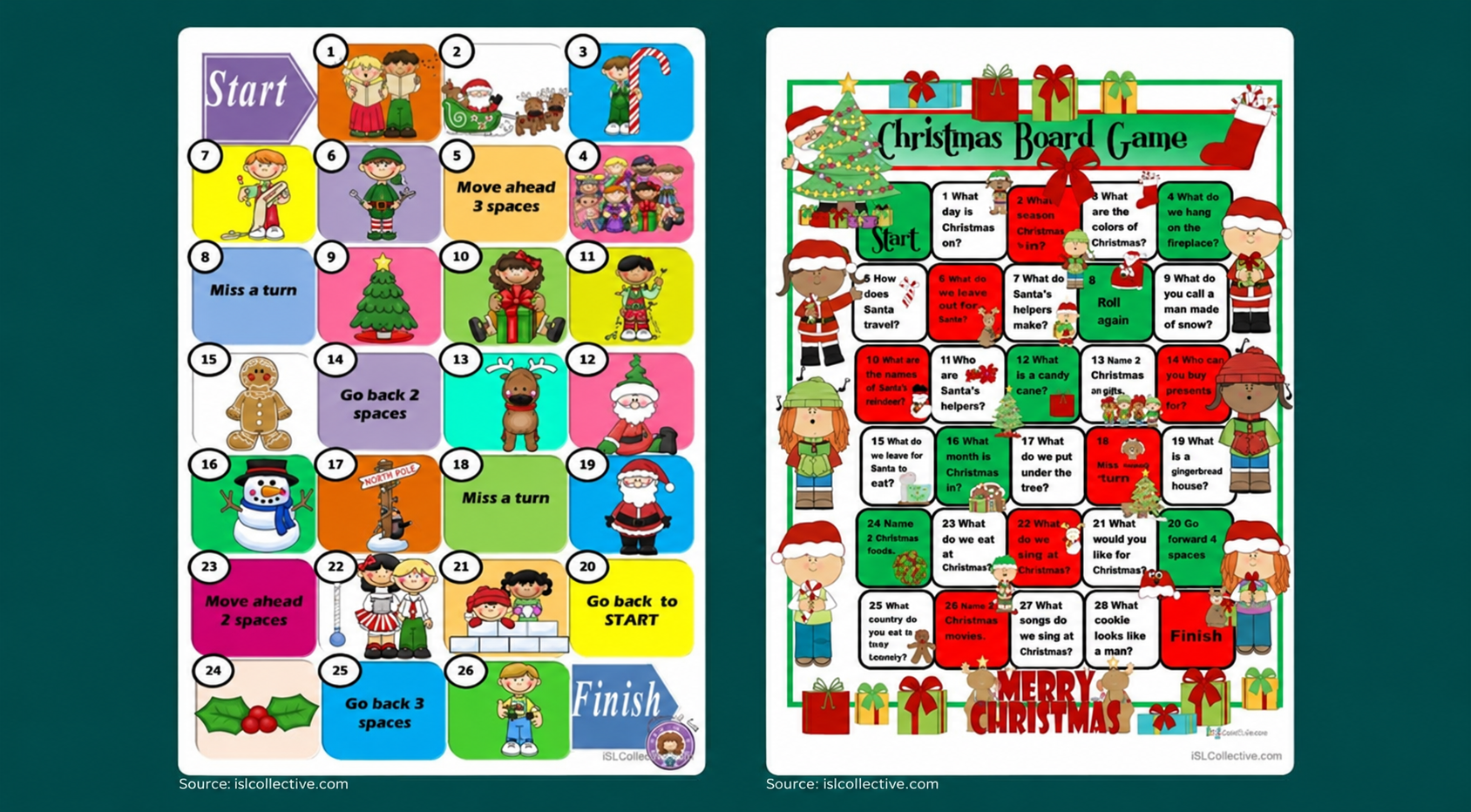
Children roll a physical or virtual die and move along a board. Each square gives a task: name a character or use a word in a sentence, for example. The route can follow a search for Santa's lost hat, missing presents or a character trying to reach a destination. Give sticker rewards for correct answers.
Google Santa Tracker
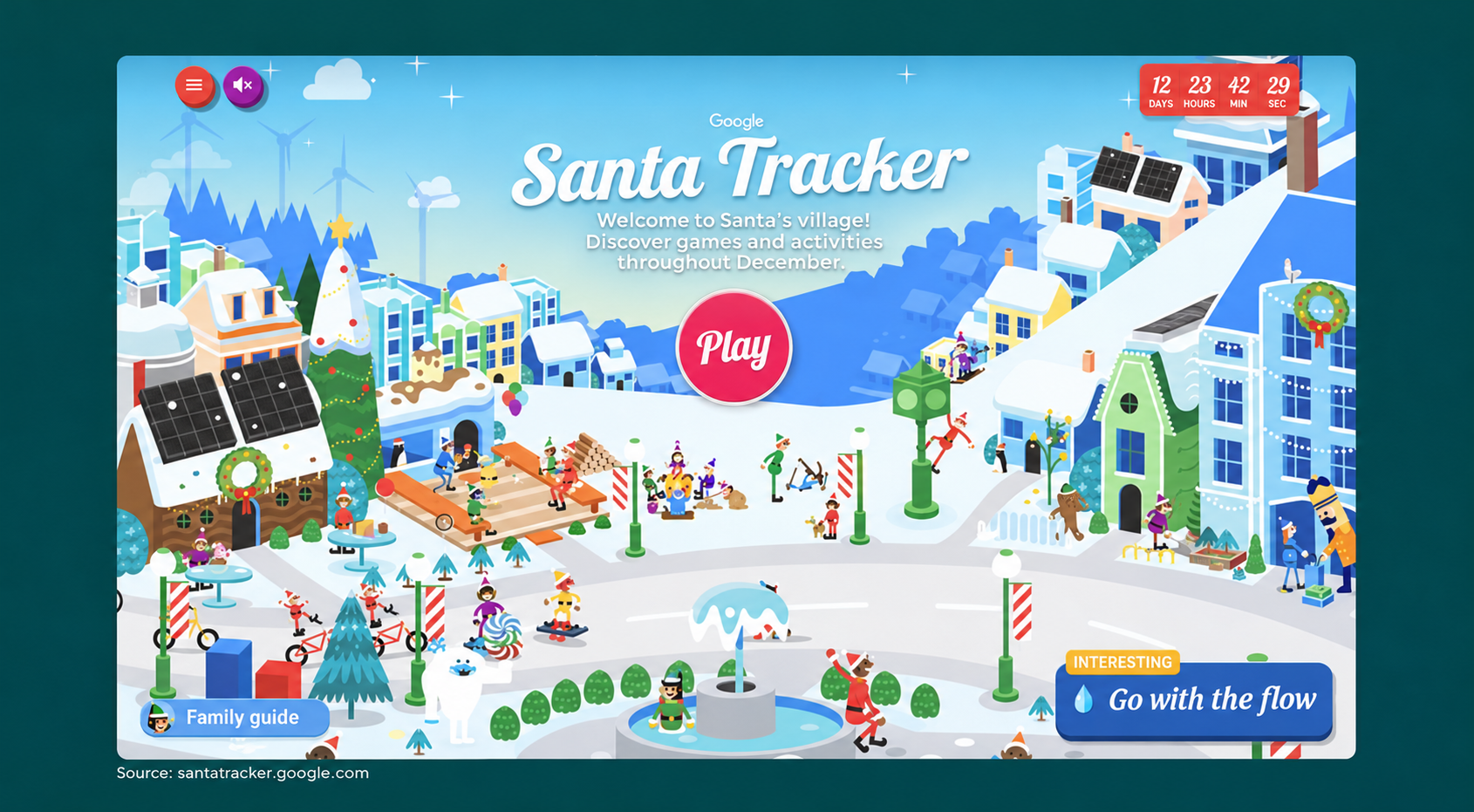
Try games from Google's Santa Tracker collection. Check which activities are currently available before the lesson. In a gliding game, for example, one student controls the elf while a partner writes down the obstacles it avoids. Give each pair five minutes, then swap roles and compare the correctly named objects. Younger children may enjoy a Santa makeover game, describing what they change before taking a virtual selfie.
A camera scavenger hunt
Give teams five minutes to find festive objects in their rooms and show them on camera. Children name each item and explain its use: “This is a Santa hat. I wear it at Christmas,” for example.
Activities for teenagers
A holiday GIF
Ask students to make a New Year GIF with a wish or short holiday scene. Offer a choice of age-appropriate editing tools they can use.
A virtual holiday trip
Students choose a country where they would like to spend Christmas or New Year and give an English presentation about its celebrations and traditions.
A shared fantasy story
Write a holiday story together: perhaps Father Frost travels on a flying Christmas tree, or snowmen organise a party. Each student adds a paragraph. Provide some festive vocabulary and expressions to include.
A Christmas meme tournament
Students create holiday memes with English captions. Possible themes include New Year's resolutions or expectations of Christmas morning compared with reality.
Christmas detectives
When a student lands on a square, they secretly take a “True” or “False” card. They make a holiday statement with be going to that follows the card: “I am going to make a Christmas hamper for my mum,” for example. Others ask Wh-questions with be going to and decide whether the statement is true. Correct guesses earn a point; the highest score wins.
Games and activities for adults
Christmas Taboo
Give students festive words to explain without using the word itself or its close forms. The team that guesses the most wins.
Christmas Taboo cards
A New Year quiz
Prepare questions about Christmas traditions, winter holidays and vocabulary in a quiz tool such as Wordwall or a Jeopardy-style game.
An interactive advent calendar
Hide a task behind each date. Students choose one, then explain a word, make a sentence or describe a tradition.
A virtual party
Hold an informal online gathering where students share plans and practise festive language. A theme can give them the option of wearing a costume or using a virtual mask.
Who said it?
Choose short, permitted quotations from books or films. Students guess the title or character.
New Year predictions
Students choose a prediction card, such as “You will visit a new place” or “You will master a new skill.” They react and explain what they would do if it came true.
A wheel of fortune
Spin a virtual wheel for a question or language task. Create a wheel here.
Decode the message
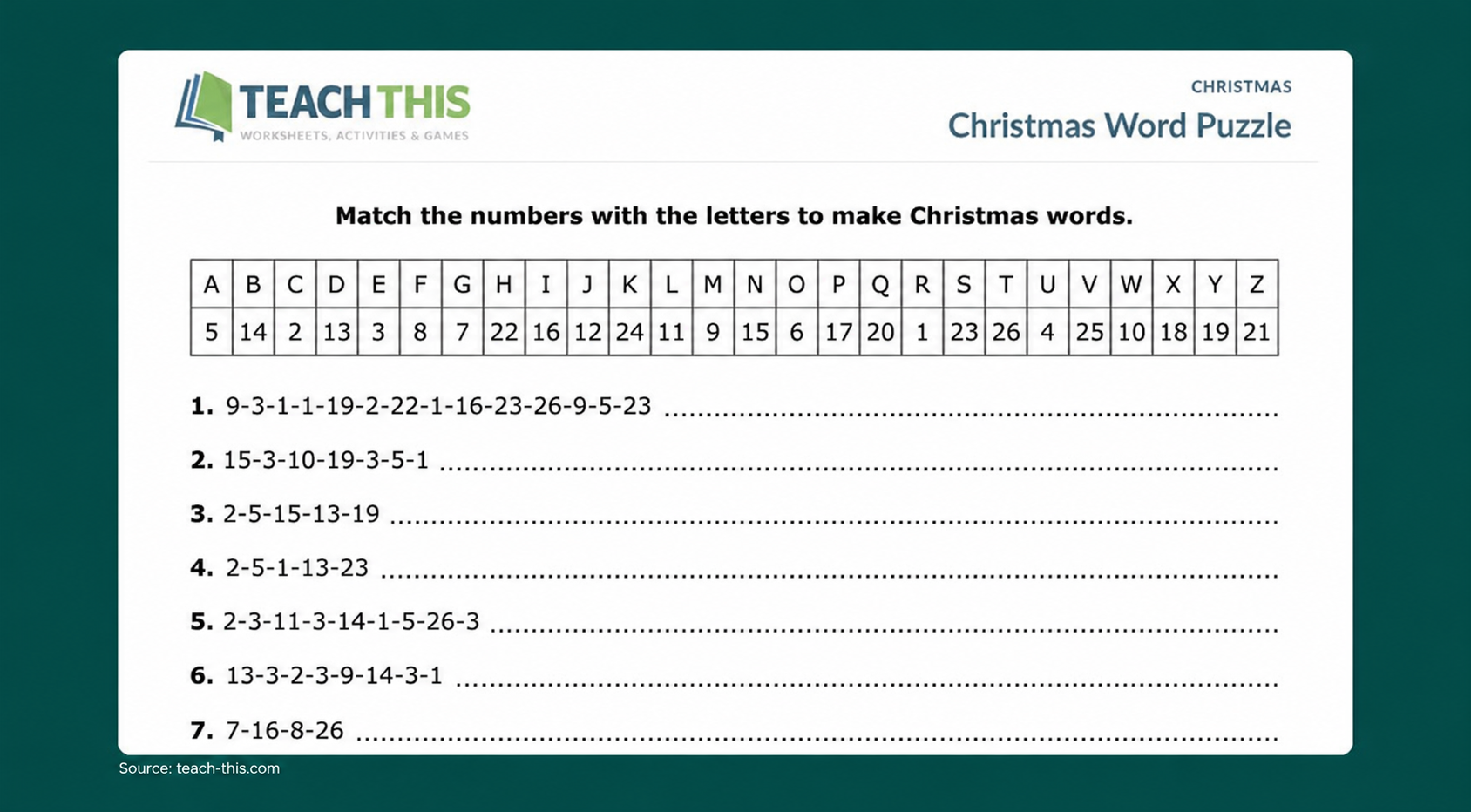
Give students a number-to-letter key and a coded message to work out, perhaps a secret report from Santa.
Christmas charades
One person acts out a word or phrase without speaking; the others guess.
A resolution chain
Each participant adds a sentence to a shared story about New Year's resolutions.
Guess the idiom
Prepare expressions connected with the holidays. Students take turns acting them out while the others guess the expression and meaning.
Vocabulary from unusual pictures
This picture activity imagines people throwing out old possessions at New Year. Use clearly fictional or staged pictures of discarded objects as a vocabulary game. Beginners name the objects; other students can describe their colour, size or use. Do not present the scene as a universal national custom.
Unexpected traditions
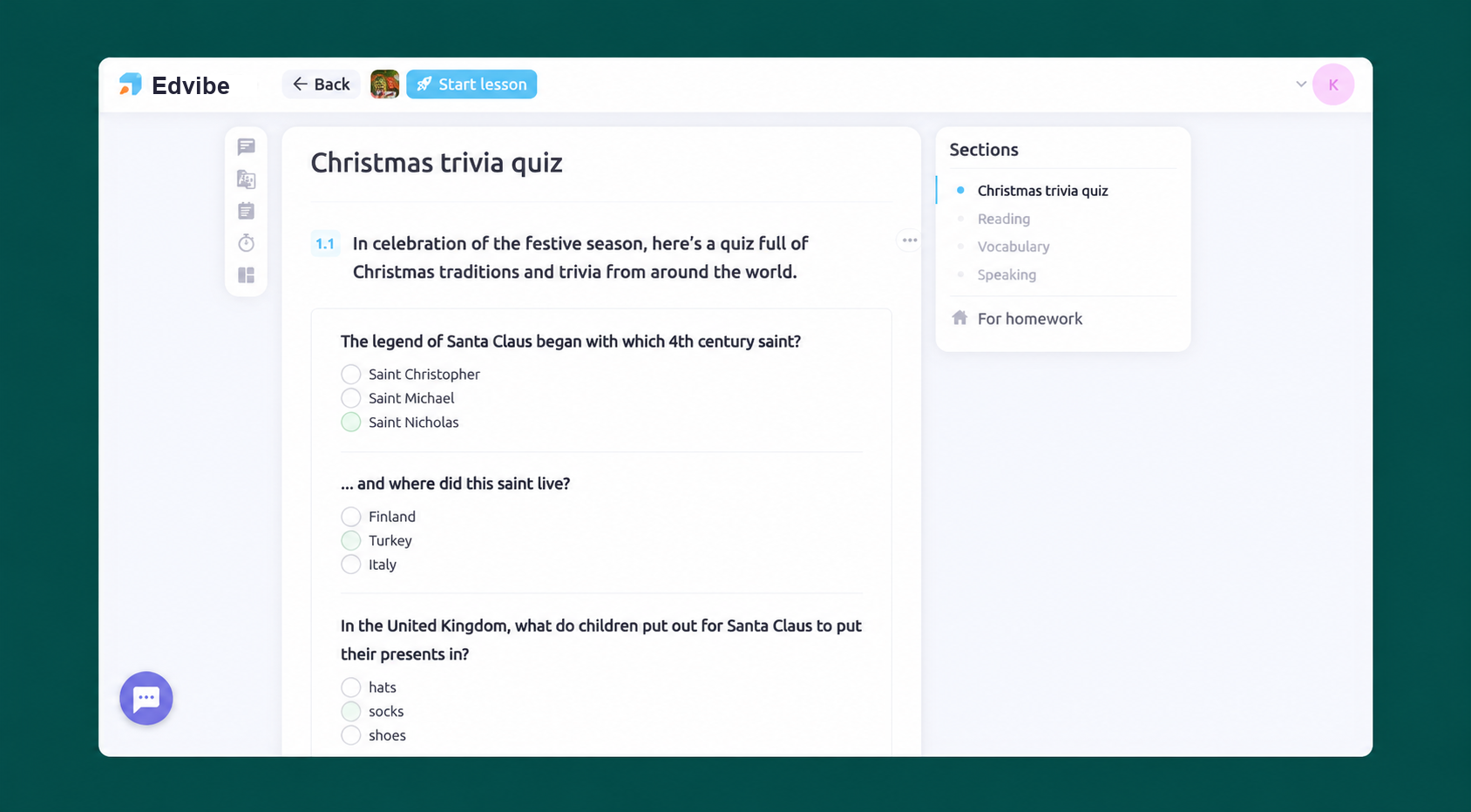
Prepare cards describing unusual holiday traditions, checking the facts first and mixing in clearly identified invented examples if you want a true-or-false game. Students guess the country or decide whether a description is real. Award points for correct answers. You can build a Christmas trivia activity in Edvibe using questions you have checked and an exercise template that suits the game.
Make a sentence
Give students random festive words and ask them to build sentences.
A fill-in story
Prepare a text with gaps and offer unexpected or funny words to complete it. Use a letter to Santa, a list of resolutions or a description of a celebration. Students choose words that turn it into a story worth reading aloud.
Guess the song
Play a short, permitted excerpt of a holiday song and ask students to identify its title, performer or the film associated with it. Offer answer choices if needed. You can also design a short listening gap-fill task.
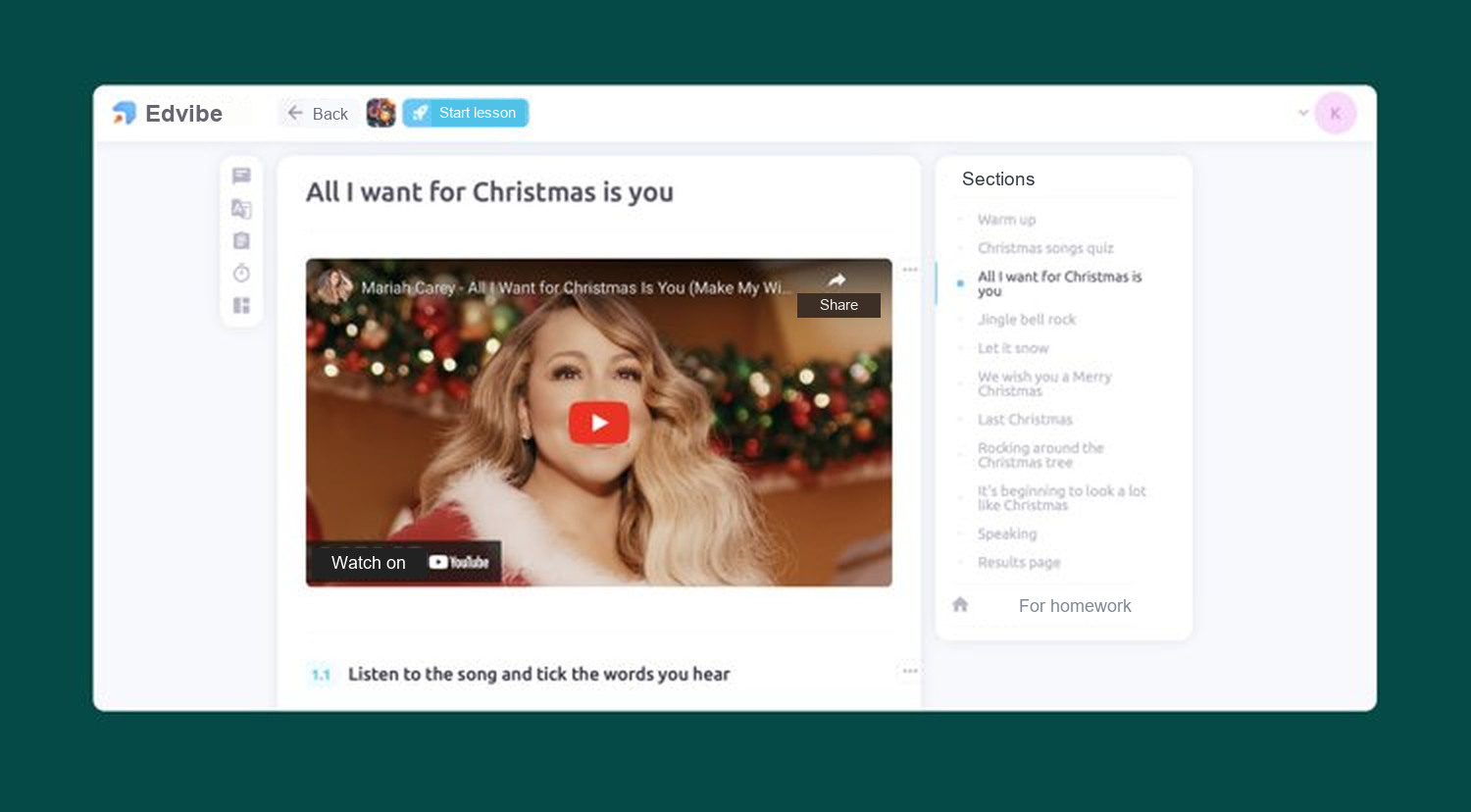
For a listening example, use a permitted excerpt of Mariah Carey’s All I Want for Christmas Is You. Prepare a short gap-fill from the lines you want learners to notice, then compare their answers with the recording.
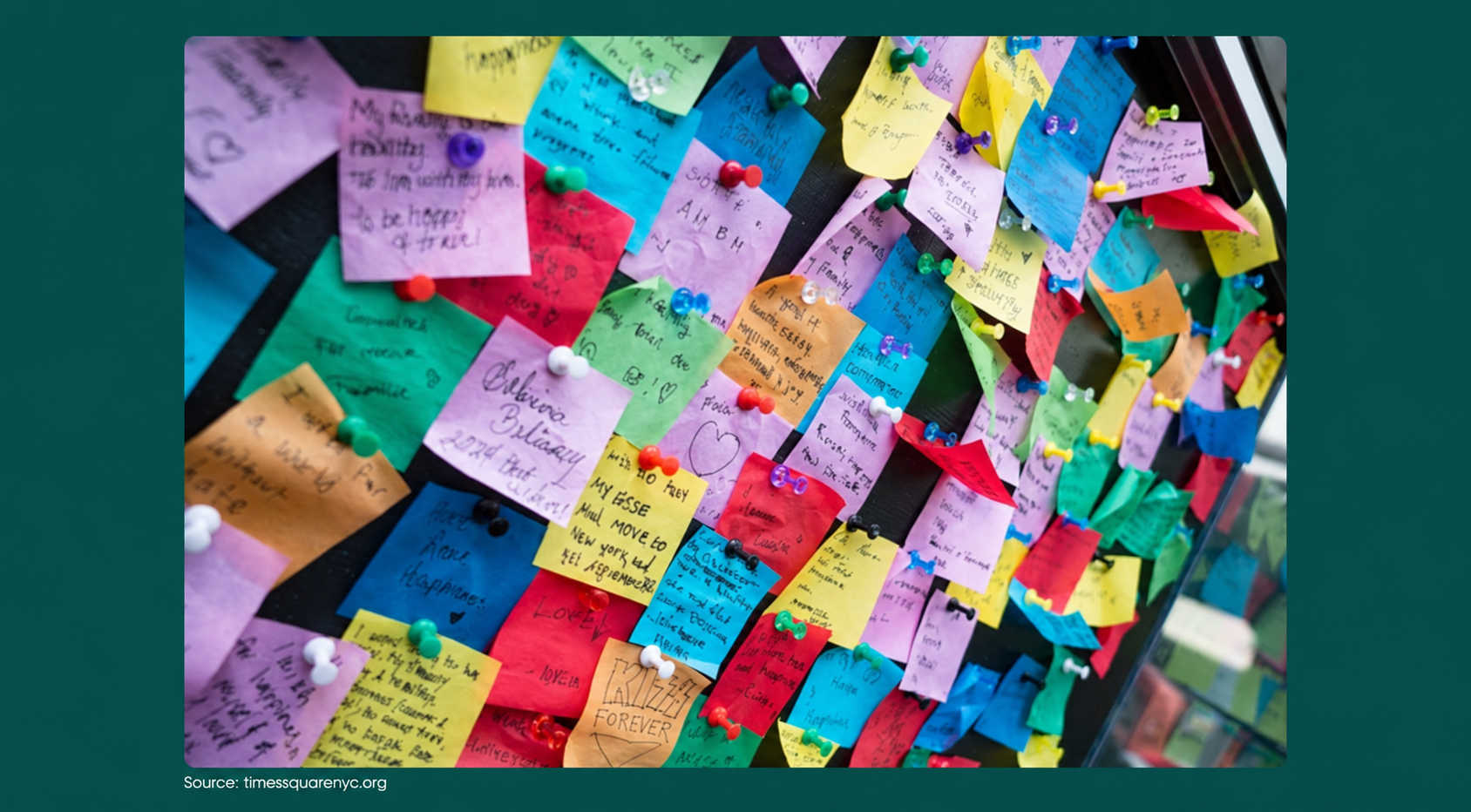
Send a wish to Times Square
One writing task is to submit a New Year wish through the Times Square Wishing Wall page. The project has invited wishes to be printed on confetti released during the New Year celebrations in New York. Check the current submission dates and arrangements before setting the task. For lower-level students, provide a starter such as “Next year I would like to…” or “Next year I hope to…”.
Choose a game that lets students use language they already know or need to practise. Edvibe supports interactive exercises, ready-made materials and a shared whiteboard; use the tool that fits the activity.
For more holiday lesson ideas, see the Christmas and New Year collection.


