
10 Valentine’s Day English Lesson Ideas

Here are ten Valentine’s Day lesson ideas, from an A2 card-making activity to a C1 discussion of a crush. Choose an outline, then prepare the texts, recordings, questions and task sheets your group will use. The screenshots illustrate activity formats; this article does not provide downloadable lesson files.
The topics offer practice with vocabulary about love, relationships and marriage, alongside grammar and listening. Choose material students will be comfortable discussing; fictional characters work well when learners would rather keep their own lives private. If you are planning a lesson from scratch, the outlines can give you a starting point. You can assemble your own versions with Edvibe’s lesson builder.
Perfect Match (B1)
Aim: introduce yourself and create a social profile in English. The plan combines vocabulary, listening, reading and speaking.
For the warm-up, students guess the interests of Alfred, a single man who wants to meet a partner.
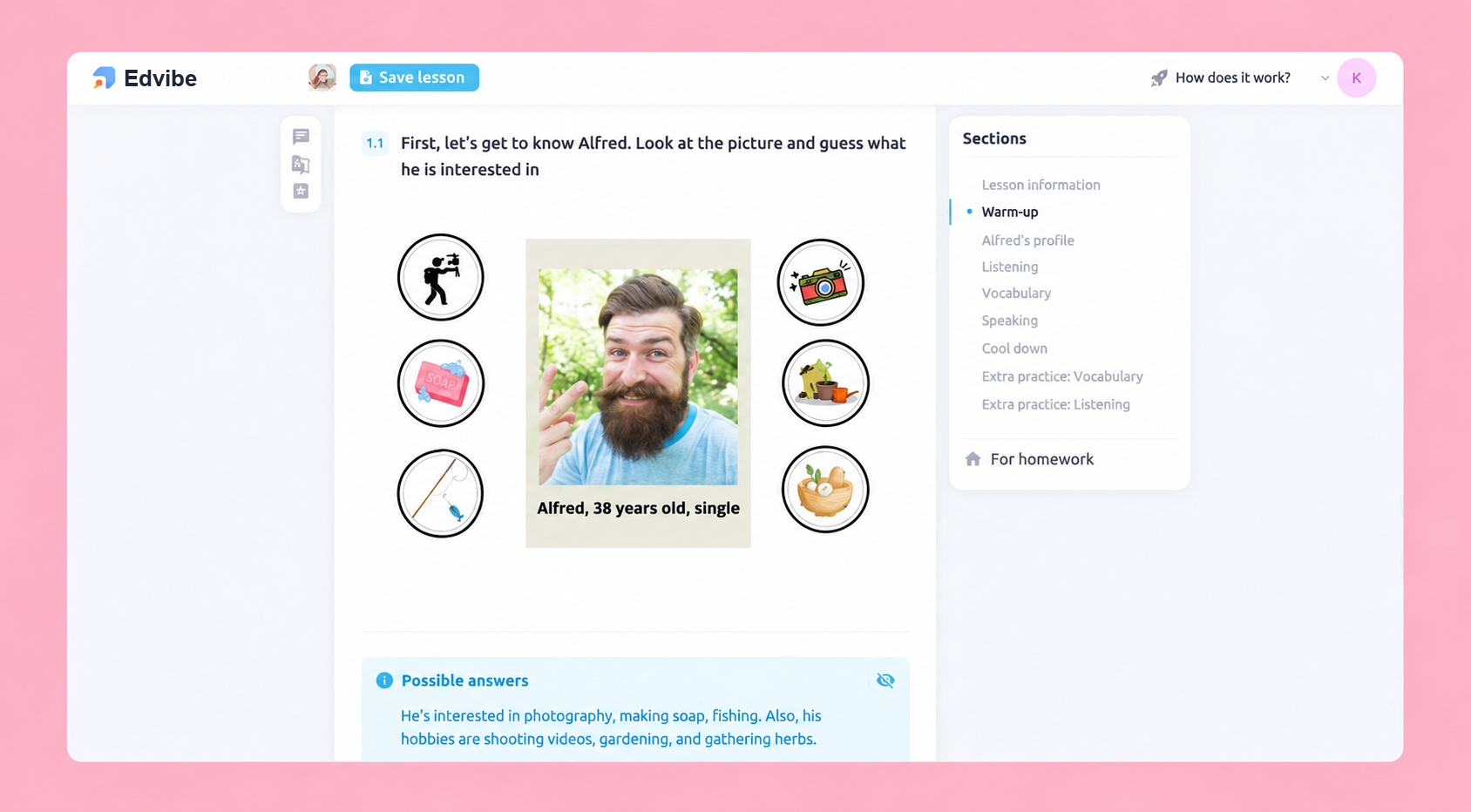
Students then infer vocabulary meanings and use Alfred's social profile to ask him questions. Discuss what his future partner might be like using prompts you prepare.
The Listening section introduces two women Alfred might date, with tasks for listening, speaking and vocabulary.
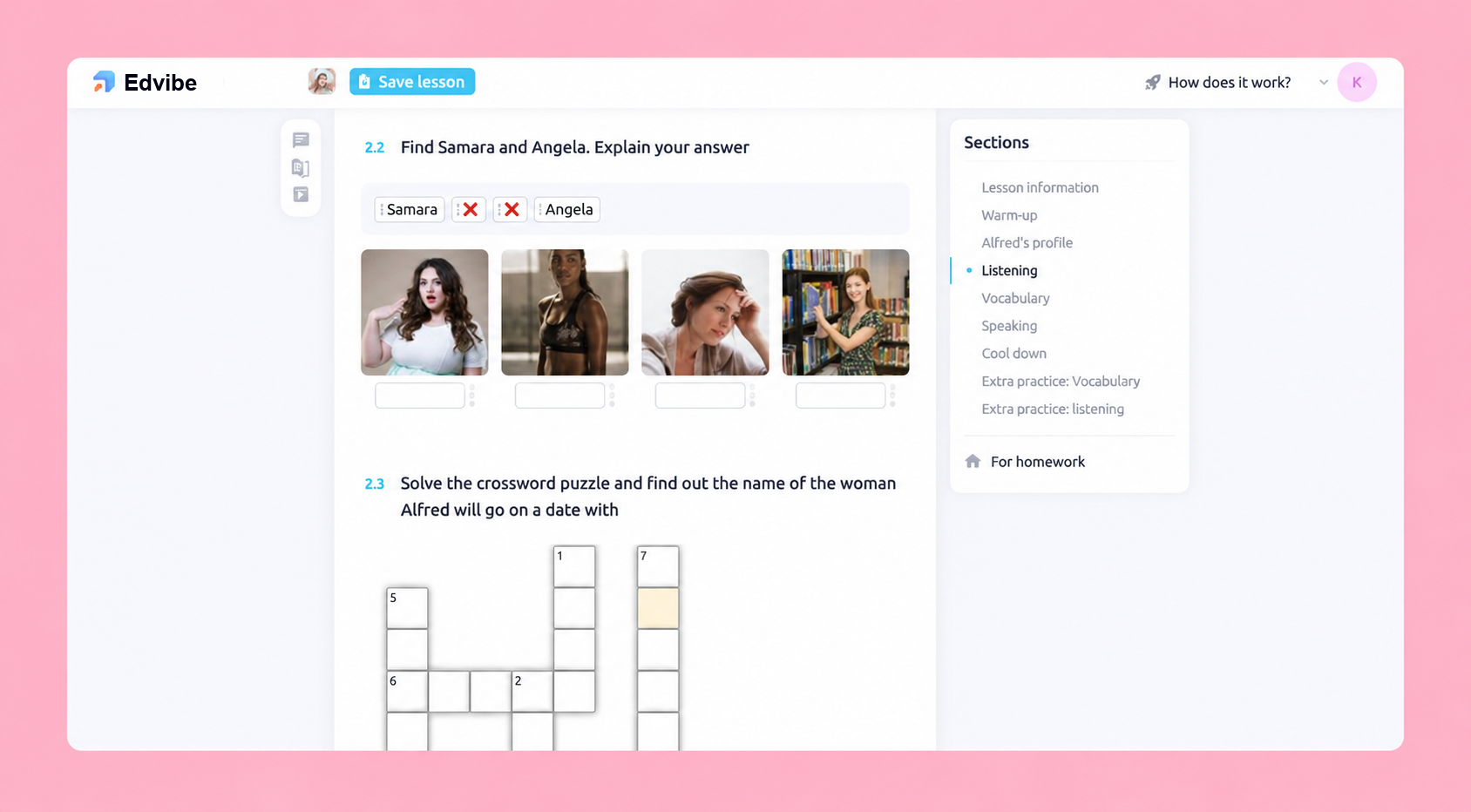
In Vocabulary, practise useful expressions for describing personal qualities.
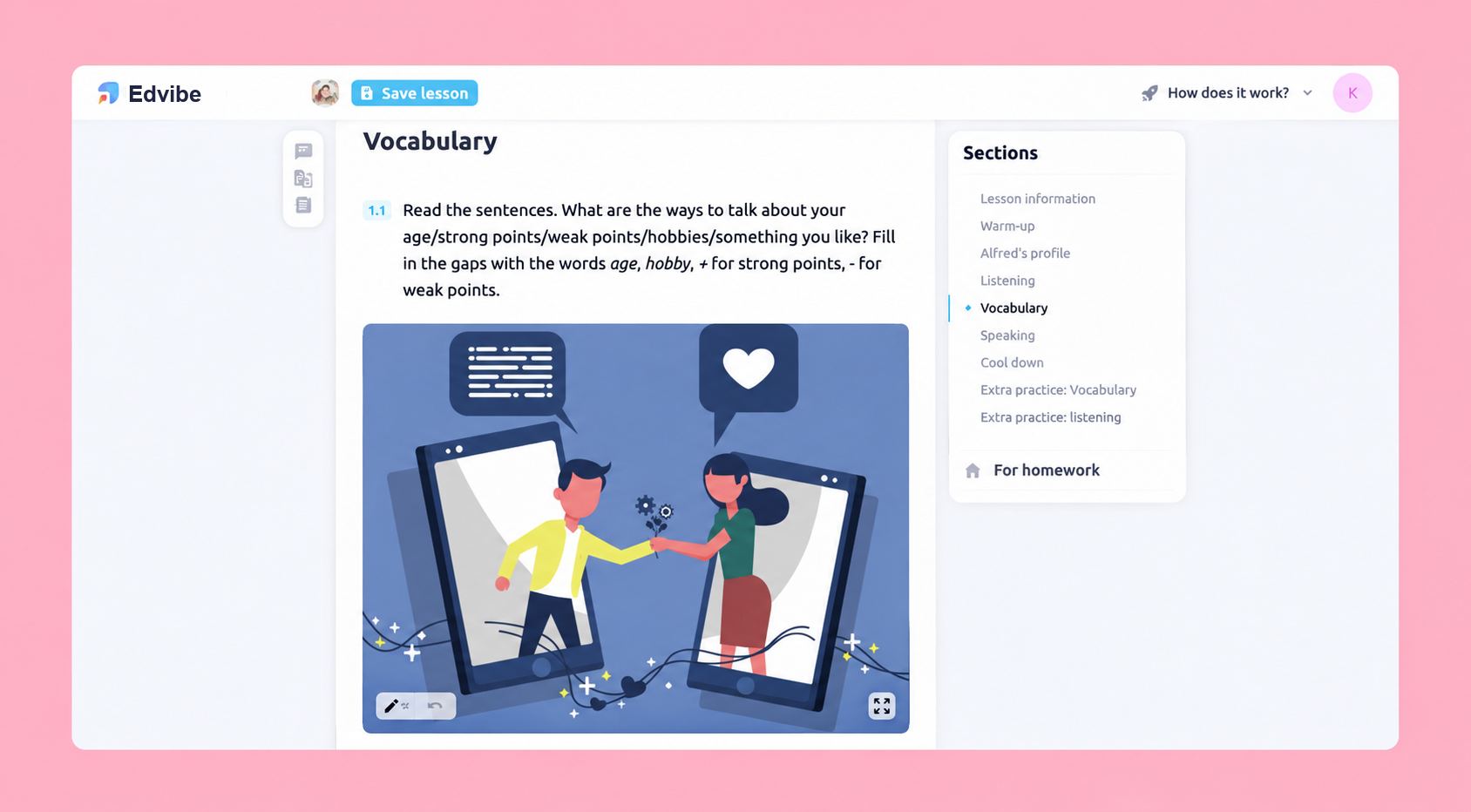
In Speaking, students describe the women using their profiles and the lesson language, then complete a description template. Next, they use the same framework to introduce themselves or a fictional character.
Finish with the reflection questions and a review of useful words and expressions. The plan also includes two additional vocabulary and listening sections, plus homework.
Leap Day (B2)
Aim: discuss marriage proposals using expressions such as propose, drop to one's knee, soften the blow, vow and pop the question.
A 50-second authentic video introduces the topic, followed by questions.
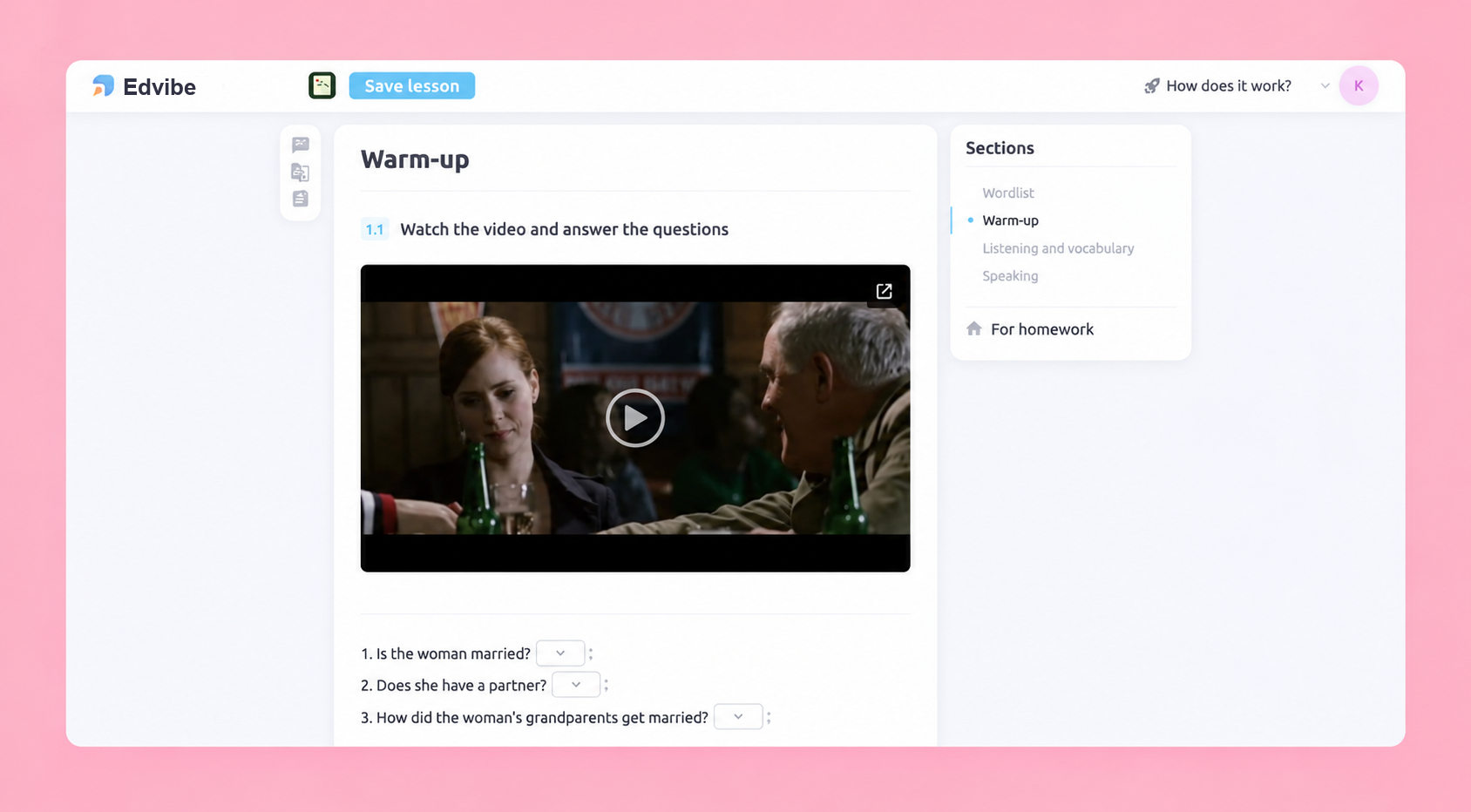
The main activity uses a five-minute recording about a leap-year proposal tradition associated with Ireland. Treat the story as a cultural account to discuss, not as a rule requiring anyone to accept a proposal.
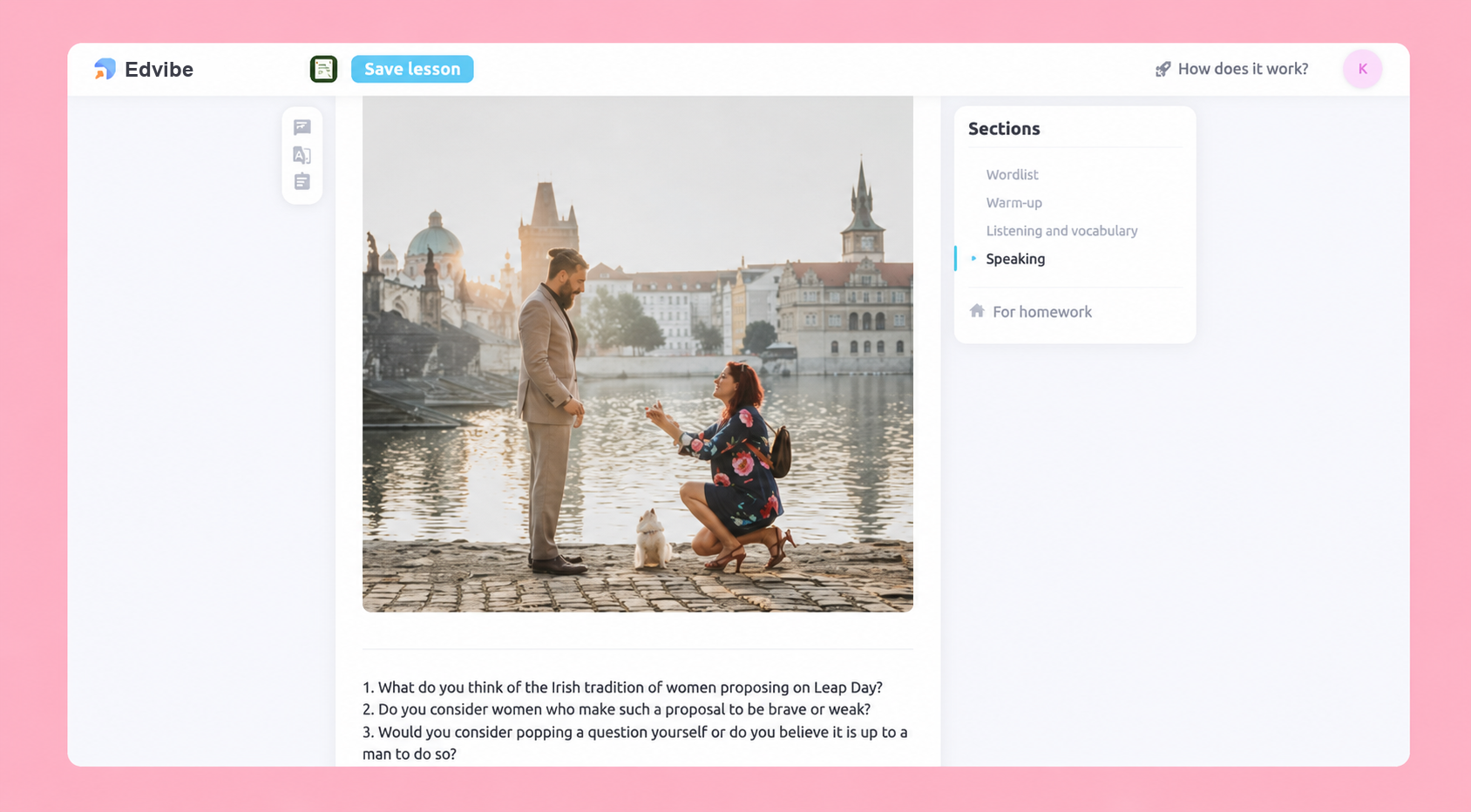
Vocabulary exercises accompany the recording. To finish, students discuss the tradition using the language from the lesson.
St. Valentine Day 2021 (A2–B1)
Aim: talk about romantic relationships using relevant words and expressions.
The warm-up is a word cloud. Students identify the holiday it suggests and discuss whether they mark it.
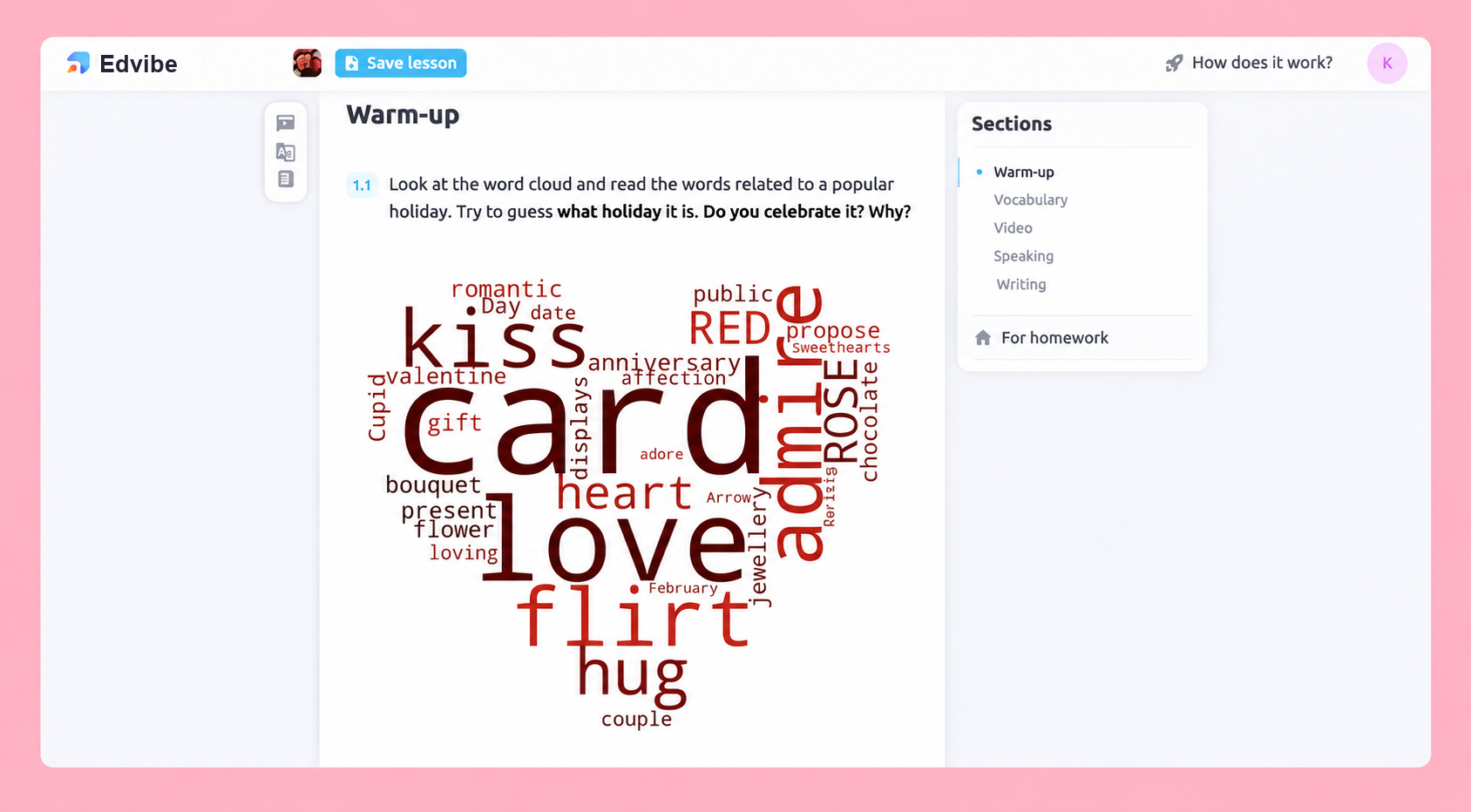
The Vocabulary section activates familiar language and introduces:
- date
- love at first sight
- fall in love with
- kiss
- flirt
- hug
- ask out
- break up
A two-minute video then introduces the history of Valentine's Day and celebrations in the US, with vocabulary exercises.
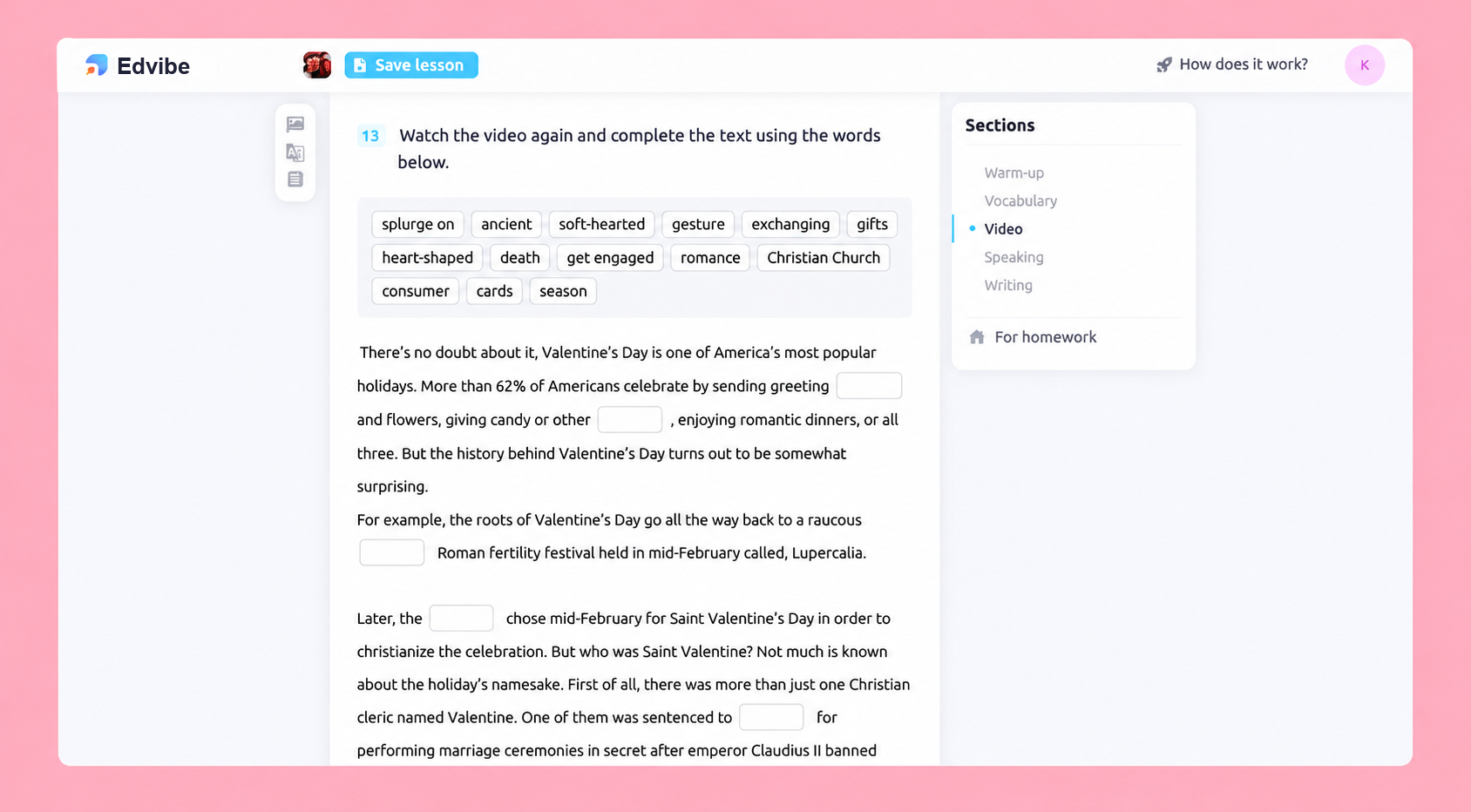
Add comprehension questions if useful. The video can also work as a standalone activity for B1–B2 students.
The Speaking section offers picture descriptions using the target language and discussion questions. For learners who need more support, provide useful expressions or sentence starters.
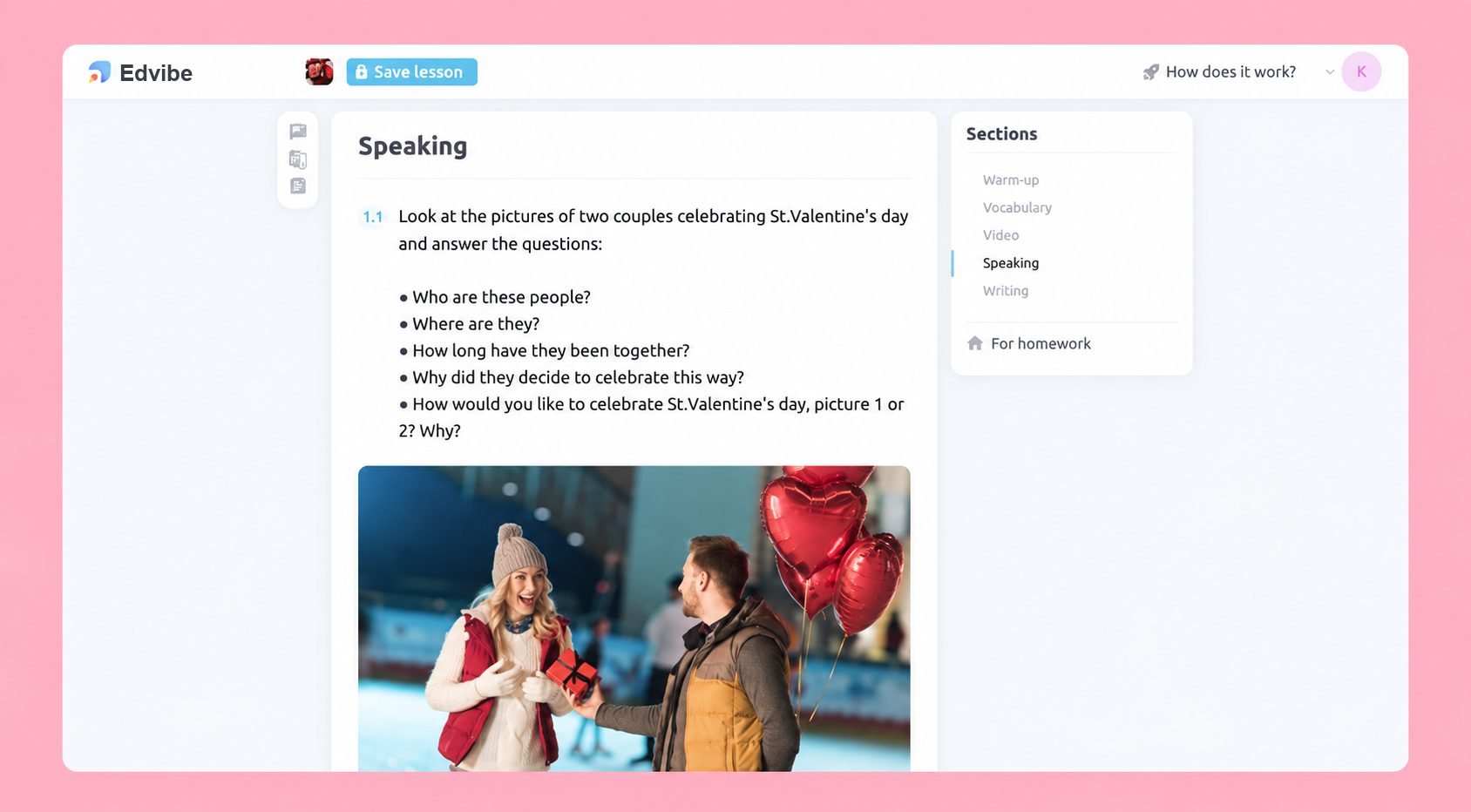
A final writing activity can be set for homework: students describe a picture using the expression provided.
Terrible Date Experience (B2)
Aim: talk about awkward dates using relevant vocabulary.
For the warm-up, students choose familiar types of dates from a list and discuss examples, real or imagined.
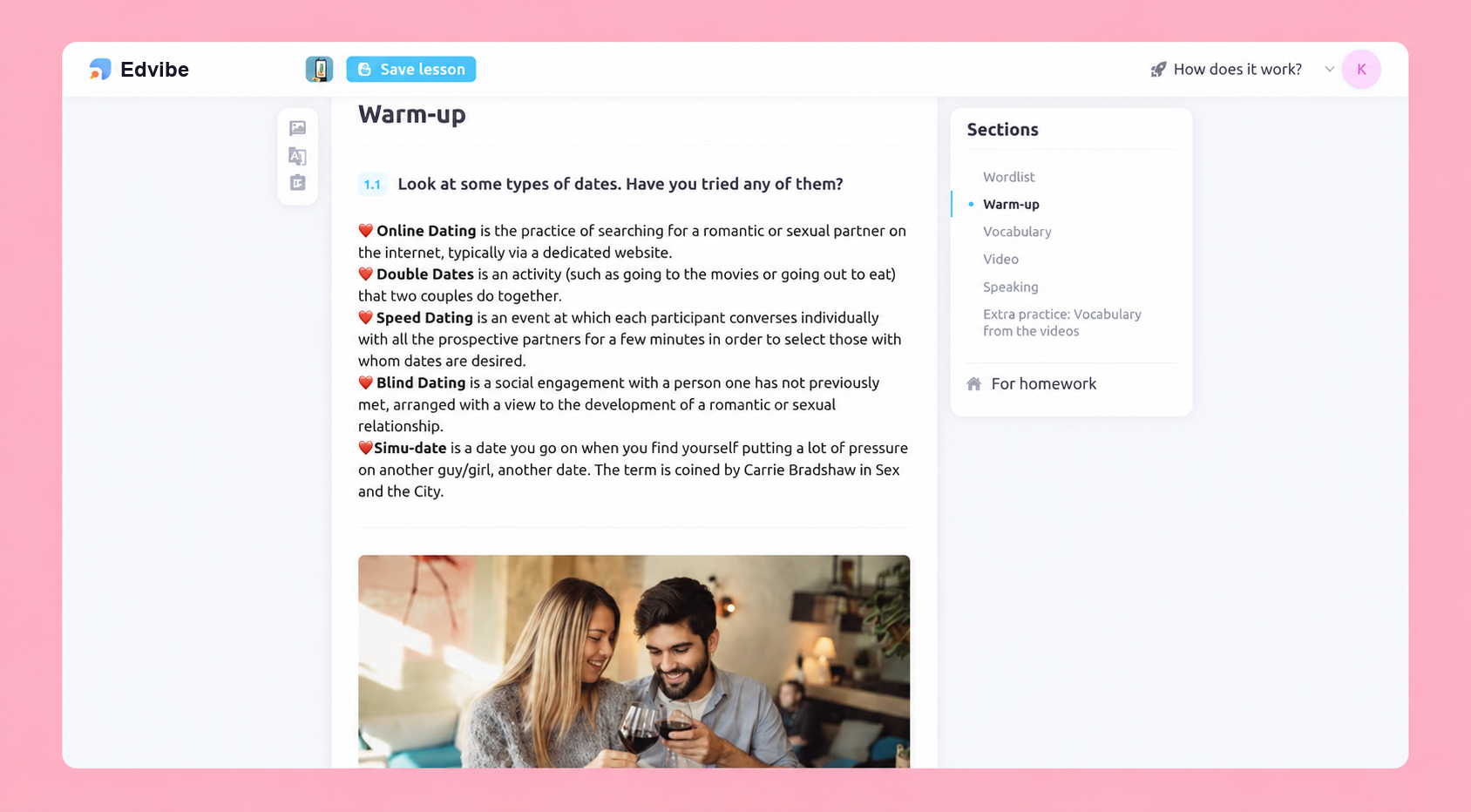
The next part of the plan introduces and practises vocabulary.
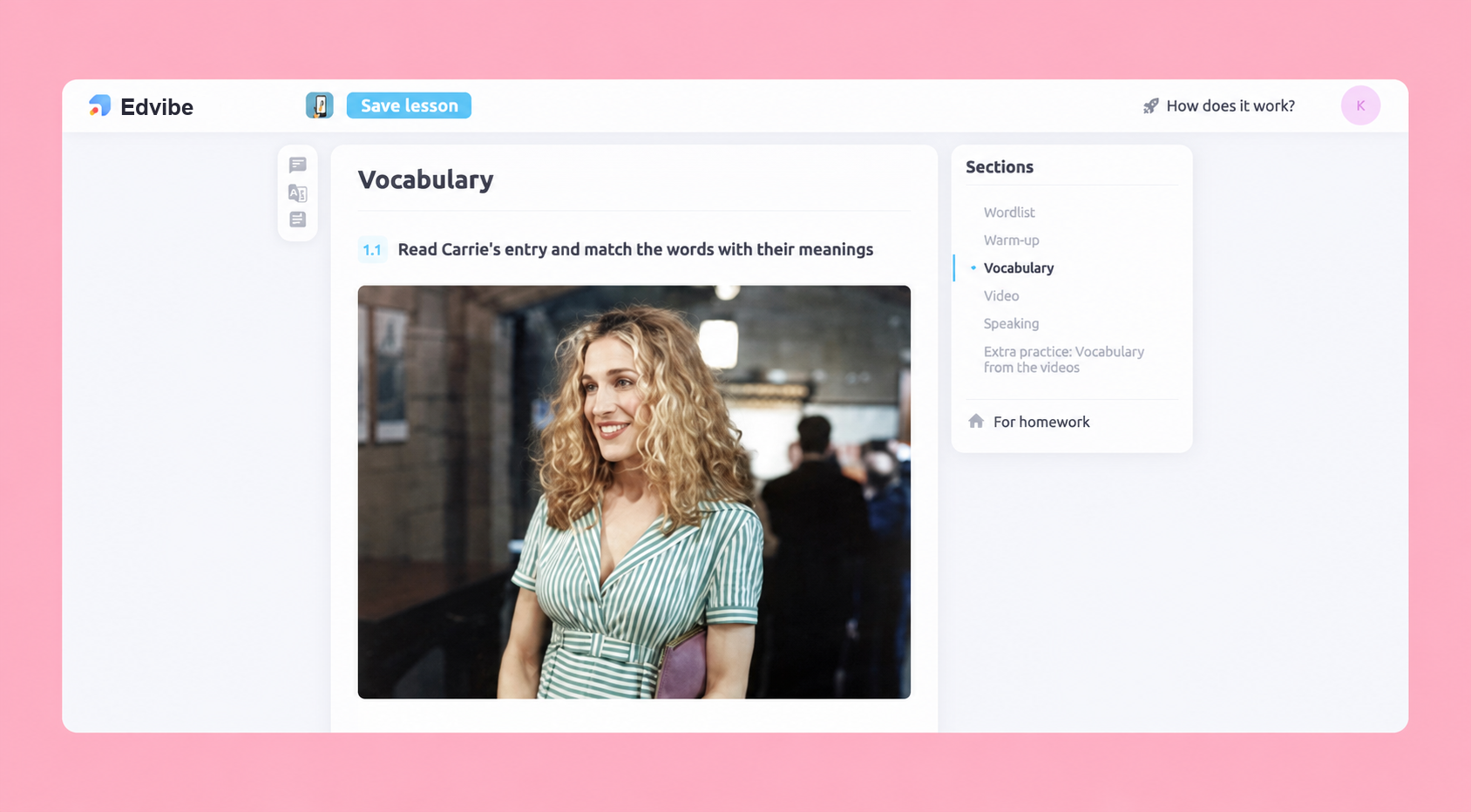
Video practice uses three short comic scenes about awkward dates from television series. Each comes with context, potentially difficult language and discussion questions.
In Speaking, students use the target expressions to describe an unsuccessful date. They can draw on a fictional situation rather than personal experience.
Speak Low, If You Speak Love (A2)
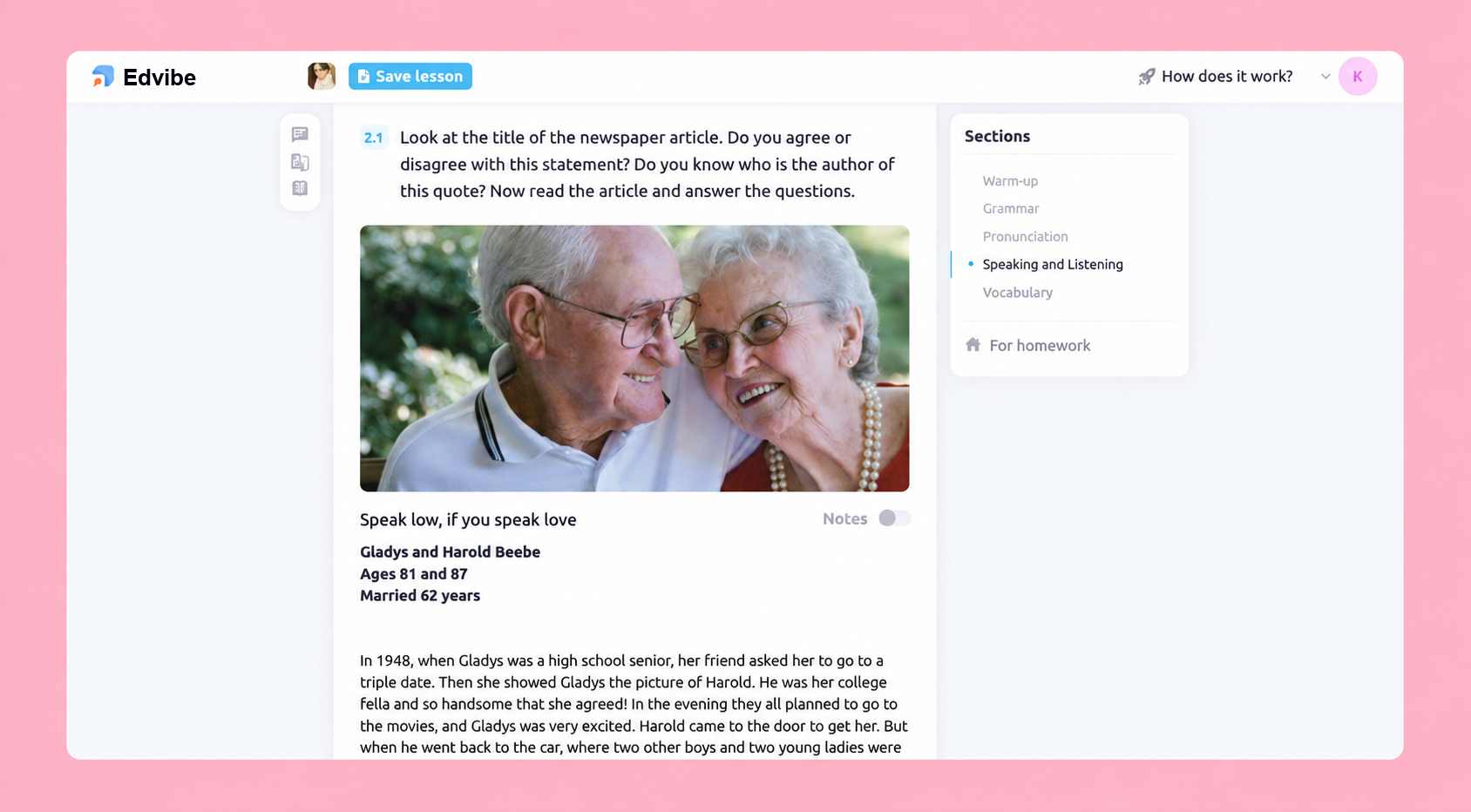
The Speaking and Listening section includes a romantic story with text and audio. It can also be adapted for B1 students. Expressions include fella, talk back, be full of yourself and mess up.
True Love (B2)
This collection of activities looks at stages in romantic relationships. Use the tasks separately or add them to another lesson.
The opening question asks whether students believe in love at first sight. Vocabulary is then practised through tasks and video.
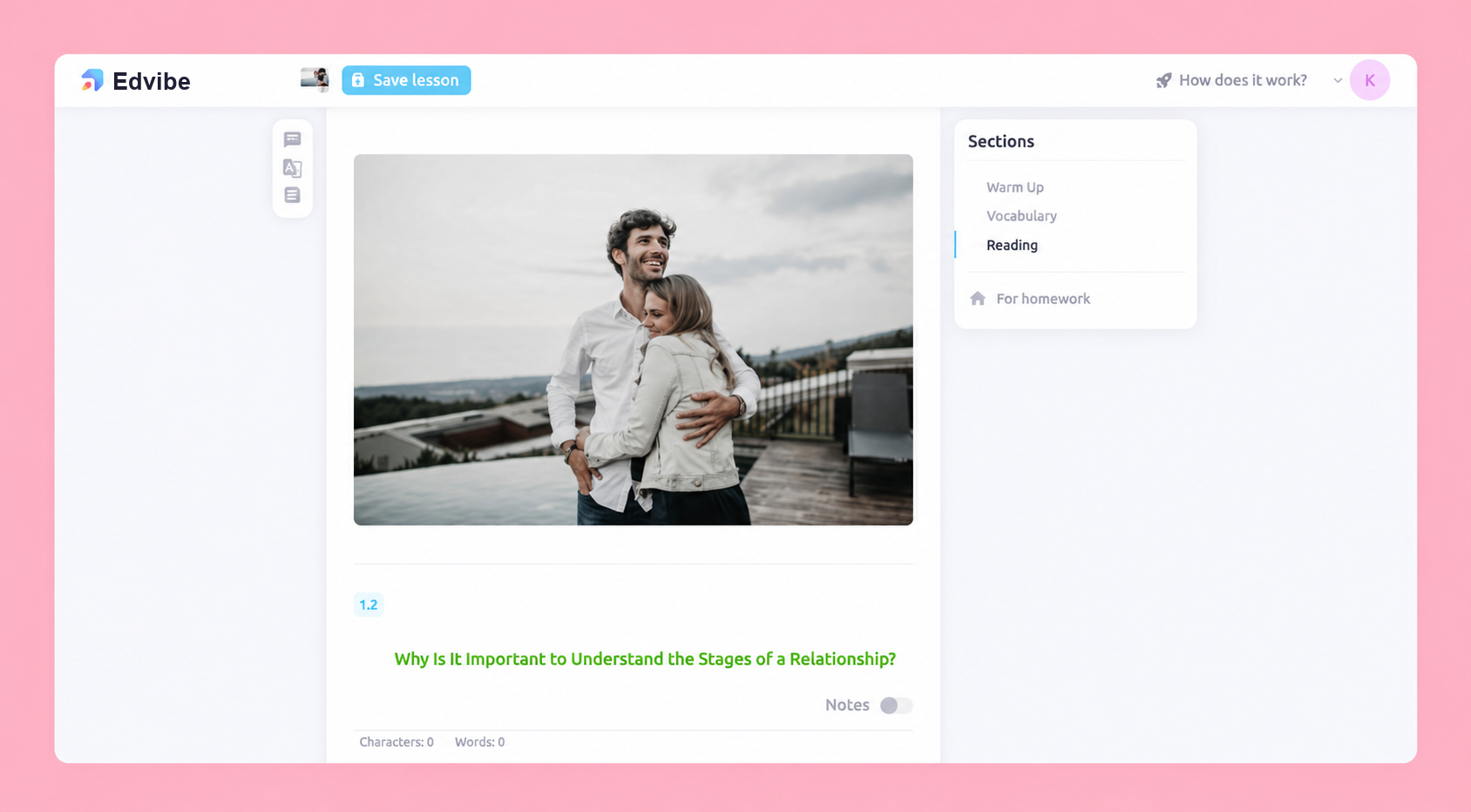
A text presents ten stages of a relationship as a discussion framework. It is one account to respond to, rather than a universal model every relationship follows. Add comprehension or vocabulary work if needed.
Talking about Love (B1)
Aim: discuss love and relationships using the target vocabulary. The materials can form a complete lesson or supplement other work.
A short, wordless romantic video starts the lesson. Use the questions to discuss what happens.
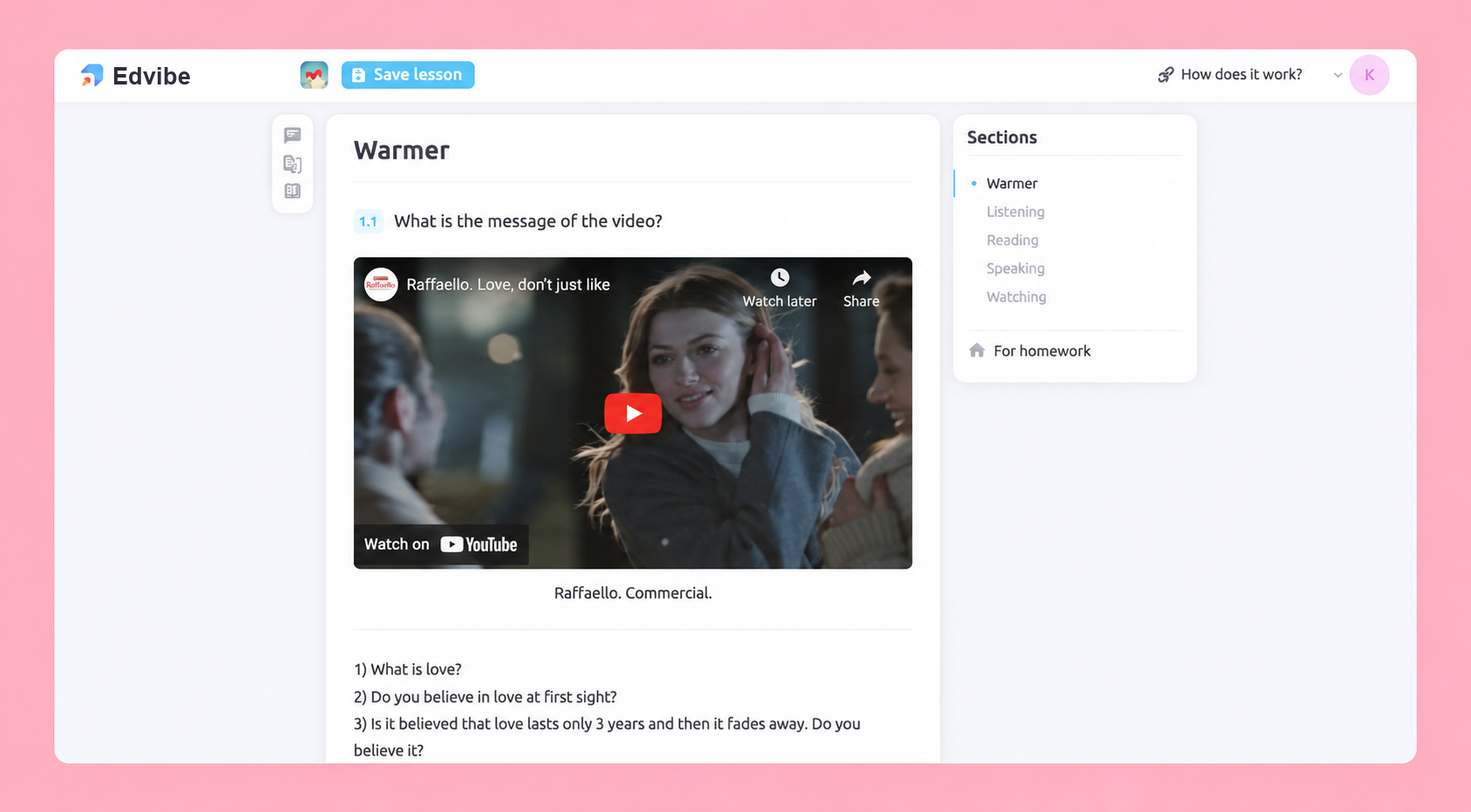
The Listening section includes:
- a four-minute video in which children explain what love means to them, with a gap-fill activity
- Lady Gaga's Shallow, also with a listening gap-fill task
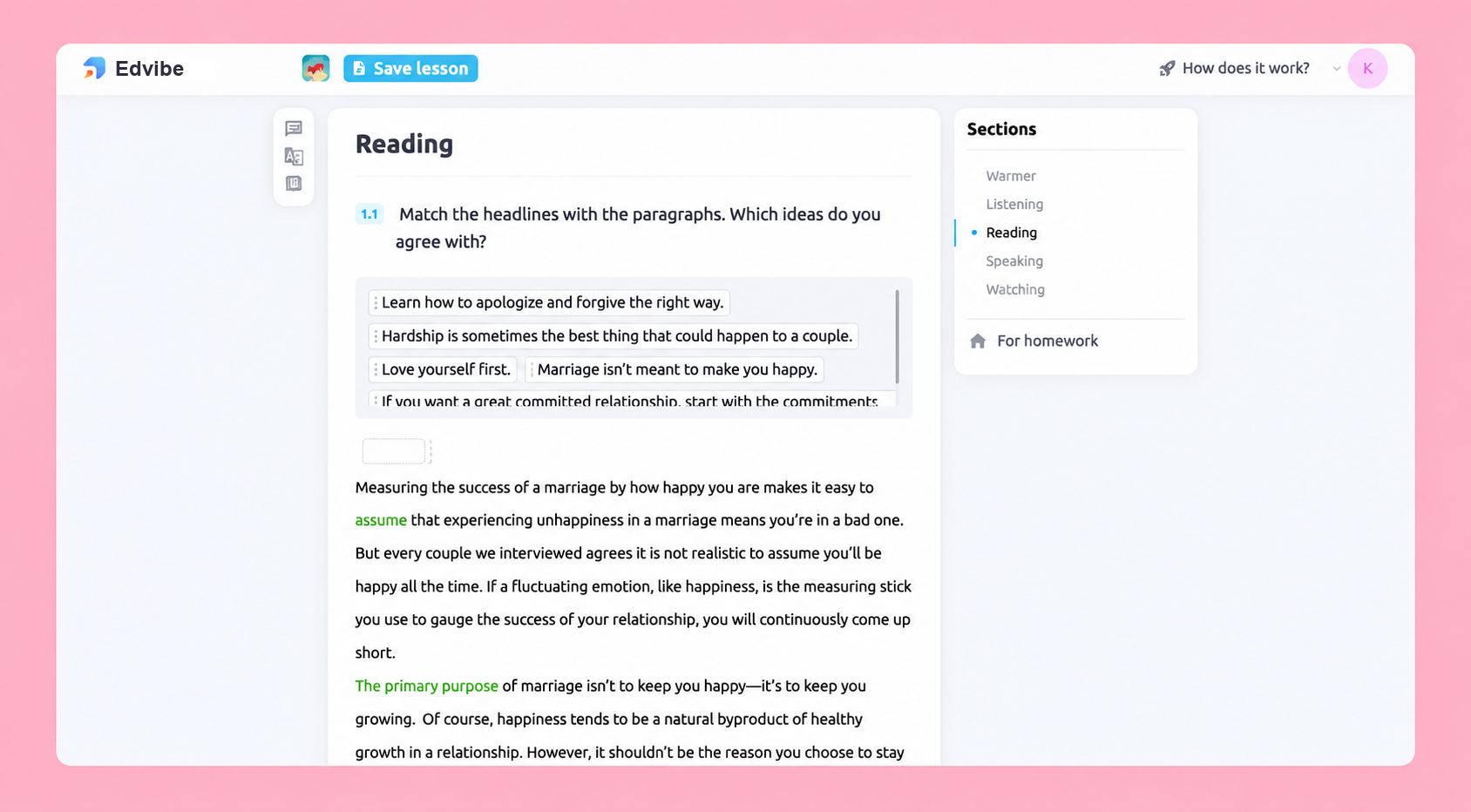
A reading text about relationships follows, with language that may also interest B2 students.
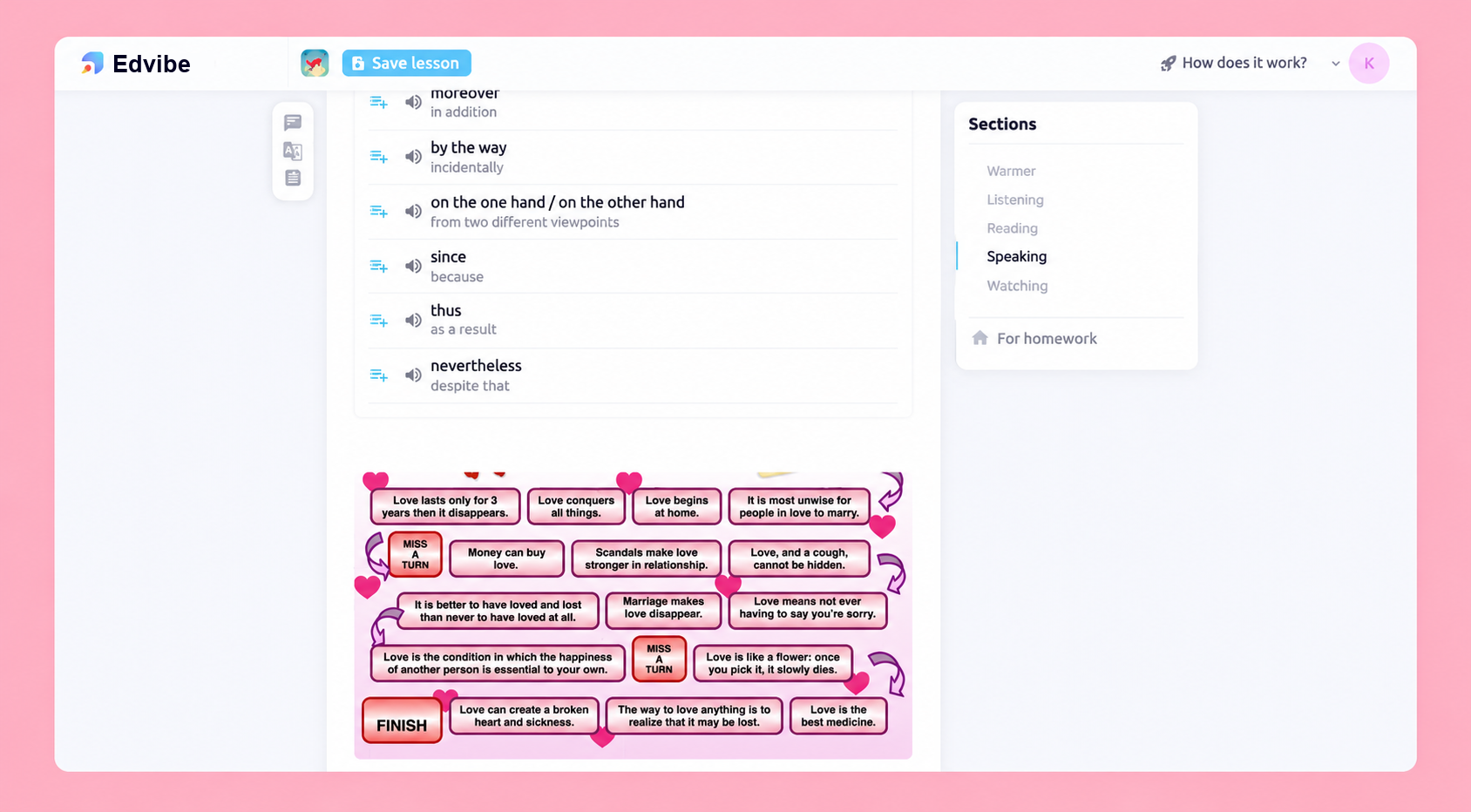
In Speaking Activities, students discuss statements about love and relationships, using linking expressions such as on the other hand, thus, although and in terms of. The activity is a game that uses virtual dice.
The plan closes with a scene from The Great Gatsby and discussion questions.
Mutual Crush (C1)
Aim: discuss having a crush using advanced American English collocations and idioms. Use a fictional crush as the discussion context, so nobody needs to disclose a personal situation.
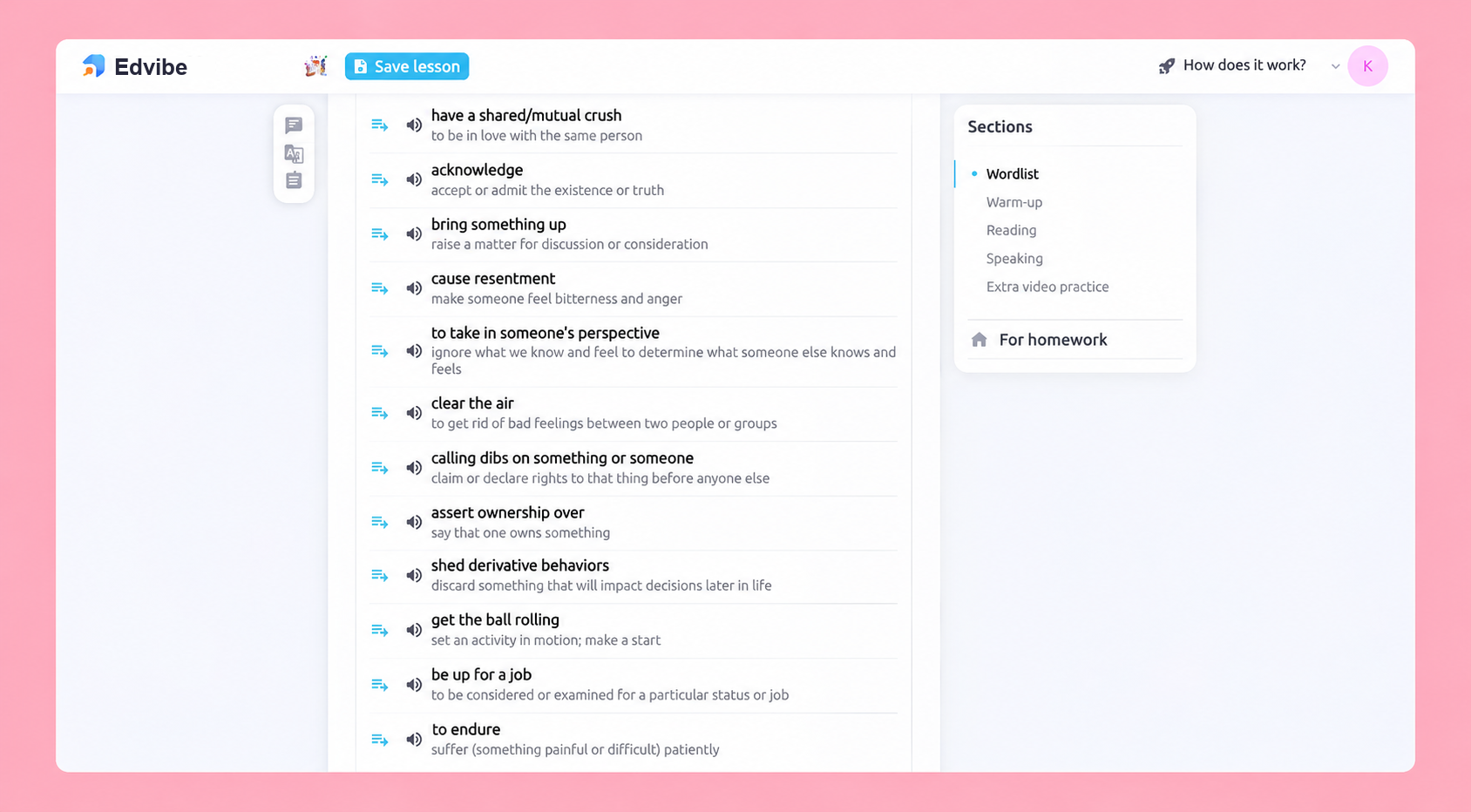
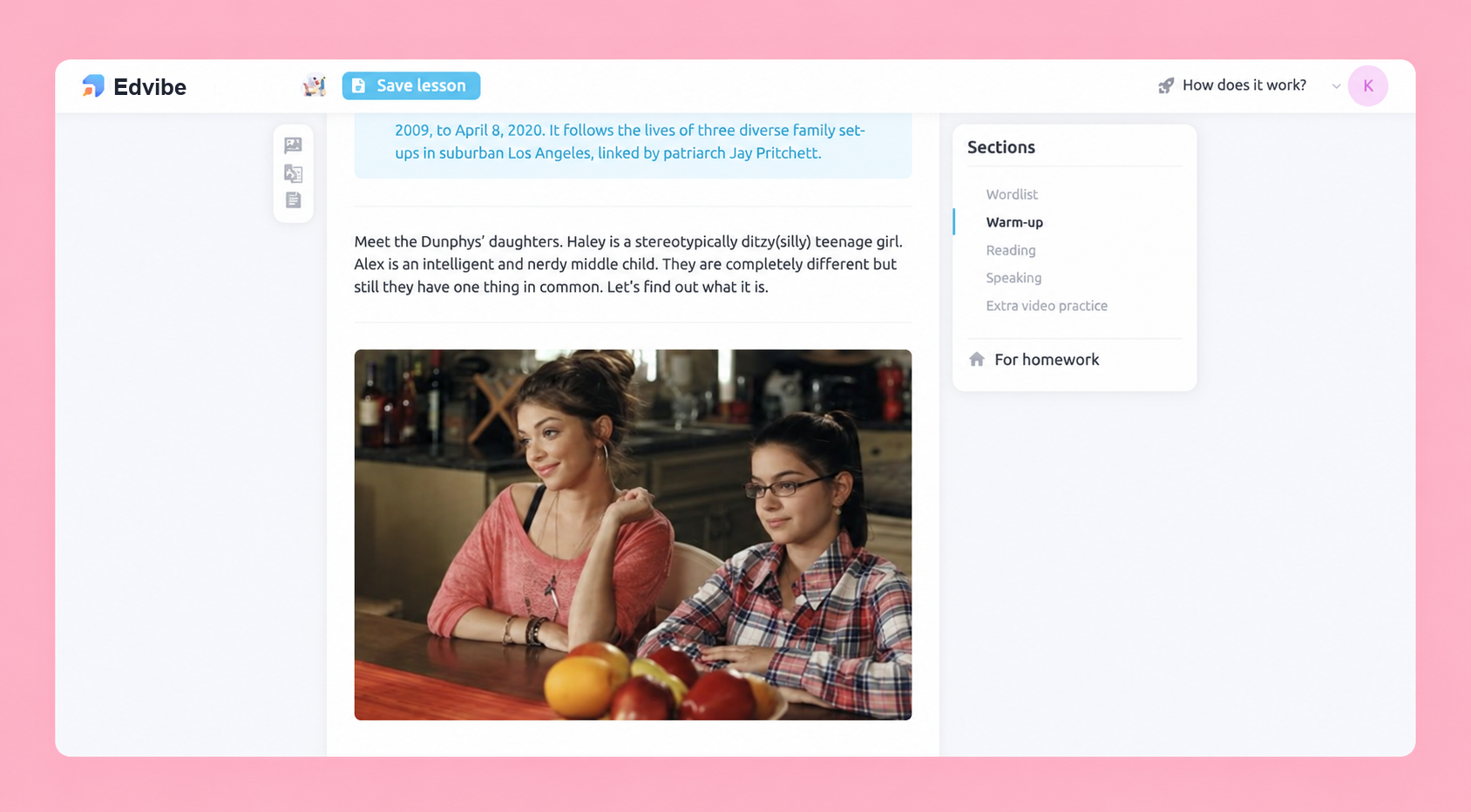
The warm-up uses two short scenes from Modern Family, in which two sisters are interested in the same young man. Students infer what is happening, then identify and practise expressions from the clips.
Students read an adapted advice article about the situation, with further expressions introduced through exercises. At the end, they use the ideas and language to explain how the characters could handle the problem.
The plan includes additional listening practice and homework.
Happy or Crappy (B2–C1)
The materials may also suit higher-level students who want more listening practice and expressions about dating.
Aim: recognise dating and relationship vocabulary in spoken British English.
The lesson uses a four-and-a-half-minute authentic video in which a young British woman describes a disappointing date with a man she compares to a young Johnny Depp.
Begin with questions about Valentine's Day. Two main sections then work with different sets of idioms.
A short test reviews the expressions at the end.
St. Valentine Day (A2–B1)
Aim: discuss Valentine's Day and relationships, then make Valentine cards.
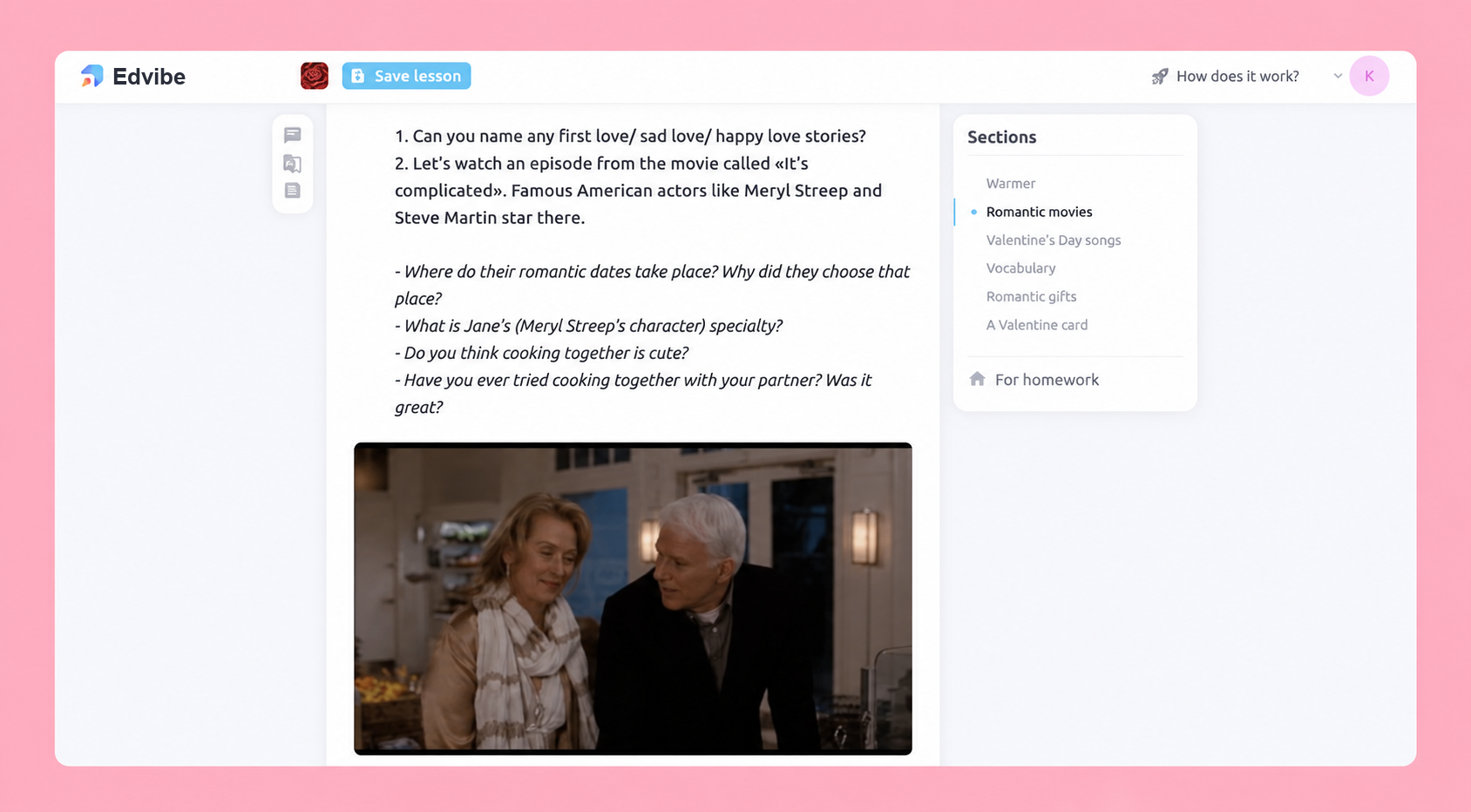
The warm-up uses questions about the holiday, love and relationships. A clip from It's Complicated follows, with tasks before and after viewing.
Students then respond to statements about love and relationships.
The next section introduces idioms about falling in love.
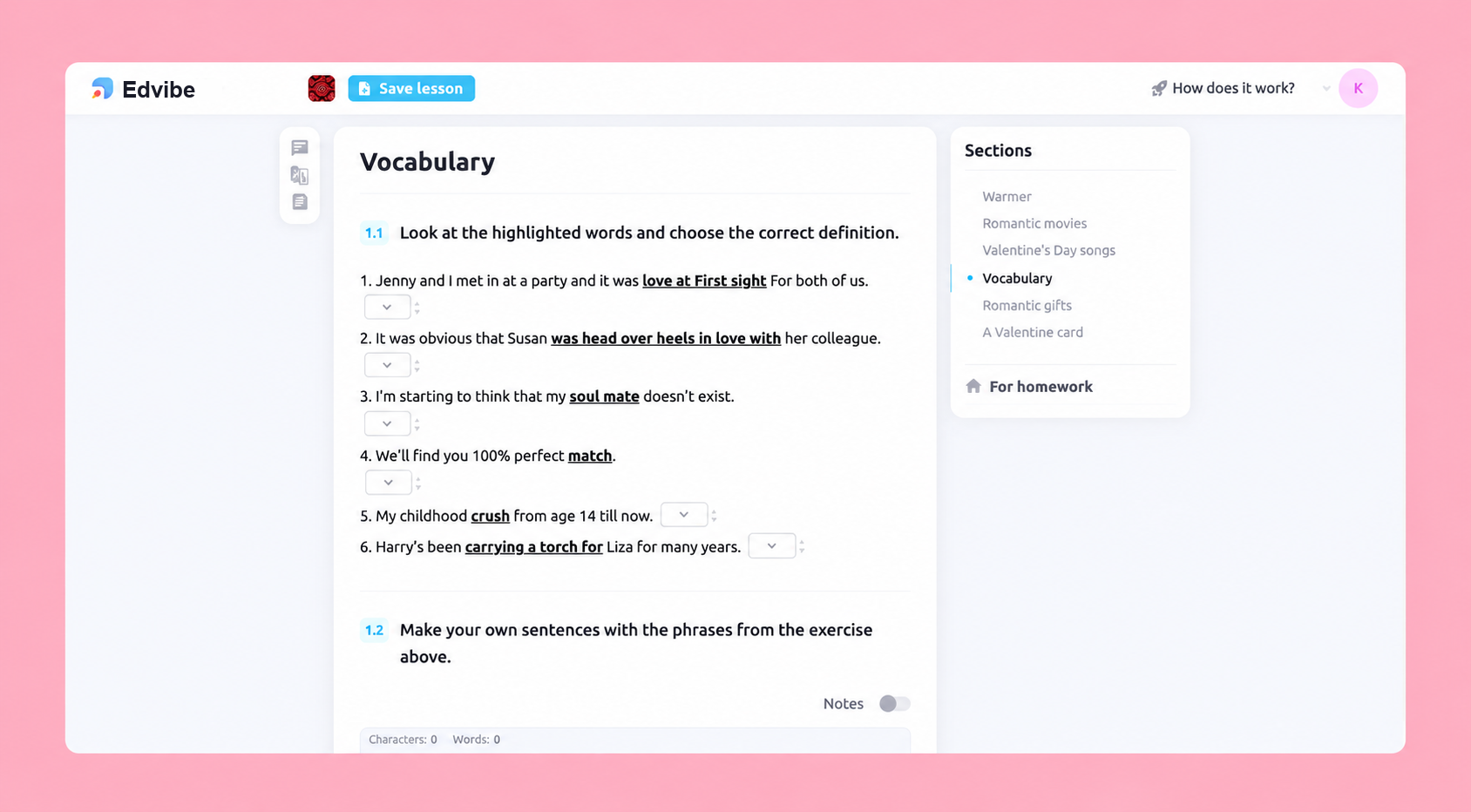
For students who need support, add sentence frames. The idiom section can also work as a separate B1 activity.
In Romantic Gifts, students choose a suitable present from a list and explain their ideas.
The lesson ends with a short Valentine-card workshop. Add examples for inspiration, or ask students to arrange words you supply into a greeting using a word-order task. A short homework activity is included.
Choose a plan that gives your students something they want to say, and adapt the support to their level.
Use Edvibe to organise your own lesson materials, interactive exercises and homework. Explore Edvibe lesson tools.


