
Teaching Beginner English: 10 Principles for the First Lessons

Here are ten principles for teaching beginners.
Teaching students with no prior English is not as simple as it may look, particularly with a communicative approach. It calls for patience and specific classroom skills. These principles help beginners start speaking and recognise what they can do from their first lessons.
1. Set a clear lesson goal
Decide what students should be able to do by the end. For beginners, that often means three to five questions they can ask and answer. Everything in the lesson should contribute to that goal. Find a detailed lesson-planning guide here.
2. Do not assume prior knowledge
Avoid assuming students already know a word or a grammar structure. Plan to introduce and explain the language they will need in the lesson.
3. Keep Teacher Talking Time down
Speak when it serves a purpose. Use the words and phrases students will need to produce by the end of the lesson. Unfamiliar synonyms and complicated expressions may confuse them.
4. Use visual support and gestures
Use objects, pictures and gestures to explain meaning. This reduces Teacher Talking Time (TTT) and avoids explanations beginners cannot yet follow. At the end of this article, you will find gestures that also work online.
5. Keep students actively involved
Beginners can be curious, notice patterns and draw conclusions even before they know much grammar or vocabulary. Ask questions and give them a chance to work things out. After introducing “I like”, for example, invite them to try the phrase with other pronouns. After learning some words through pictures, show an apple and ask, “Orange?” or “Is it an orange?”
6. Slow down
Fast speech is difficult for beginners to follow. Speak slowly enough to be understood, while keeping your delivery natural and respectful.
7. Introduce less and practise more
Do not overload the lesson with new vocabulary or grammar. Everything you introduce should help achieve the lesson goal. It is often more useful to teach three to five phrases and practise them through drills and communicative tasks than to leave students overwhelmed by new language. When teaching vocabulary, focus on those words and their use. When teaching grammar, use vocabulary students already know.
8. Use drilling
Beginners need repeated practice with words, structures and phrases before they can retrieve them readily. Provide that practice in class rather than assuming students will do all the repetition independently.
9. Teach chunks as well as individual words
Reusable phrases give students something they can adapt to different situations. A frame such as “I will [verb] tomorrow” lets them begin expressing future plans without a lengthy explanation.
10. Introduce contractions early
Help students become familiar with forms such as “I'm” alongside “I am”. This supports more natural speech and helps them recognise the forms when listening. Where time and students' goals allow, work on pronunciation from the start so fewer habits need to be changed later.
American and British English: what teachers should know
The question of error correction
Teachers take different approaches. Some avoid correcting every word because constant interruption can discourage students from speaking. Others prefer frequent correction to establish accurate language from the beginning. Respond to the learner and the task. If a student is afraid to speak and finds correction upsetting, give fluency more space. If a student welcomes correction and asks for it, provide the support they need.
Beginners also benefit from visible encouragement. Early difficulties can make giving up tempting, so show that you are interested in their progress. Gestures can help communicate that support.
Gestures for online lessons
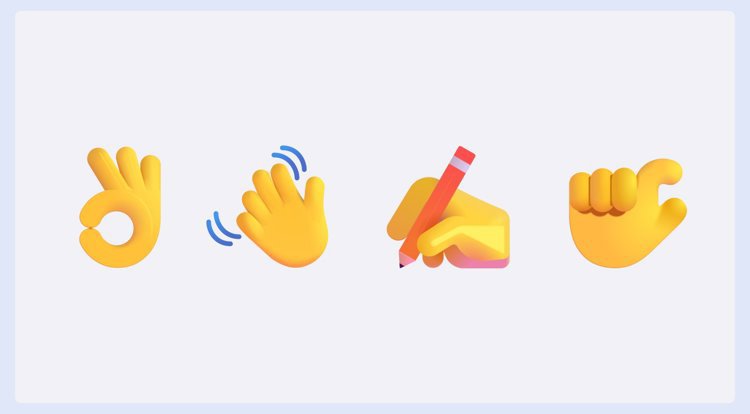
Body language helps at any level, but it is especially useful with beginners and children. Gestures can show involvement and reduce the amount of explanation needed. These examples work online and in a physical classroom.
Examples:
1. Cup a hand behind your ear
Use this to show that you cannot hear a student, or to invite them to speak. After asking, “How was your weekend?”, for example, the gesture can prompt an answer.
2. Point towards the student
After asking a question, an open hand directed towards the student can show whose turn it is to answer. This helps manage the conversation and focus attention.
3. Use your fingers
When practising “I live in the UK”, point to one finger for each word. This can support sentence structure and stress. Fingers also provide a quick way to show a number, such as a selected answer or quantity.
4. Signal for quiet
A finger to your lips can show that it is time to listen. Agree what the gesture means so students recognise it without another explanation.
5. Mime writing
Pretend to hold a pen and write when asking students to make a note. The gesture can replace a longer instruction.
6. Ask for a full sentence
A gesture suggesting that you are stretching out an answer can prompt students to expand a short reply. For example, “Fine” becomes “I'm fine.”
7. Give a thumbs-up
This can show approval of an answer.
To read about a colleague's experience using this approach with beginners, see this article.
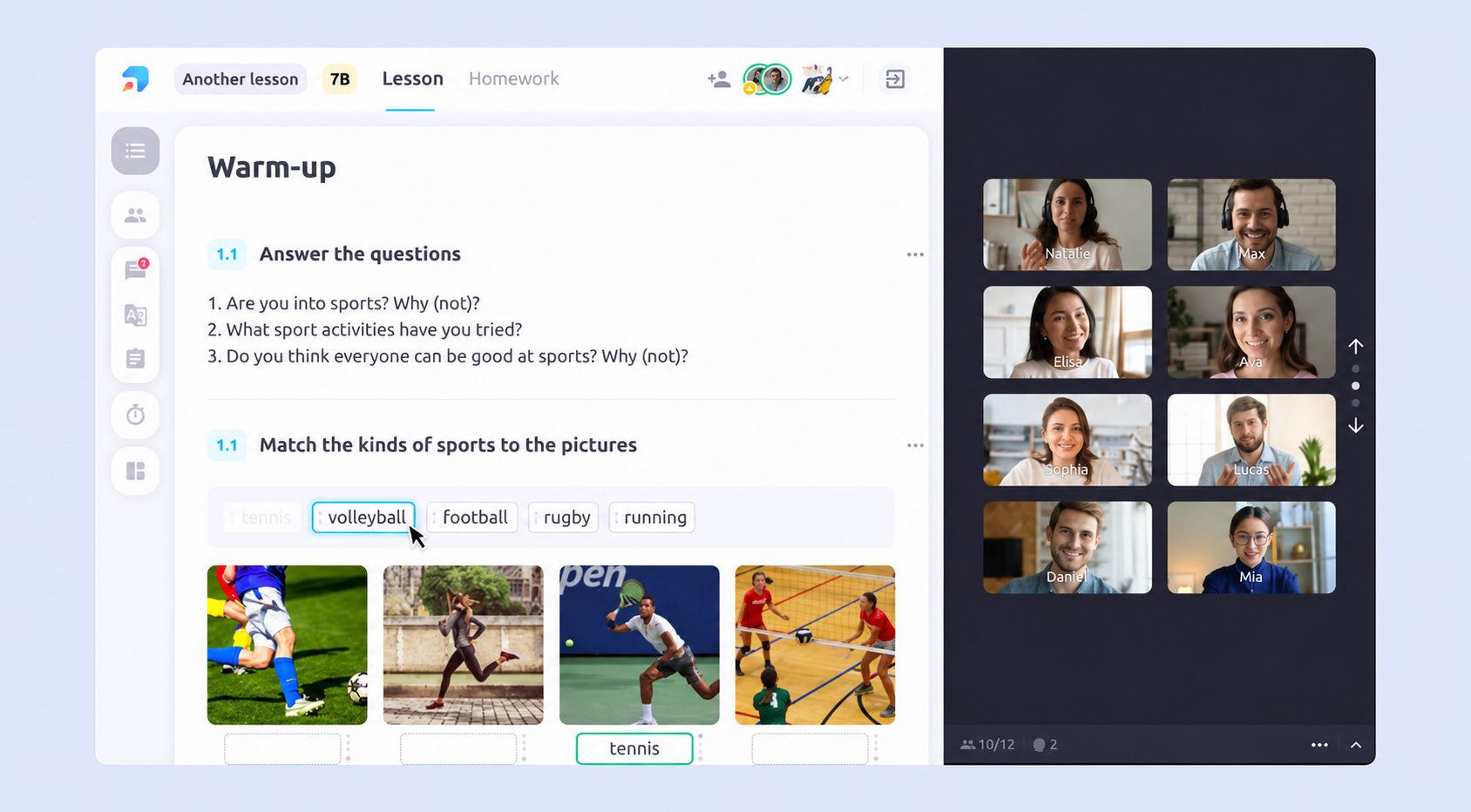
Edvibe's lesson builder includes exercise formats for beginners, such as matching words to pictures and putting words into sentence order.
If you do not yet use Edvibe, explore the platform here.


