
Help Students Overcome the Language Barrier: 20 Speaking Activities

If you have ever been surrounded by people whose language you do not speak, you have experienced a language barrier. It can also affect people who already know some of the language. A student who understands texts and recordings but struggles to speak is facing a similar obstacle. The teacher's task is to help them work through it.
Start by finding out what is getting in the way. Limited knowledge is one obvious reason. Others include fear of mistakes, embarrassment about an accent or pronunciation, low confidence and a lack of regular speaking practice. Work on the relevant vocabulary and grammar, and provide speaking practice both in class and outside it. As knowledge and experience grow, students can become more confident about speaking.
Ask students what they think is stopping them, then listen for patterns in their grammar, vocabulary and pronunciation. We explain how to identify students' needs during a trial lesson in this article.
Choose activities and games that address the causes you have identified. Track progress, notice which approaches help and adjust the programme accordingly.
How to track student progress: read the article
Nine ways to get students talking
To develop students' speaking, give them more time to talk and reduce how much you speak yourself. The following techniques help reduce Teacher Talking Time (TTT) and increase Student Talking Time (STT).
1. Prepare short, clear task instructions.
Teacher and teacher trainer Maria Vasilyeva starts work with students at any level by giving them a list of useful classroom phrases. Clear structure and familiar classroom language reduce the time needed for explanations.
2. Ask open questions.
Instead of “Did you like the story?”, try “What do you think about the story?”
3. Use prompts rather than giving the explanation straight away.
Do not rush students or answer for them. Give them time to think.
4. Put students in pairs or small groups.
More students can take part at the same time, increasing their opportunities to speak.
5. Invite stronger students to help explain the material.
6. Use non-verbal feedback where appropriate.
A thumbs-up, pointing to an object or miming an action may be enough. For more on gestures in language lessons, see this article.
7. Ask students to retell something they have read or watched.
Give lower-level learners key words or a simple framework to support their answer.
8. Include debates, role-plays and dialogues.
9. Build speaking tasks around topics your students actually care about.
AI tools can help personalise materials. Edvibe has built-in AI assistants that teachers can use to create tasks without leaving the platform.
20 speaking activities and games
1. Debate
Prepare two sets of cards expressing opposing views on a topic: for example, “Money makes people happy” and “Money cannot buy happiness”. Put students in pairs or groups and give each side a position to defend. They should support their arguments with examples and use linking expressions.
2. Retell a video
Choose a video and prepare a short summary with gaps. Leave only sentence beginnings, or remove key words and phrases. Ask students to retell the video using that framework.
3. Sort the facts
Prepare facts about the lesson topic and a second list about a related topic. Possible pairs include technology and artificial intelligence, veganism and vegetarianism, or business etiquette and stereotypes. Ask students to identify the facts that belong to the main topic and explain their choices.
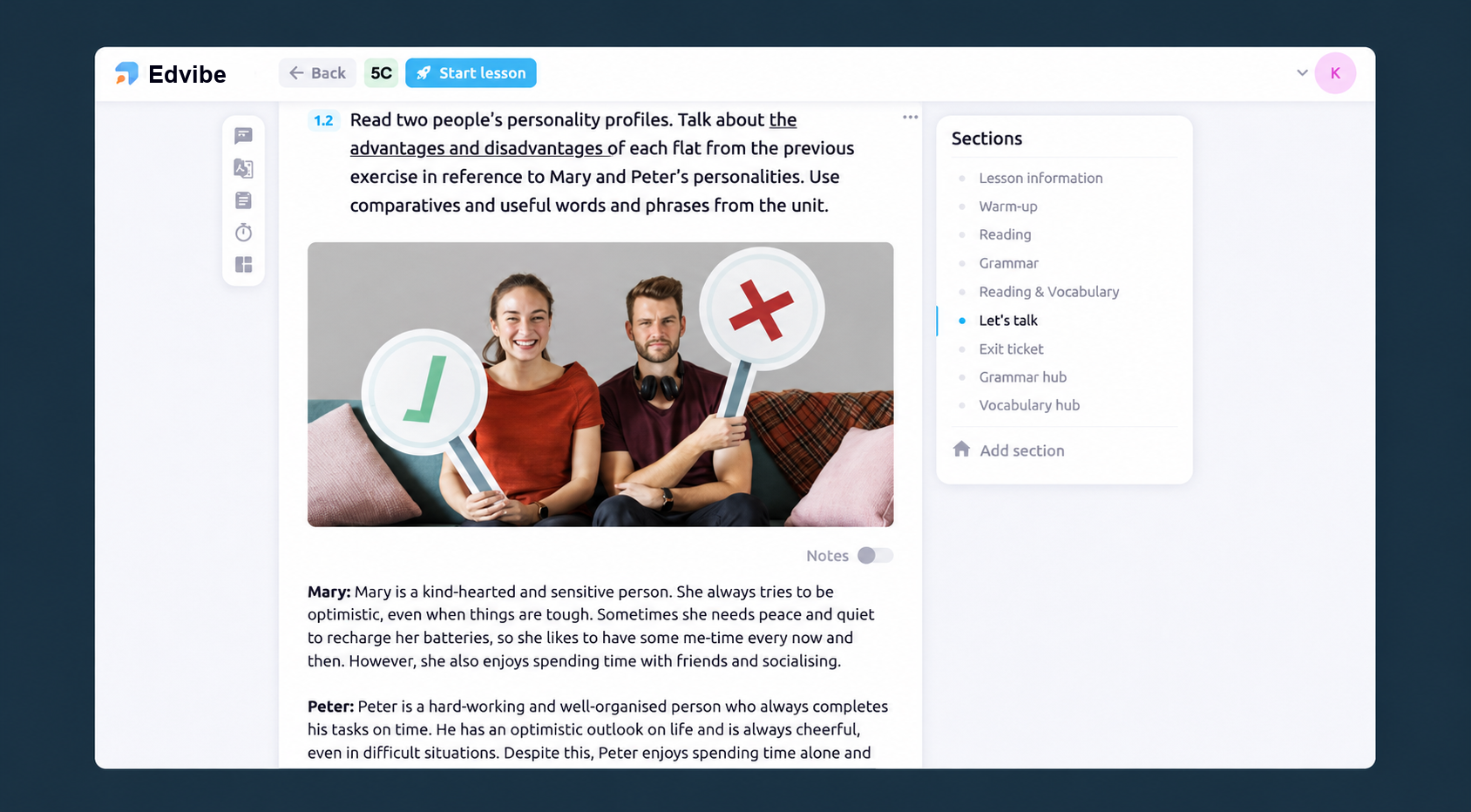
4. Pros and cons
Make a list of advantages and disadvantages of something such as remote work, online learning or having a large family. Leave only the beginning of each point and ask students to finish it with their own ideas. The illustration shows one way to lay out this activity for B2 learners.
5. Tell a picture story
Use pictures or emoji to suggest a story and ask students to give their interpretations. Alternatively, provide a word or an opening phrase and ask students to continue the story.
6. Guess the emotion
Find photographs showing people expressing different emotions. One option is the portraits of American actors from photographer Howard Schatz's book. If you know students' favourite actors or characters, use those. Ask students to describe the emotions and suggest what caused them, with vocabulary and sentence frames for support. At the end, reveal the emotion the actor was asked to portray.
7. Guess the word
One student chooses a word and describes it without using words from the same family. The others try to guess. This works for practising new vocabulary or revising it. In another version, students ask yes/no questions: “Is it a type of food?” or “Is it sweet?”
8. Name the category
Give a student a category, such as breakfast, and five seconds to name three items: cereal, coffee and toast, for example.
9. Substitute a mystery verb
One student receives a verb that the others must discover through questions. They use “coffee-pot” in place of the unknown verb: “Do people coffee-pot every day?”, “Have we coffee-potted in this lesson?”, “Are you coffee-potting now?”, “Do people coffee-pot on purpose?” or “Is coffee-potting dangerous?”
Answers need not be limited to yes or no. The student might explain that the action can be dangerous, but people do it regularly without anyone being hurt. Learners can also ask open questions such as “In what situations do people coffee-pot?”
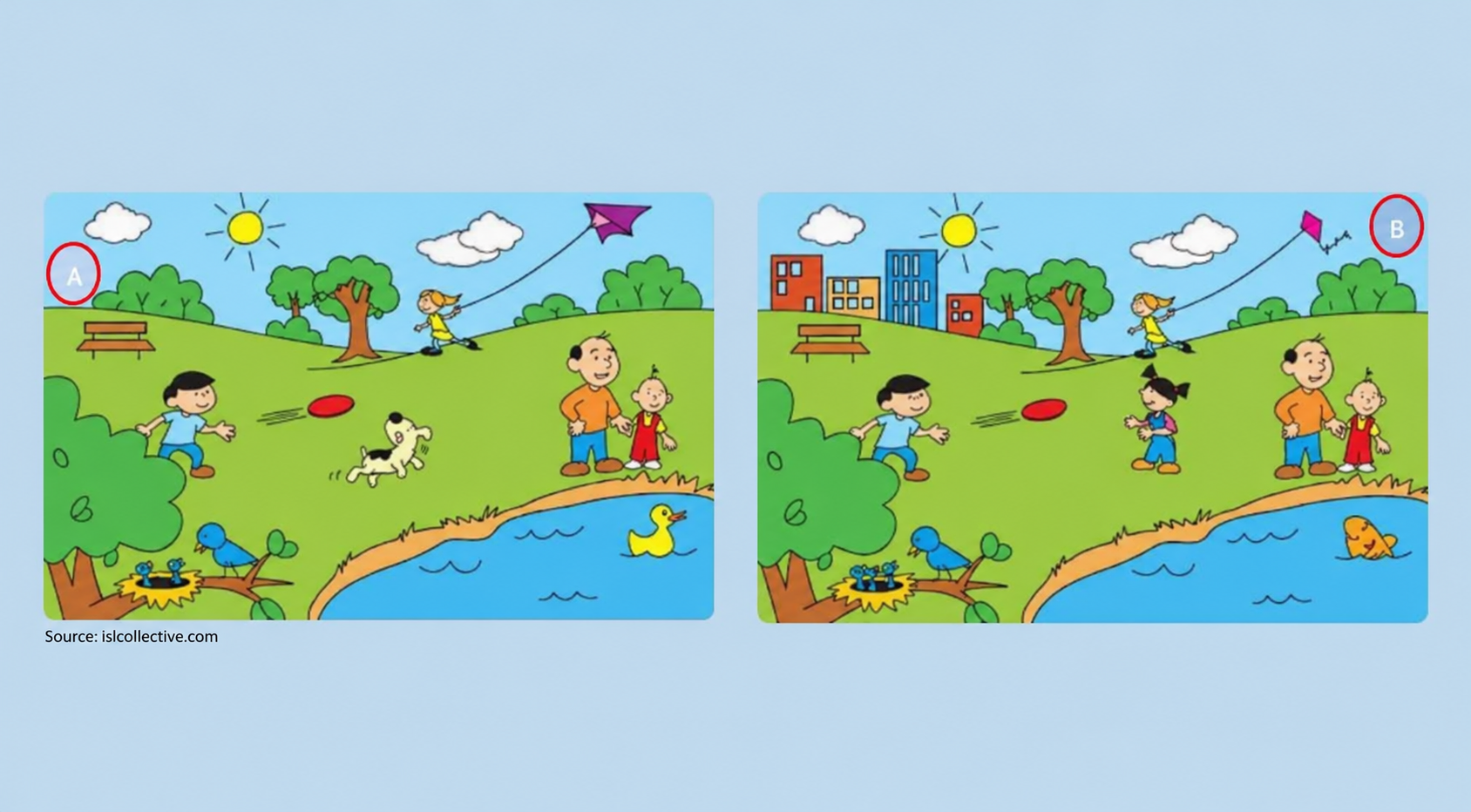
10. Compare pictures
Give students versions of the same picture with different elements missing. They ask each other questions to complete their own version. Another variation uses pictures with small differences, which students identify through conversation.
11. Solve a problem
Give students a problem. For example, Mary is preparing for Christmas but has only $500. Show a shop scene with items and price labels. Divide students into two groups and ask them to decide which purchases matter most. Each group then presents its solution. The amount is part of the fictional classroom task, not a lesson price.
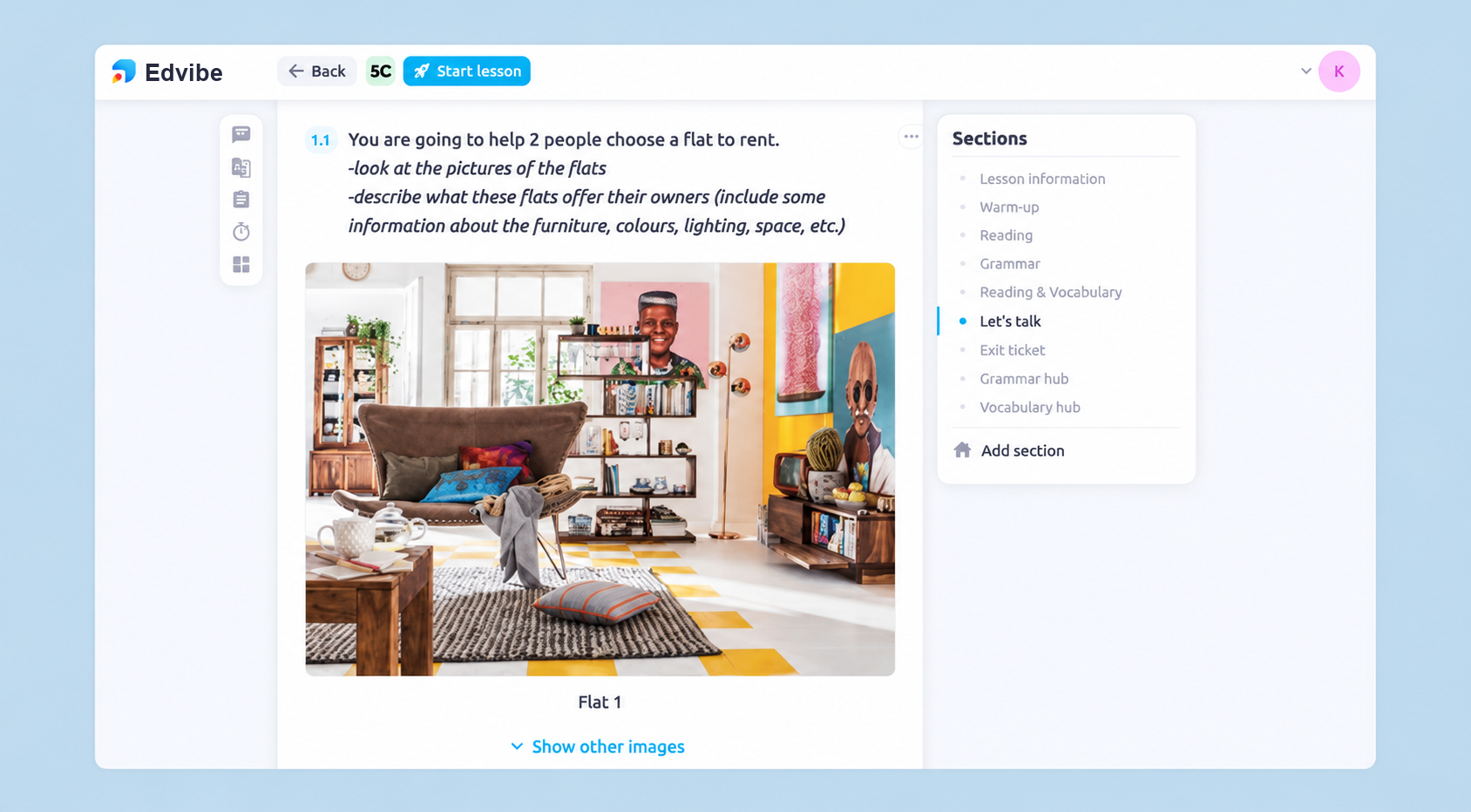
12. CAE-style picture tasks
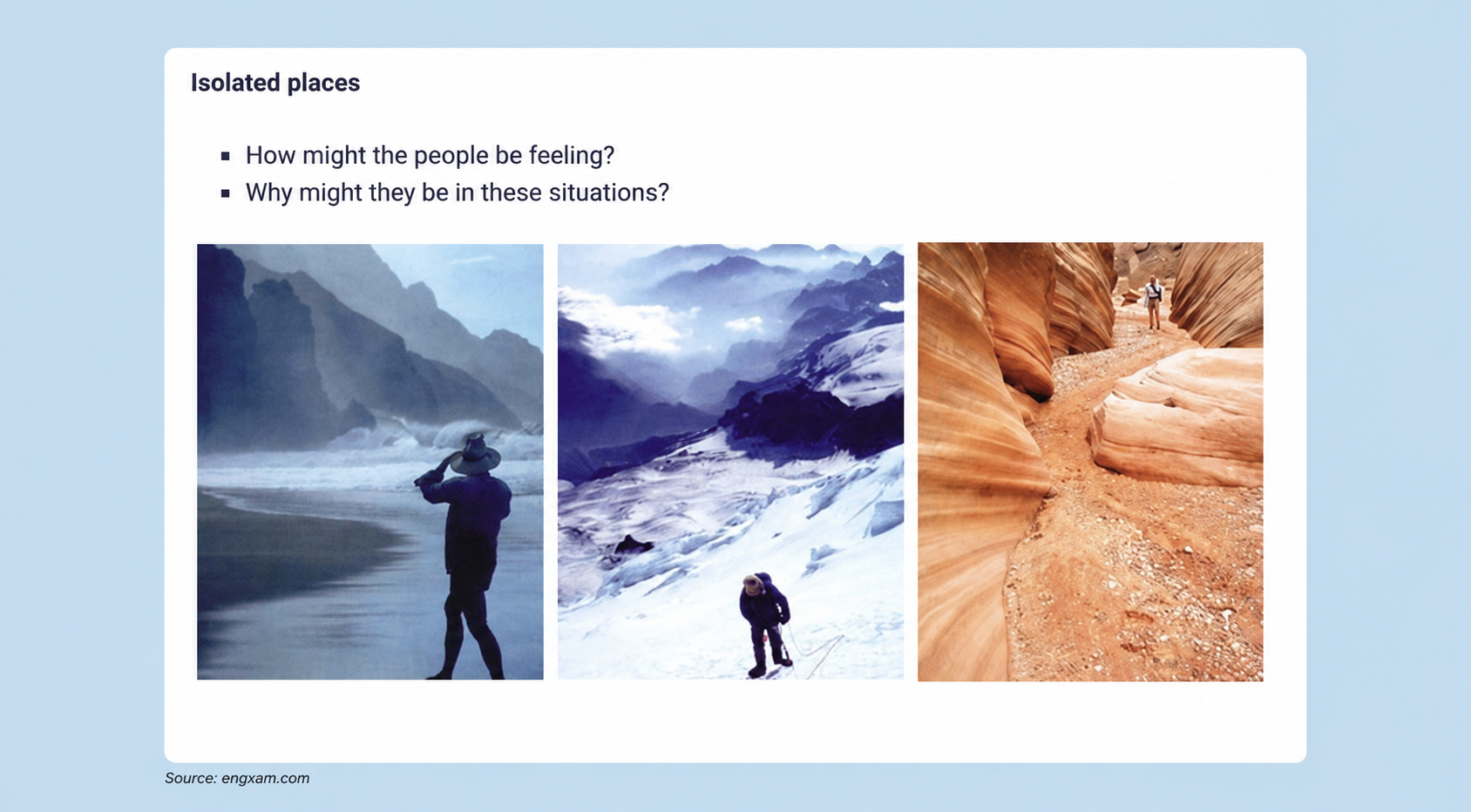
Ask students to discuss the situation shown in a photograph. The emphasis is on what may have happened and how the people feel, rather than simply listing visible objects. Use this with learners from B1+ upwards.
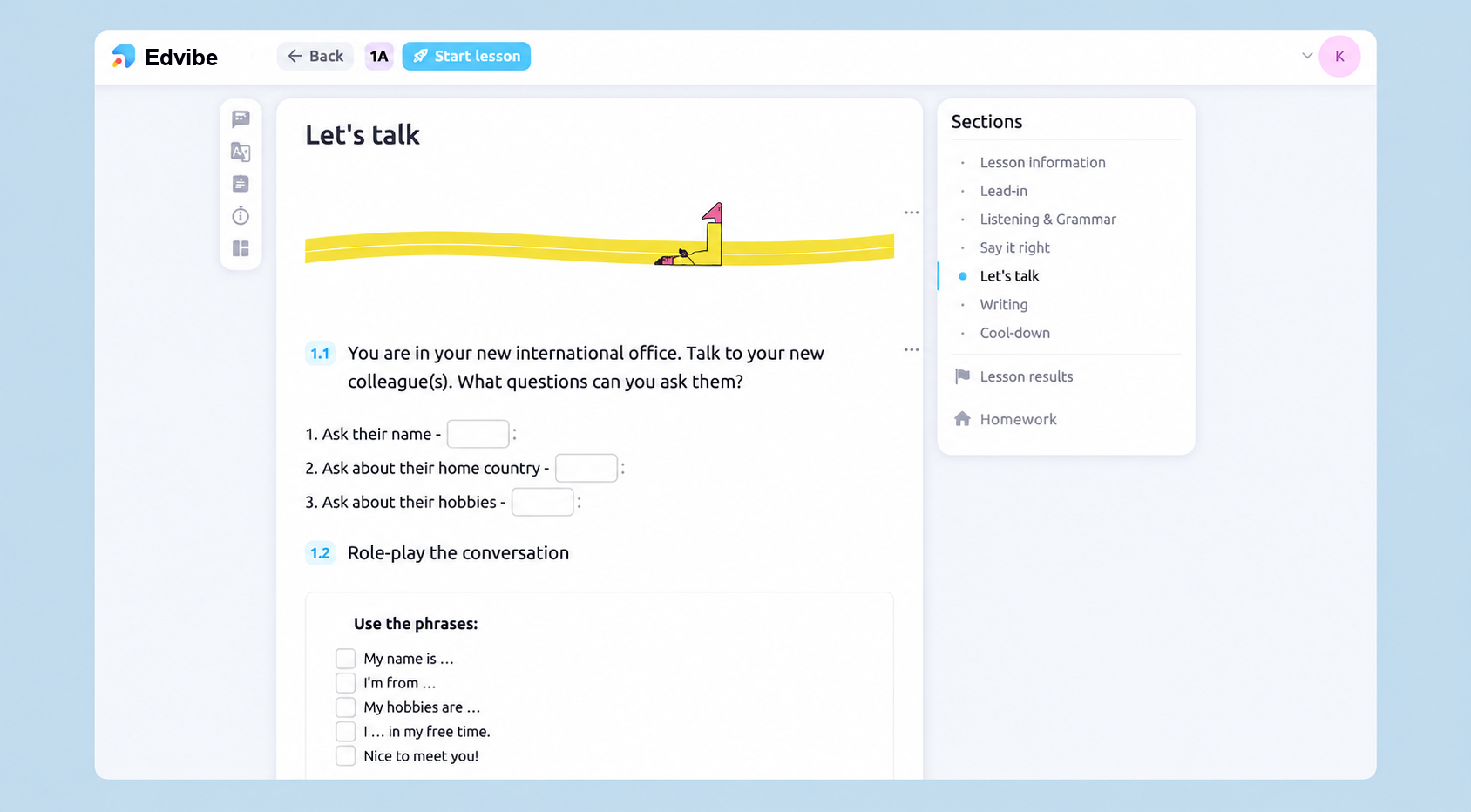
13. Role-play
Give students a situation and some background information, then ask them to act it out using the target grammar and vocabulary. Familiar settings include a restaurant, hotel, job interview or celebrity interview.
A disagreement or a funny complication gives the conversation a purpose: a disappointing holiday, a dirty hotel room or an unfortunate haircut, for example. AI tools on Edvibe can generate situations for a chosen level, vocabulary set and grammar structure. See examples in this article.
The illustration shows an A2 role-play example you can use as a model for your own situation.
14. Guess who I am
Students choose a celebrity or character. The others ask questions to work out the identity. Use yes/no or more varied questions, depending on the grammar students know. The winner identifies the person in the fewest questions.
15. Would you rather?
Use this to practise the second conditional. Offer situations suited to the students' level and vocabulary. For example: “Would you rather be a happy homeless person or an unhappy millionaire? Why?” or “Would you rather have a crocodile or a kangaroo as a pet? Why?”
16. Box of lies
This activity practises speaking with little preparation. Show students a picture, give them a minute and ask them to describe it. They can describe it truthfully or invent details. The others listen and decide which parts were true.
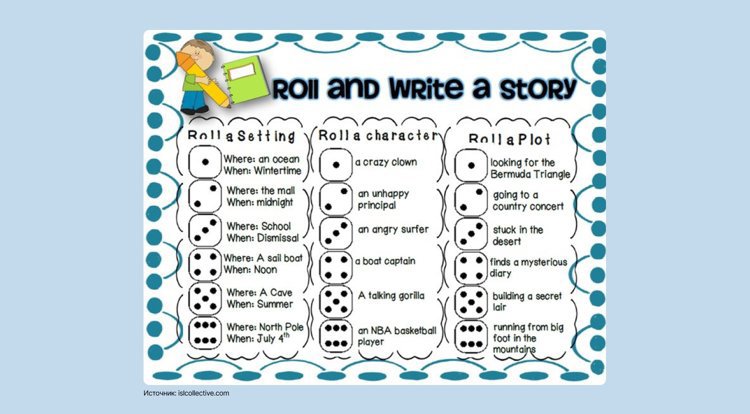
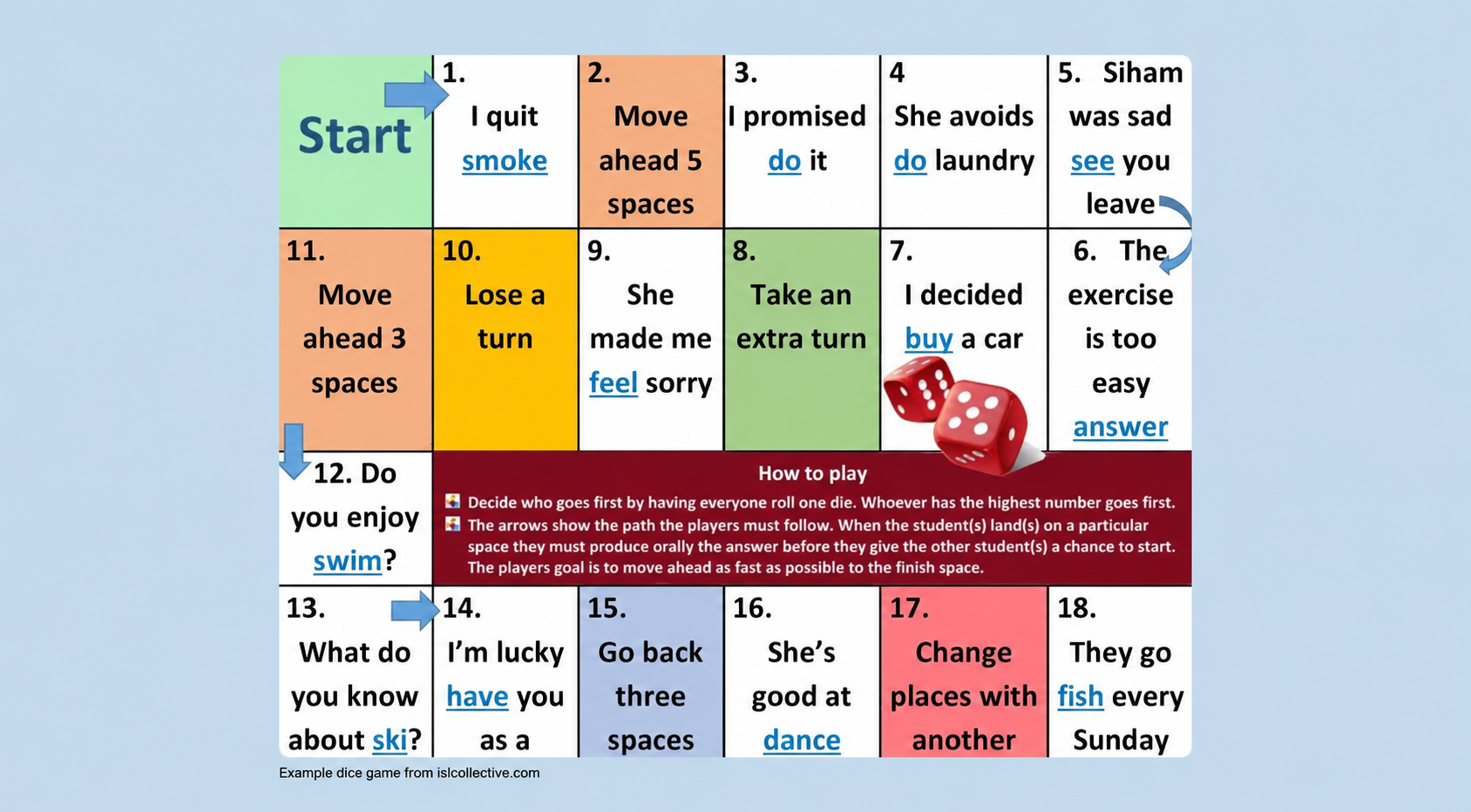
17. Roll the dice
Give students a board with a word or phrase next to each number. They roll a die and make a sentence using the corresponding word. For online lessons, search for a virtual or online dice roller.
18. Find the mistake
Give students sentences, some correct and some incorrect. Teams identify mistakes and explain their decisions. Award ten points or units of play money for a correct answer and deduct ten for an incorrect one. The team with the highest total wins.
19. Disappearing words
BKC-IH teacher trainer Olga Fomina shared this activity in a webinar. It provides support for lower-level learners.
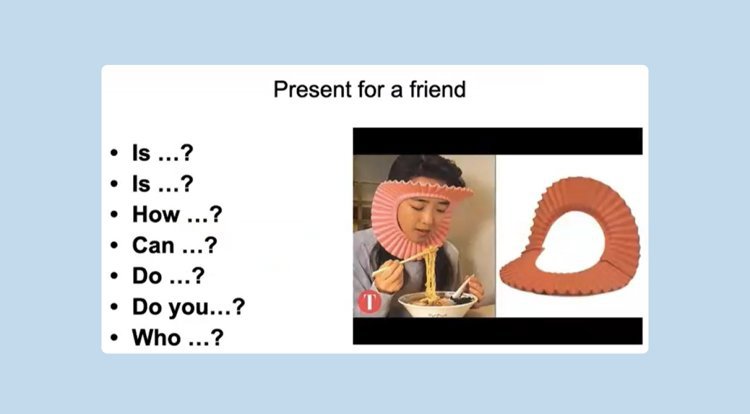
Choose something to discuss, such as gifts for a friend. Find pictures of unusual presents, perhaps on AliExpress, and write questions about them: “Is it expensive?”, “Is it big?”, “How does it work?”, “Do we need to clean it?” and “Do you like it?”
Show another present and hide the final words of each question. Ask students to reconstruct the questions. With each new gift, remove more letters or words until only the first word of each question remains on the slide.
20. Scenarios
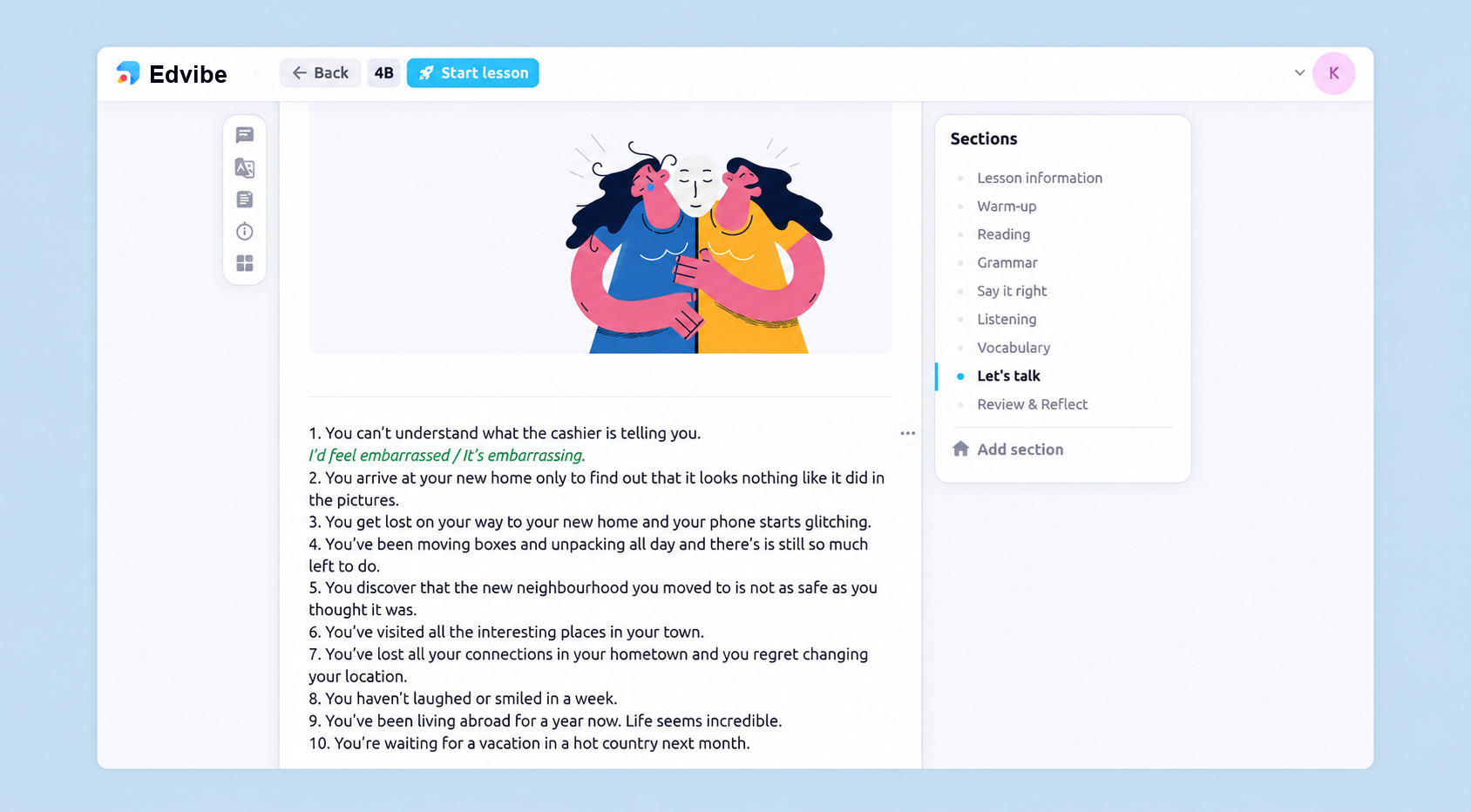
To practise the lesson’s grammar and vocabulary, ask students what they would do in a particular situation, using the target language. For example, a B1 activity about relocation can ask learners to respond to hypothetical everyday situations.
You can also find speaking activities in Speakout, Outcomes and these other English coursebook series.
English coursebooks for adults: read the review
Choose the techniques and activities that address your students’ particular barriers. In Edvibe’s exercise builder, combine tasks into a lesson, add pictures or video, and adjust the prompts to the learner’s level.


